9 Best Wheelchairs for Narrow Doorways (November 2026)
The best wheelchairs for narrow doorways include the Medline Lightweight Foldable Transport Wheelchair with Handbrakes for tight household routes, the Medline Comfortable Folding Wheelchair for a 20 in seat, and the Drive Medical Blue Streak Lightweight Wheelchair for desk access.
On this page (6 sections)
The best wheelchair for narrow doorways is the Medline Lightweight Foldable Transport Wheelchair with Handbrakes. Its 12 in rear wheels and swivel front wheels are designed for tight corners, doorways and ramps, while the folding frame helps with storage and car travel.
A narrow wheelchair for doorways must fit the route when open. A small folded size helps with storage, but it does not solve a doorway that is too narrow for the chair's frame, wheels or footrests.
We compared the stated widths, seat sizes, wheel layouts, folding features and transfer details for these picks. Our score weighs specs, features and buyer feedback against what you're shopping for.
If seat width is your main concern, compare this guide with our best 22 inch seat wheelchair guide. A smaller user may also need a different seat height or depth, while a taller user should review our guides to the best wheelchair for small adult and best wheelchair for tall adults.
Our picks at a glance
-
1
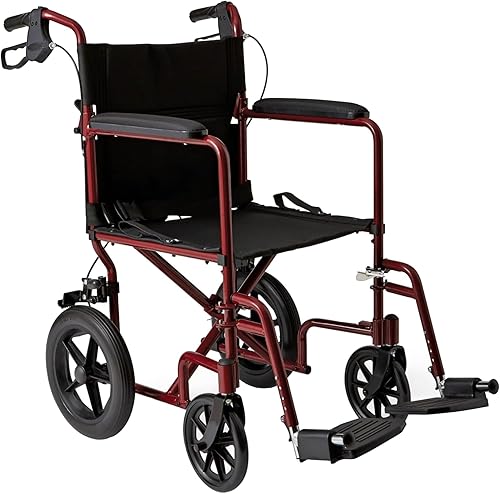 Best for tight household routes
Medline Lightweight Foldable Transport Wheelchair with Handbrakes
9.6/10 our score
See it on Amazon -
2

-
3
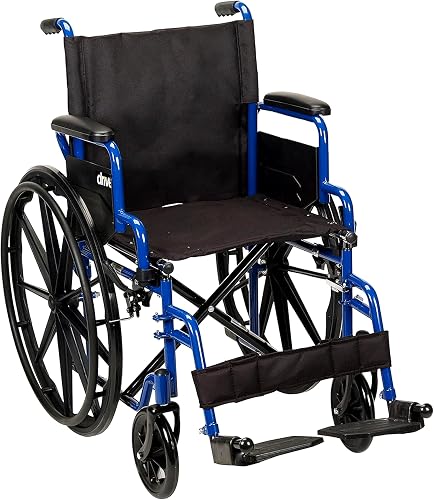 Best for desk access
Drive Medical Blue Streak Lightweight Wheelchair
9.5/10 our score
See it on Amazon
- 4
 Check it
Medline Comfortable Folding Wheelchair with Swing-Back Desk-Length
Best for easier transfers - 5
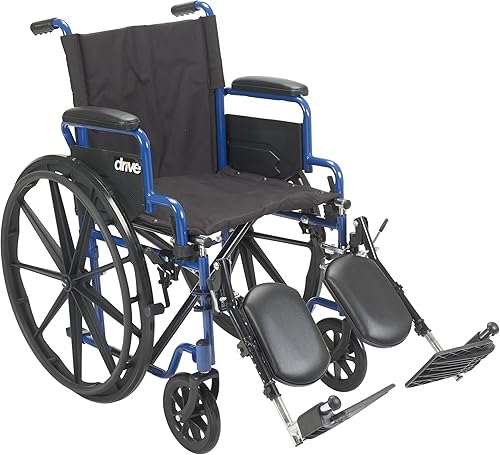 Check it
Drive Medical Blue Streak Foldable Wheelchair
Best for a 16 in seat - 6
 Check it
Karman 24 pounds LT-980 Ultra Lightweight Wheelchair
Best for lifting and storage - 7
 Best for walker-chair flexibilityCheck it
- 8
 Check it
WHLICKS Wheelchairs for Adults Ergonomic Transport Chair
Best for compact travel - 9
 Check it
EconoHome Light Weight Wheelchair
Best for a ready-to-use chair
Which wheelchair is best for narrow doorways?
The Medline Lightweight Foldable Transport Wheelchair is the strongest overall choice because its 12 in rear wheels, swivel front wheels and 19 in seat address common indoor movement needs. The Drive Medical Blue Streak Foldable Wheelchair is another good option when a 24 in overall width and a smaller 16 in seat fit your needs.
A doorway measurement should come before brand or feature preferences. Measure the narrowest clear opening, then compare the chair's open width rather than its folded width.
Medline Lightweight Foldable Transport Wheelchair with Handbrakes: Best for tight household routes
- 12 in rear wheels
- 19 in wide x 16 in deep seat
- 300 lb capacity
- Folding aluminum frame
The 12 in rear wheels and swivel front wheels help this transport chair turn around tight corners, doorways and ramps. It folds for vehicle storage and has hand brakes plus rear-wheel locking brakes.
Pros
- 12 in rear wheels
- Hand brakes and locking brakes
- Swing-away detachable footrest
Cons
- Overall dimension is about 24.02 in wide
- Transport chair format needs a caregiver to push
The Medline Lightweight Foldable Transport Wheelchair with Handbrakes is the top pick for restricted household routes. Its 12 in rear wheels work with swivel front wheels to help the chair turn around tight corners, doorways and ramps.
The chair has a 19 in wide x 16 in deep seat and a 300 lb weight capacity. Full-length cushioned armrests add support, while the swing-away, detachable footrest makes it easier to get in and out.
Hand brakes give the companion a way to control movement, and rear-wheel manual locking brakes help keep the chair in place during transfers. The aluminum frame folds for storage, and the nylon fabric is easy to clean.
Medline gives this chair an overall dimension of 37.01 x 24.02 x 37.01 in in the product specifications. Treat 24.02 in as the key comparison figure, then measure your doorway's clear opening before ordering.
Buy it for narrow indoor routes, caregiver use and regular vehicle transport. It is a transport chair, so it suits users who have someone available to push.
Medline Comfortable Folding Wheelchair: Best for a 20 in seat
- 20 in wide x 16 in deep seat
- 28.5 in overall width
- Swing-back desk-length arms
- Elevating leg rests
This chair offers more seat room but needs a wider route than the narrowest picks. Swing-back arms help with lateral transfers and access to tables, while the frame folds to 11.5 in wide.
Pros
- 20 in seat
- Swing-back desk-length arms
- Elevating leg rests
Cons
- Widest overall chair in this group
- 38 lb chair weight
The Medline Comfortable Folding Wheelchair offers the largest seat in this group at 20 in wide x 16 in deep. It suits users who need that extra room at the hips and thighs and whose doorways can accommodate its 28.5 in overall width.
Swing-back, desk-length arms help with lateral transfers and access to tables or desks. That design can make moving across to a bed or chair simpler, since the arm can be moved out of the way rather than forcing a lift over it.
Elevating leg rests add another positioning option for users who need more lower leg support during longer sits. Raising the legs may suit people who spend extended periods seated at home, while the nylon upholstery is breathable and easy to clean for daily spills and dust.
The hammertone frame weighs 38 lb and supports up to 300 lb. The chair folds to 11.5 in wide for storage, which helps in a closet or beside a wall, although folding does not reduce the width needed while the chair is open.
This model is not the first choice for a truly restricted doorway. Choose it when seat space matters more than the narrowest possible open width, and check the route before ordering.
Drive Medical Blue Streak Lightweight Wheelchair: Best for desk access
- 18 in seat
- Flip-back desk arms
- Swing-away footrests
- Push-to-lock brakes
Flip-back desk arms make it easier to pull up to tables, counters and workspaces. Its folding frame reaches 12.5 in wide when folded, but you should confirm its open width against each doorway.
Pros
- 18 in seat
- Flip-back desk arms
- Compact 12.5 in folded width
Cons
- Open width needs careful doorway measurement
- 41.3 lb listed item weight
The Drive Medical Blue Streak Lightweight Wheelchair suits users who need desk access and an 18 in seat. Flip-back desk arms help the chair pull closer to tables, counters and workspaces without the arm blocking the approach.
Swing-away footrests support easier transfers, and push-to-lock brakes help keep the chair stationary when stopped. The alloy steel frame, push handles and solid wheels support manual use indoors or outdoors, with solid tires that avoid punctures on everyday indoor surfaces and level outdoor ground.
The chair folds to 12.5 in wide, which is useful for a vehicle or closet. Its open width is not included in the supplied product details, so measure the chair or confirm the open dimension before choosing it for a tight doorway.
The 16 in seat depth gives a little more front to back room than the seat width alone suggests. Check both the seat fit and the clear route, since a comfortable seat still needs space to pass through trim and hinges.
Medline Comfortable Folding Wheelchair with Swing-Back Desk-Length: Best for easier transfers
- 20 in wide x 16 in deep seat
- Swing-back desk-length arms
- Swing-away footrests
- 300 lb capacity
The 26.5 in overall width is narrower than the other 20 in-seat Medline pick. Swing-back arms and swing-away footrests make transfers easier, while the folded width is 11.5 in.
Pros
- Narrower 20 in-seat design
- Swing-back arms
- Swing-away footrests
Cons
- 26.5 in open width still needs a wide route
- 38 lb chair weight
The Medline Comfortable Folding Wheelchair with Swing-Back Desk-Length Arms is the better 20 in seat option when you need a narrower frame than the other 20 in Medline pick. Its stated overall width is 26.5 in, which remains wide for a restricted home route.
Swing-back desk-length arms make lateral transfers and table access easier. They allow the user to sit closer to a desk or table and to clear the arm during a side transfer, which can reduce twisting on narrow approaches.
Swing-away footrests help you step in and out without having to work around fixed foot supports. That matters in tight hallways, where fixed supports can catch on frames or make the first step awkward.
The chair has a 20 in wide x 16 in deep seat, a 300 lb capacity and a 38 lb weight. It folds to 11.5 in wide, which helps with storage but does not change the open width needed for doorways.
Choose it when a 20 in seat is important and your route provides at least the required clear width. A doorway close to 26.5 in leaves little room for steering corrections, so measure every pinch point first.
Drive Medical Blue Streak Foldable Wheelchair: Best for a 16 in seat
- 16 in seat
- Flip-back desk arms
- Elevating leg rests
- Swing-away leg rests
The 24 in overall width makes this one of the narrower full wheelchair options here. Its 16 in seat, desk arms and elevating leg rests favor users who fit the smaller seating area.
Pros
- 24 in overall width
- 16 in seat
- Elevating leg rests
Cons
- 47 lb item weight
- Smaller seat than the 20 in models
The Drive Medical Blue Streak Foldable Wheelchair is the best conventional wheelchair here for buyers who fit a 16 in seat and want a 24 in overall width. Its smaller seat can make the frame easier to place in a tight indoor route, provided the seat itself is not too snug for the user.
Flip-back desk arms support access to tables and counters. Swing-away elevating leg rests give more flexibility during transfers and can be adjusted for a different leg position, which helps when the user needs to change posture during the day.
The metal frame has a 300 lb maximum weight recommendation, but the chair itself weighs 47 lb. That makes it less convenient to lift than the lighter transport chairs and the Karman LT-980, especially for frequent car transfers.
Choose this model when width and leg rest features matter more than carrying weight. Confirm that the 16 in seat is large enough before treating its narrower frame as the deciding factor.
Karman 24 pounds LT-980 Ultra Lightweight Wheelchair: Best for lifting and storage
- 18 in wide x 16 in deep seat
- 24 lb without footrest
- Folding backrest and seat
- 22 in rear wheels
At 24 lb without the footrest, the LT-980 is easier to lift into storage or a vehicle. Its 18 in seat and handbrakes suit buyers who value portability as much as doorway clearance.
Pros
- 24 lb without footrest
- Folding backrest and seat
- Removable adjustable footrest
Cons
- 250 lb capacity
- Overall width should be confirmed before ordering
The Karman 24 pounds LT-980 Ultra Lightweight Wheelchair is the portability pick. It weighs 24 lb without the footrest, has an 18 in x 16 in seat and uses a folding backrest and folding seat for storage in small spaces.
Its aluminum frame supports up to 250 lb. The swing-in, swing-away removable footrest has adjustable-height footplates, and the chair includes a seatbelt and padded nylon upholstery that is easy to clean and maintain.
The LT-980 uses 22 in rear wheels and 6 in polyurethane solid front casters. Handbrakes are within reach of the person sitting in the chair, which may be useful when the user needs direct brake access rather than relying only on a companion.
The overall width is not included in the supplied product details. Measure it before choosing this chair for narrow doorways, even though its 28 in overall length and light weight make storage easier.
VOCIC Z51 Walker for Seniors: Best for walker-chair flexibility
- 2-in-1 walker and transport chair
- 24 in maximum width
- 10 in front wheels
- One-hand folding
The Z51 combines a rollator walker and transport chair in a 24 in maximum-width design. Its one-hand folding frame and 26.7 lb weight help when the chair must be stored or moved often.
Pros
- Walker and transport chair in one
- 24 in maximum width
- One-hand folding
Cons
- Not a conventional full wheelchair
- Doorway clearance still needs measurement
The VOCIC Z51 Walker for Seniors is useful when you need both a walker and a transport chair. It has a maximum width of 24 in, so it may suit a route with 24 in openings only after you measure the actual clear space and account for handles and footrests.
The Z51 weighs 26.7 lb and folds with one hand. Its folded dimensions are 19.7 x 25.2 x 33.5-39.4 in, which helps with trunk storage and with keeping the device beside a bed when it is not in use.
The 10 in front wheels, handbrakes, security strap and adjustable handlebar support its rollator use. Those features help the user walk with support for part of a trip, then sit for a rest without needing a separate chair nearby.
It can convert into a transport chair by flipping the backrest and installing the footrests. This is not a conventional self-propelled wheelchair, so pick it when walker support and occasional caregiver transport matter more than a dedicated wheelchair frame.
WHLICKS Wheelchairs for Adults Ergonomic Transport Chair: Best for compact travel
- 23.1 lb transport chair
- 300 lb capacity
- 20 x 11 x 26 in folded size
- 12 in rear wheels
This transport chair folds to 20 x 11 x 26 in and weighs 23.1 lb, making it useful for travel and small storage spaces. Its 12 in rear wheels and swiveling front wheels are suited to tight indoor turns.
Pros
- 23.1 lb weight
- Compact folded size
- Removable washable cushions
Cons
- Open width is not stated in the supplied product details
- Transport chair format needs a caregiver
The WHLICKS Wheelchairs for Adults Ergonomic Transport Chair is the compact travel choice. It weighs 23.1 lb, supports up to 300 lb and folds to 20 x 11 x 26 in, which suits car boots and small storage corners.
Its 5 mm aluminum frame includes a safety belt, while the S-shaped backrest and removable cushions focus on seated comfort and cleaning. The cushions are machine-washable, and the seat cushion can detach for use as a shower seat, which may help during travel when bathroom facilities differ.
The chair uses 12 in rear rubber wheels and swiveling front wheels with shock-absorbing springs. Those features may help in hallways, elevators and doorways, but the open width is not included in the supplied product details.
Confirm the open width before buying for a narrow doorway. The small folded size is most useful after you have verified that the chair fits the route when open, since folded dimensions do not describe doorway clearance.
EconoHome Light Weight Wheelchair: Best for a ready-to-use chair
- 22 lb aluminum frame
- Companion-activated hand brakes
- Swing-away footrests
- 300 lb capacity
The 22 lb fold-flat frame is easy to lift, and the chair arrives fully assembled with a protective waterproof cover. Large wheels and maneuverable front wheels are intended for narrow hallways and door thresholds.
Pros
- 22 lb weight
- Fully assembled
- Hand brakes and swing-away footrests
Cons
- Open width is not stated in the supplied product details
- Companion-activated brakes require a caregiver
The EconoHome Light Weight Wheelchair suits buyers who want a light transport chair that arrives fully assembled. It weighs 22 lb, uses a fold-flat aluminum frame and supports up to 300 lb, so lifting it into a vehicle is simpler than with heavier full wheelchairs.
Companion-activated hand brakes give the caregiver control, while the seat belt and padded armrests add practical support. Swing-away footrests make transfers easier, and a protective waterproof cover is included for storage.
Large wheels and maneuverable front wheels are intended to move over door thresholds, curbs and narrow hallways. The supplied product details do not state the open width, so measure or confirm that dimension before choosing it for a restricted doorway.
The chair is a good fit for errands, travel and storage in a vehicle. Pick it when low lifting weight and ready-to-use setup are priorities, and check that the caregiver braking setup suits the person who will push it.
How do you measure a doorway for a wheelchair?
Measure the clear opening with the door fully open, not the rough wall-to-wall distance. The chair's open width must fit through the narrowest point, including trim, hinges, handles and any part of the frame that projects into the route.
Use a tape measure at several points from floor level upward. A doorway may be narrower near the bottom because of trim or a threshold.
Check every doorway between the chair's storage point and the places where it will be used. A chair that fits the front door may still fail at a bedroom, bathroom or kitchen entrance.
Leave room for controlled movement. A chair that technically fits with no spare space may scrape the frame when a caregiver corrects the direction.
For a 24 in opening, don't assume a chair described as 24 in wide will pass comfortably. The Medline transport chair has a 24.02 in stated overall dimension, and the VOCIC Z51 has a 24 in maximum width, so actual opening measurements matter.
Are narrow wheelchairs comfortable for daily use?
A narrow wheelchair can be comfortable when the seat width, seat depth, arm position and footrest placement fit the user. Narrower does not always mean better if the seat is too small or the user's legs cannot rest in a natural position during daily use at home.
The products here show the trade-off clearly. The Drive Medical Blue Streak Foldable Wheelchair has a 16 in seat, while the Medline Comfortable Folding Wheelchair and its swing-back version have 20 in seats.
That four inch difference can change how the hips sit, how much space remains beside the body and whether clothing or posture aids fit without pressure.
Seat width is only one part of fit. Seat depth, seat height, armrest style and leg-rest position also affect transfers and table access.
A deep seat may support the thighs well for one person and push too far forward for another, while arm height can affect whether the user can reach a table or lock the brakes comfortably.
For daily use, check whether the footrests allow the feet to sit flat and whether the knees clear the frame when approaching a doorway. A chair that passes the doorway test can still cause discomfort if the user must perch, twist or lift the legs over fixed supports for every transfer.
For users who need a specific seat height, review our guide to a hemi height wheelchair before choosing based on doorway width alone. A chair that fits through a doorway still needs to support safe transfers and usable positioning throughout the day.
It also helps to think about how long the user will sit. Short trips to another room place different demands on a seat than hours at a desk, so match the cushion, arm style and leg rest to the real routine rather than to doorway clearance alone.
What features help a wheelchair move through tight spaces?
Swivel front wheels, manageable rear wheels, swing-away footrests and a frame width that leaves clearance are the most useful features for tight household routes. Folding ability helps after use, but it does not replace an appropriate open width while the chair is moving through a doorway.
Transport chairs often have smaller rear wheels and caregiver handles, which can simplify turning in a home. A companion can steer from behind, pivot the chair in a small bathroom and keep the front casters aligned when space is limited, although the user cannot self-propel in the same way as with a full wheelchair.
Full wheelchairs may offer more seating and self-propelling options but can take more room. Larger rear wheels and hand rims need space to rotate, and that turning arc can matter as much as the straight-line width when a hallway ends in a closed door.
Footrests deserve special attention. A chair may fit at the wheels but catch on a door frame if the footrests extend farther forward or outward.
Swing-away and removable designs help during transfers, yet they still need to be positioned correctly before entering a narrow opening.
Desk-length or flip-back arms help when the chair must pull alongside a table. Swing-back arms can also make lateral transfers easier, but they do not make a wide chair narrow enough for a restricted doorway.
Brakes and casters also affect control in tight spaces. A caster that swivels freely may turn easily but can also swing into trim, while a chair that drifts during a transfer can bump a wall.
Choosing features for the actual route, including thresholds and rugs, matters more than choosing the smallest folded size.
How should you use and care for a narrow wheelchair?
Check the brakes before every transfer, keep the route clear and approach doorways straight when possible. Don't force a chair through a doorway that requires the frame or footrests to scrape the trim.
Lock the brakes before the user sits down or stands up. Companion-activated hand brakes can help a caregiver control movement, while push-to-lock or rear-wheel locking brakes help keep the chair stationary.
Keep folding parts clear before closing the frame. Swing-away footrests should be moved as intended for transfers, and removable parts should be stored where they won't be lost.
Clean easy-clean nylon or washable cushions according to the product instructions. Check wheels, footrests, brakes and frame joints regularly for loose or damaged parts.
A ramp or threshold can change the amount of control needed. Approach sloped surfaces carefully, use the chair's brakes as designed and ask a qualified clinician or mobility professional if the route presents a safety concern.
What is the best wheelchair for narrow doorways?
Pick the Medline Lightweight Foldable Transport Wheelchair with Handbrakes when tight turns, caregiver control and a 19 in seat matter most. Choose the Drive Medical Blue Streak Foldable Wheelchair if a 24 in overall width and 16 in seat fit your body, or the VOCIC Z51 if you need a walker and transport chair in one.
For a larger 20 in seat, the Medline Comfortable Folding Wheelchair with Swing-Back Desk-Length Arms offers a narrower stated width than the other 20 in-seat Medline option. That choice suits users who need seat room and have a route that can take a 26.5 in open frame.
For lifting and travel, the Karman LT-980, WHLICKS and EconoHome models weigh less than many full wheelchairs, but confirm their open widths before buying for a narrow doorway. Light weight helps with storage and car transfers, yet it does not guarantee doorway clearance.
Measure the complete route first. The best wheelchair for narrow doorways is the one that fits the clear opening with enough room for controlled movement and safe transfers.
Our top 3 picks at a glance
-
1
Best for tight household routes
Medline Lightweight Foldable Transport Wheelchair with Handbrakes
9.6/10 our score
See it on Amazon -
2
-
3
Best for desk access
Drive Medical Blue Streak Lightweight Wheelchair
9.5/10 our score
See it on Amazon
Frequently asked questions
What is the best wheelchair width for narrow doorways?
The best wheelchair width depends on the clear opening of your narrowest doorway. Measure from the inside edge of one door frame to the other with the door fully open, then compare that number with the chair's open overall width.
Also account for hands, footrests and turning space.
Will a 24 in wheelchair fit through a 24 in doorway?
A 24 in wheelchair should not be treated as a guaranteed fit for a 24 in doorway. The chair needs clearance for hand rims, footrests, door trim and steering corrections.
Measure the actual clear opening and leave practical room for moving straight through without scraping.
Are transport chairs good for narrow doorways?
Transport chairs can work well in narrow doorways when their open width and wheel layout fit the route. Models such as the Medline transport chair use 12 in rear wheels and swivel front wheels, while the WHLICKS and EconoHome chairs focus on light folding designs.
What should I measure before buying a narrow wheelchair?
Measure the clear width of every doorway, hallway pinch point and bathroom entrance. Check the chair's open width, seat width, footrest position and turning area.
Folded dimensions matter for storage and vehicles, but they do not tell you whether the chair fits through a doorway while open.


