Electric Wheelchair vs Mobility Scooter: The Rundown
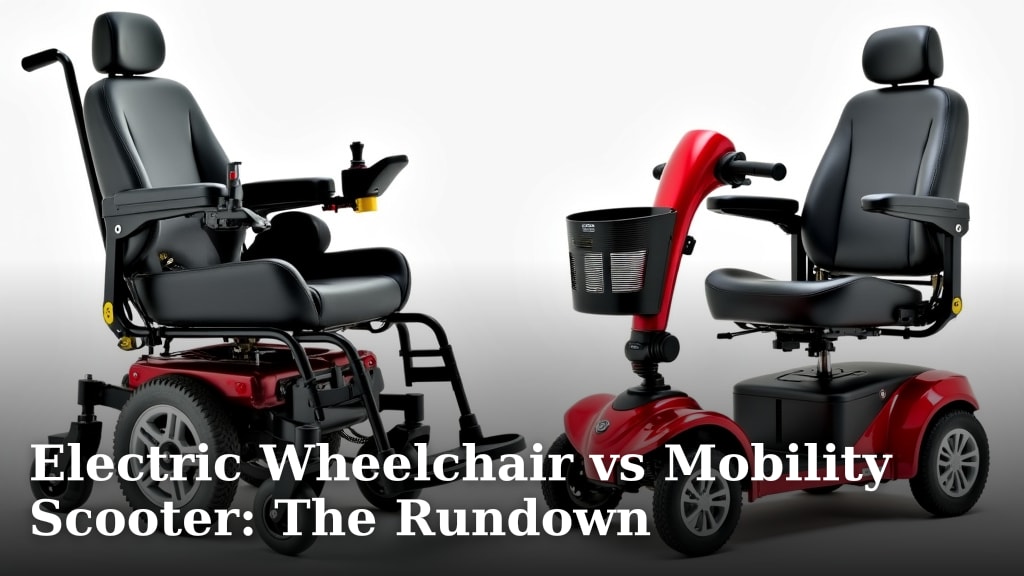
Choosing between an electric wheelchair and a mobility scooter depends on your specific needs and how you’ll use it. An electric wheelchair is generally better for indoor use and navigating tight spaces, offering more precise control. A mobility scooter usually excels outdoors, providing greater speed and a longer travel range.
Both are fantastic tools for maintaining independence. However, they differ in their design, capabilities, and how they are operated. We’ve researched how each functions to help you make the best choice for your lifestyle. Understanding these key differences will ensure you get the mobility aid that truly fits your life.
- Electric wheelchairs offer tight turning and indoor maneuverability.
- Mobility scooters are great for outdoor travel and speed.
- Consider your typical environment: indoors or outdoors?
- Think about the distance you need to travel regularly.
- Your physical ability to operate controls is also a factor.
Let’s break down the key differences between an electric wheelchair and a mobility scooter so you can find your perfect match.
Electric Wheelchairs vs. Mobility Scooters: Making the Right Choice
Deciding between an electric wheelchair and a mobility scooter can feel like a big step. Both offer incredible freedom. We’ve looked into how they work to help you understand which one might be a better fit for your life. Think about where you spend most of your time and how you move around. This will guide you toward the best option.
Understanding the Core Differences: Design and Function
Electric Wheelchairs: Precision and Compactness
Electric wheelchairs, often called power wheelchairs, are built like a chair with a powered drive system. They usually have a joystick control, much like a small airplane’s controls. This joystick allows for very precise movements. You can turn on a dime and navigate tight corners with ease. Many models are designed with smaller turning radii. This makes them ideal for indoor use in homes and offices. Our guide to a mid wheel drive wheelchair explains how its design offers superior indoor agility.
The seating in an electric wheelchair is often more akin to a comfortable armchair. You’ll find options for high backs, supportive cushions, and even reclining features. This focus on comfort is important for those who need to use their mobility aid for extended periods. The battery systems are usually robust, offering a decent range for daily use.
Mobility Scooters: Speed and Outdoor Capability
Mobility scooters, on the other hand, are designed to look more like a tricycle or a small car. They typically have three or four wheels. You steer them with a tiller, which is like handlebars. This tiller system is generally simpler to operate for some people. They tend to offer a faster travel speed than most electric wheelchairs.
Mobility scooters are often better suited for outdoor environments. They can handle varied terrain like sidewalks, parks, and even some unpaved paths more easily. Their larger wheels and sturdier build contribute to this. Many users find them to be a great way to maintain an active social life outside the home.
Key Factors to Consider for Your Mobility Needs
Where Will You Use It Most? Indoors or Outdoors?
This is often the biggest deciding factor. If your daily routine keeps you primarily inside your home, a compact electric wheelchair might be your best bet. Its maneuverability in tight spaces is a major advantage. Think about navigating doorways, narrow hallways, and crowded rooms.
If you plan to spend a lot of time outdoors, a mobility scooter often shines. They are built to handle longer distances and outdoor conditions. This includes getting around your neighborhood, visiting shops, or enjoying outdoor recreation. We found that outdoor users often prioritize speed and range.
How Much Distance Will You Cover?
Consider your typical daily travel distance. Both electric wheelchairs and mobility scooters come with different battery capacities and ranges. Some high-end power wheelchairs can travel quite far on a single charge. However, mobility scooters are generally known for their longer travel ranges per charge.
If you’re planning longer outings, like a trip to the mall or a day out in the park, a mobility scooter might offer more convenience. You won’t have to worry as much about finding a place to charge. We found that users who travel longer distances tend to favor scooters.
What Level of Control Do You Need or Prefer?
The control systems are quite different. Electric wheelchairs use a joystick. This offers fine-tuned control and allows for quick changes in direction. It’s often preferred by individuals with limited arm or hand strength who can operate a joystick. Many can be controlled with just a thumb or finger.
Mobility scooters use a tiller for steering. This can feel more intuitive for people who are used to riding a bike or scooter. The controls are usually simple buttons or levers. If you have balance issues but can operate handlebars, a scooter might feel more natural. Many experts suggest trying both control types if possible.
Comfort and Seating Considerations
When you’re using a mobility aid for extended periods, comfort is key. Electric wheelchairs often provide more seating customization. You can find options with advanced support, pressure relief, and ergonomic designs. This is especially important for individuals with specific medical needs related to seating posture.
Mobility scooters also offer comfortable seating, but the variety of advanced ergonomic options might be less. The seats are usually captain’s style chairs. They provide good support for moderate use. If you experience significant discomfort or require specialized seating, an electric wheelchair might offer more solutions.
Comparing Features: A Quick Overview
To help you visualize the differences, here’s a simple comparison. We’ve highlighted the main points to consider:
| Feature | Electric Wheelchair | Mobility Scooter |
|---|---|---|
| Primary Use | Indoor, tight spaces, precise navigation | Outdoor, longer distances, varied terrain |
| Control System | Joystick (precise, multi-directional) | Tiller (handlebar-like, simpler steering) |
| Turning Radius | Generally smaller, excellent for indoors | Wider, better for open spaces |
| Speed | Moderate, focused on control | Generally faster, good for covering ground |
| Seating Comfort | Often more customizable, specialized options available | Comfortable captain’s style, good for general use |
| Portability/Transport | Some models fold or disassemble, but can be heavy | Many models disassemble into lighter parts for transport |
| Terrain Handling | Best on smooth, level surfaces | Handles uneven surfaces better (e.g., grass, gravel) |
Assembly and Transport: Getting Around Town
Disassembly and Portability
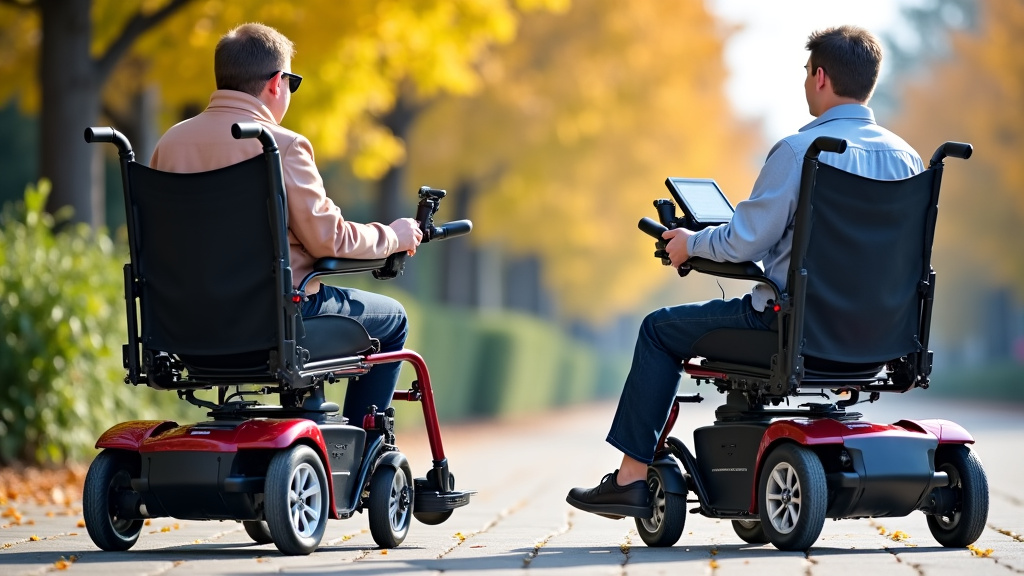
If you need to transport your mobility device in a car, portability is a major concern. Many mobility scooters are designed to disassemble into lighter pieces. This makes them easier to lift into a car trunk. Some even have quick-release levers for effortless breakdown. This is a huge advantage for those who travel frequently by car.
Weight and Lifting
Electric wheelchairs can be heavier, especially the more robust models. While some can be partially disassembled, they might still require a ramp or lift for transport. If lifting the device into your vehicle is a concern, research the weight of individual components. We found that weight is a key factor for users who rely on personal vehicles for transportation.
Car Lifts and Ramps
For heavier electric wheelchairs or for users who cannot disassemble their device, a vehicle lift or ramp system might be necessary. These accessories attach to your car and help you load your mobility aid. They add to the overall cost but can make car travel feasible. Many organizations offer resources on vehicle modifications. (CDC)
Your Personal Checklist for Choosing
To help you narrow down your options, consider these questions. Check off the answers that best describe your situation:
- My primary environment is: Indoors / Outdoors / A mix
- I need to cover: Short distances / Moderate distances / Long distances daily
- I prefer controls that are: Very precise (like a joystick) / Simple and intuitive (like handlebars)
- Comfort is most important for: Extended sitting periods / General daily use
- Transporting my device will be: Not a major concern / By disassembling / With a vehicle lift or ramp
- Maneuvering in tight spaces is: A daily challenge / Rarely an issue
Conclusion
Choosing the right mobility aid is a personal journey. We’ve seen how electric wheelchairs offer exceptional indoor control and comfort. Mobility scooters, on the other hand, excel in outdoor travel with speed and range. Your daily routine and specific needs are your best guides. Think about where you spend most of your time and how far you need to go. By honestly answering your personal checklist questions, you can confidently select the device that will best support your independence and lifestyle. We encourage you to try both options if possible before making your final decision.
Frequently Asked Questions
Which is easier to steer, an electric wheelchair or a mobility scooter?
This often comes down to personal preference and physical ability. Electric wheelchairs use a joystick for very precise, multi-directional control that can be operated with minimal hand movement. Mobility scooters use a tiller, which feels more like bicycle handlebars and is often preferred by those who want simpler, more intuitive steering.
Can an electric wheelchair be used outdoors?
Yes, many electric wheelchairs can be used outdoors, but they generally perform best on smooth, paved surfaces. They may struggle with rough terrain, inclines, or soft ground compared to mobility scooters, which are typically designed with larger wheels and sturdier builds for outdoor use.
Are mobility scooters good for people who need to sit for long periods?
Mobility scooters offer comfortable seating, often in a captain’s style. However, electric wheelchairs often provide more specialized seating options, such as advanced support, pressure relief, and reclining features. If you require very specific seating accommodations for extended use, an electric wheelchair might offer more customization.
How do electric wheelchairs and mobility scooters compare in terms of portability for car travel?
Many mobility scooters are designed to disassemble into lighter parts, making them easier to lift into a car. Electric wheelchairs can be heavier and may require a vehicle lift or ramp system for transport, though some models offer partial disassembly. Always check the weight of components if portability is a key concern.
What is the typical speed difference between the two?
Mobility scooters generally offer a faster top speed than electric wheelchairs. Electric wheelchairs prioritize precise control and maneuverability, especially in tight indoor spaces, so their speed is often moderate. If covering distance quickly is a priority, a mobility scooter might be the better choice.