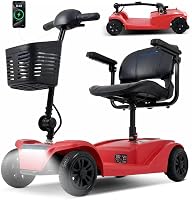
How to Choose Heavy Duty Mobility Scooters 500 lbs
A 500-pound mobility scooter must have a clearly stated weight capacity of at least 500 lb. Check the rider, clothing, bags, and accessories together, then confirm the seat, frame, tires, brakes, range, and transport plan match daily use.
On this page (10 sections)
- How do you verify a 500-pound weight capacity?
- What seat measurements matter for larger riders?
- Does a powerful motor prove a scooter supports 500 lb?
- How should you match the scooter to the route?
- Which portable scooter fits a lighter load?
- Can a folding scooter work for everyday errands?
- What transport plan does a heavy-duty scooter need?
- How should you compare safety and daily control?
- Should you choose a scooter made for adults or seniors?
- What is the best decision rule for heavy duty mobility scooters 500 lbs?
A 500-pound mobility scooter needs a stated weight capacity of at least 500 lb, with enough seat space, braking control, stability, range, and transport support for the rider's routine. Add clothing, bags, medical equipment, and other carried items before comparing models.
That total load matters more than body weight alone. A rider near the limit may have little reserve left for hills, uneven ground, turning, braking, or a longer trip.
A large motor does not prove a scooter can support 500 lb. Look for a clear maximum load rating from the manufacturer, then compare that rating with the full riding load rather than the rider's body weight alone.
Check where the rating appears and what it covers. Confirm whether it includes only the rider or also bags, accessories, clothing, and equipment carried during use.
Do not accept vague phrases as a substitute for a number. Words such as heavy duty, powerful, or sturdy may describe a design style, but they do not state the load the scooter is rated to carry.
Seat space needs the same careful check. A rating can be correct while the seat, armrests, foot space, or steering reach still make the scooter hard to use each day.
Think about the routes you use most before comparing models. Indoor floors, pavements, grass, gravel, slopes, thresholds, and doorways each place different demands on tires, clearance, braking, and turning room.
Range should also be matched to real use. Rider load, terrain, speed, frequent stops, temperature, tire condition, and battery age can all change the distance a scooter covers.
Transport needs deserve early attention too. Some scooters can be lifted into a car by a caregiver, while larger models need a ramp, vehicle lift, trailer, or accessible vehicle.
Set up the scooter for a safe first ride and check it before regular use. Confirm the seat position, control reach, brake feel, tire condition, battery charge, and lighting where fitted.
Care matters because capacity is not only about the first trip. Regular checks of brakes, tires, suspension where fitted, fasteners, and battery storage help keep the scooter working as expected over time.
This guide explains how to check true capacity, usable seat space, route needs, and transport requirements. For background, start with [What Is a Heavy Duty Mobility Scooter?
What to Expect](/what-is-a-heavy-duty-mobility-scooter/).
Use the checks in order and keep the complete load in view. That approach helps you exclude unsuitable models early and focus on scooters that fit the rider, the route, and daily life.
How do you verify a 500-pound weight capacity?
Verify the published maximum load rating, not the motor wattage, tire size, or phrase “heavy duty.” The capacity should be stated as a number and should cover the rider plus anything carried on the scooter.
Write down the total load you need to support:
- Rider's body weight
- Clothing and shoes
- Shopping bags or personal items
- Oxygen equipment or other mobility equipment
- A basket, seat accessory, or mounted carrier
- Any other item that stays on the scooter while moving
If the total comes close to 500 lb, leave room below the maximum rating. A scooter operating at its limit may have less practical reserve for hills, uneven paths, braking, or battery range.
Do not treat a 500-pound capacity as a promise that every rider will fit comfortably. Weight capacity and body shape are different checks.
Seat width, seat depth, armrest spacing, steering reach, and transfer height all affect daily use.
The products in this guide show why careful checking matters. The SuperHandy Passport has a stated 275 lb capacity, and the Aotedor has a 275 lb capacity in its title.
Those figures do not meet a 500 lb requirement. The Ecomobi model is described as heavy duty, but the supplied product information here does not state a 500 lb capacity, so confirm its exact rating before considering it for this use.
What seat measurements matter for larger riders?
Choose a seat that gives you usable room to sit, turn, and transfer, not simply the widest advertised measurement. Measure your seated width and compare it with the clear space between armrests.
Check these dimensions before ordering:
- Seat width between the armrests
- Seat depth from the front edge to the back support
- Armrest height and whether the armrests adjust
- Space around the steering tiller
- Seat height compared with your transfer surface
- Foot space and the position of the controls
A seat can be wide but still feel restrictive if the armrests reduce usable space. A deep seat can also make it harder to place your feet or reach the tiller.
The Aotedor includes a 16.5 in seat with padded, adjustable armrests. Its stated capacity is 275 lb, so that seat information may help a buyer comparing fit, but it does not make the scooter suitable for a 500 lb load.
The SuperHandy Passport has no armrests. The rider holds the handlebars, and the product data says a physician should be consulted to confirm fit.
That layout may suit a traveler who needs a compact scooter, but it requires careful thought about steering control, posture, and transfers.
A 500-pound rider should also check how the seat and controls work during a full stop. You need enough room to sit securely while turning, braking, and getting on or off.
Does a powerful motor prove a scooter supports 500 lb?
A powerful motor does not guarantee a 500-pound capacity. Motor power can help with speed or hills, but the frame, seat, axle, tires, brakes, suspension, and controller must all support the stated load.
The Ecomobi MS02 MAX has a 1000W motor, speeds up to 15 MPH, a 960Wh battery, and a claimed range of up to 32 miles per charge. It also has a claimed 20° climbing capability, suspension, 4.3 in ground clearance, pneumatic rear tires, and selectable drive modes.
Those features make it relevant to outdoor route planning, but they do not answer the capacity question by themselves. Confirm the maximum load before treating it as a 500-pound scooter.
The Ecomobi weighs 265 lb and measures 54.3 x 26.7 x 48 in. It arrives fully assembled with an adjustable seat, battery, storage compartments, and a user manual.
That makes setup simpler, but the size and weight create major transport questions.
Its six-way adjustable comfort design, storage compartments, USB charging port, headlights, turn signals, rearview mirrors, seat belt, auxiliary wheels, and braking system may matter on longer outdoor trips. Use only the features that match your route and ability to operate the controls.
The Ecomobi has dual-sided throttle controls. Use one lever at a time, and stop fully before switching hands.
This is a general operation point to review with the rider before using any scooter on a slope or around other people.
How should you match the scooter to the route?
Match the scooter to the surface, slopes, distance, and turning space you use most. A high-capacity scooter for smooth indoor floors may be a poor choice for gravel, grass, steep driveways, or long outdoor trips.
For outdoor routes, check:
- Tire type and size
- Suspension
- Ground clearance
- Braking system
- Lighting and signaling
- Claimed hill capability
- Battery range
- Turning space
- Weather and surface conditions
The Ecomobi is described for grass, gravel, sidewalks, uneven paths, farm roads, campground routes, and paved coastal paths. Its pneumatic tires, suspension, and ground clearance are aimed at varied outdoor surfaces.
For a deeper route comparison, read How to Choose a Heavy-Duty All-Terrain Mobility Scooter. All-terrain equipment still needs a confirmed load rating, and a slope claim should not replace safe route judgment.
Range also changes with rider load, terrain, speed, stops, temperature, tire condition, and battery age. Treat a maximum range as a comparison figure, not a guarantee for every trip.
Plan a return route with reserve power. A rider who travels far from home needs a charging plan and a way to get assistance if the battery runs low.
Which portable scooter fits a lighter load?
A portable scooter can suit a rider below its stated capacity who values trunk storage, folding, or air travel, but portability often changes the seat and transport trade-offs. Do not choose a portable model for a 500-pound rider unless its capacity clearly supports that load.
The SuperHandy Passport is a 3-wheel foldable scooter with a 13-mile range in its title and 2 removable 44.4V lithium-ion batteries with a charger. Its product dimensions are 24.8 x 23.23 x 17.32 in, and it weighs 35 lb total, with the frame weighing 26 lb when broken down.
It disassembles into 5 pieces that fit in a sedan trunk. The 3-wheel layout helps with tight-space maneuverability, while flat-free non-marking tires suit indoor spaces and paved travel.
The trade-off is clear: its stated 275 lb capacity is well below 500 lb, and it has no armrests. The rider holds the handlebars, so check steering comfort and control before choosing it for travel.
The product data also describes an adjustable drum brake. Check braking on level ground before each trip, and follow the owner's manual for small adjustments if the brake feels weak.
Do not over-tighten a brake that still does not hold.
Its two removable batteries can be swapped when one runs low. Store the battery at about 50% to 70% charge during long storage and recharge it about every 60 days.
Can a folding scooter work for everyday errands?
A folding scooter can work for short daily trips when the rider fits the capacity and can manage the folded weight. Folding convenience does not remove the need to check the seat, route, battery plan, and loading method.
The Aotedor folds and unfolds in one second without tools or disassembly. Its frame weighs 46 lb without batteries, and the product data says it can fit in car trunks, although loading a high trunk or SUV may require caregiver help.
Three removable lithium batteries support up to 20 miles of claimed range. The scooter also has dual braking, overspeed protection, a front light, an always-on taillight, a horn, one-touch start, and 7 speed levels.
Its stated capacity is 275 lb. That makes it unsuitable for a 500-pound rider, despite the wider seat and folding design.
The capacity must take priority over the seat's comfort features.
Aotedor also describes airline-friendly removable batteries, cruise use, customer support, video tutorials, replacement parts support, and a one-year warranty. Check current travel rules and carrier requirements before taking any mobility scooter on a flight or cruise.
What transport plan does a heavy-duty scooter need?
A heavy-duty scooter usually needs a ramp, vehicle lift, trailer, or accessible vehicle, because the scooter itself may be too heavy to lift safely. Measure the complete transport system before ordering.
Record these measurements:
- Scooter length, width, height, and weight
- Vehicle cargo opening
- Interior width and height
- Ramp length and rated load
- Vehicle lift capacity
- Available turning space
- Storage space at home
- Doorways and thresholds
The Ecomobi MS02 MAX weighs 265 lb and measures 54.3 x 26.7 x 48 in. That is a transport problem even before adding the rider's load, so plan equipment that is rated for the combined weight.
The SuperHandy Passport is more portable because it breaks into 5 pieces and weighs 35 lb total. Even so, the product data says the user or caregiver should be able to lift 35 lb for transport.
The Aotedor weighs 46 lb without batteries. A caregiver may still be needed for loading, especially into a high trunk or SUV.
Never choose a ramp or lift by scooter weight alone. Add the rider's load where applicable, then confirm the equipment's rated capacity and attachment method.
How should you compare safety and daily control?
Compare braking, steering, visibility, transfer access, and control layout before comparing speed. A scooter is only useful if the rider can operate it safely and stop it reliably.
Check whether the rider can:
- Reach the throttle without leaning forward
- See the display and controls
- Turn the tiller smoothly
- Use the brake system correctly
- Transfer without catching on armrests
- Stop on the rider's usual surfaces
- Operate lights and signals
- Keep bags away from the controls
The Ecomobi includes headlights, turn signals, a warning tail light, rearview mirrors, a seat belt, auxiliary wheels, and a braking system. These features can help with visibility and control on outdoor routes, but the rider still needs practice in a safe area.
The Aotedor uses electromagnetic braking and overspeed protection, along with a horn, front light, and taillights. Its one-touch start and 7 speed levels may suit a rider who wants simple controls, but confirm that the rider understands each setting.
The SuperHandy Passport has forward and reverse controls and an adjustable drum brake. Its automatic shutoff after 15 minutes without operation is normal according to the product information.
Keep bags and hands away from the controls so they do not reset the idle timer accidentally.
Should you choose a scooter made for adults or seniors?
Choose based on fit, control, route, and support needs, not the label alone. “For adults” and “for seniors” describe intended users, but neither phrase proves a 500-pound capacity.
An adult buyer may prioritize range, outdoor performance, storage, and a high-capacity seat. A senior buyer may prioritize simple controls, easy transfers, lighting, braking, and caregiver-friendly transport.
For more options organized around adult use, see Best Heavy-Duty Mobility Scooters for Adults. For comfort, control, and transport concerns common among older riders, compare Best Heavy Duty Mobility Scooters for Seniors.
A heavy-duty electric wheelchair is a different product category with different seating and control choices. Read [What Is a Heavy Duty Electric Wheelchair?
What It Looks Like](/what-is-a-heavy-duty-electric-wheelchair/) if a scooter's riding position or transfer setup does not fit your needs.
What is the best decision rule for heavy duty mobility scooters 500 lbs?
Start with the true load rating, then remove any model below 500 lb from consideration. After that, choose the scooter that fits the rider's usable seat measurements, route, braking needs, range, and transport equipment.
The three products here illustrate different priorities:
- SuperHandy Passport: portable and foldable, with a stated 275 lb capacity.
- Ecomobi MS02 MAX: large and outdoor-focused, with a 1000W motor, 32-mile claimed range, and 265 lb product weight. Confirm its capacity before considering it for a 500-pound rider.
- Aotedor folding scooter: compact and travel-oriented, with a 16.5 in seat and stated 275 lb capacity.
Each option suits a different rider and routine. A portable model may help a lighter rider who travels often, while a large outdoor model may suit longer routes once its exact load rating is confirmed.
Keep checking comfort and control alongside capacity. The seat must allow safe transfers, the controls must be reachable, and the brakes must hold on the surfaces you use.
Plan loading before you buy. A scooter that cannot be moved safely to the car, stored at home, or carried on a trip will not serve daily needs, even if its rating looks right.
If you need a true 500-pound mobility scooter, keep checking until the manufacturer clearly states that rating and you can confirm the seat and transport plan. Pick the model that supports the complete rider load and works safely on the routes you actually use.
Frequently asked questions
What weight capacity should a 500-pound mobility scooter have?
Choose a scooter with a stated capacity of at least 500 lb, then include clothing, bags, oxygen equipment, and other items carried during the ride. A scooter rated below 500 lb is not a 500-pound option, even if its motor or frame looks large.
Do heavy-duty mobility scooters have wider seats?
Some heavy-duty scooters have wider seats, but capacity and seat width are separate measurements. Check the usable seat width, armrest spacing, seat depth, and the space needed to turn or transfer.
A high weight rating does not guarantee a comfortable fit.
Can a 500-pound mobility scooter fit in a car?
Many 500-pound scooters are too heavy to lift into a trunk and may need a vehicle lift, ramp, trailer, or accessible van. Measure the scooter, vehicle opening, and loading area, then check the combined transport weight before buying.
Are all-terrain scooters suitable for a 500-pound rider?
Not automatically. All-terrain features describe surfaces and suspension, while weight capacity describes the supported load.
Confirm the exact capacity, seat fit, braking system, tire type, and slope guidance for the rider and the routes you plan to use.
What should I check besides the scooter's weight rating?
Check seat space, steering reach, braking, ground clearance, turning room, battery range under real conditions, loading weight, and service support. The scooter should fit the rider and the route, not just meet a single number on the specifications.