Raised Toilet Seat vs Commode: Which Should You Choose? (November 2026)
Choose a raised toilet seat for easier sitting on an existing toilet, or choose a commode when bedside access, transfers or portable toileting matter more. The right option depends on where you need help and how much support you need during transfers.
On this page (9 sections)
- Raised toilet seat vs commode: what is the main difference?
- When should you choose a raised toilet seat?
- When is a commode the better choice?
- Which option gives better hand support?
- Which product gives you the most flexibility?
- Which option is easier to install?
- How do cleanup and storage compare?
- How should you decide between height and bedside access?
- Raised toilet seat or commode: which should you choose?
Choose a raised toilet seat for extra height on an existing toilet, or choose a commode for bedside access and easier transfers. In a raised toilet seat vs commode decision, the main question is where toileting needs to happen and how much support is needed to sit, stand or transfer.
A raised seat keeps the user in the bathroom and changes the toilet height. A commode can be placed beside a bed, used as a portable toilet, or in some designs positioned over a standard toilet.
The location matters because the hardest part of the routine may happen before the toilet itself. A long walk, a doorway, a turn or a transfer from a bed can create more risk than sitting down.
This comparison covers height, stability, transfer support, cleanup, storage and daily use. We checked the specifications and features of 4 options, including simple risers, toilet safety frames and portable commodes.
A simple riser suits a user who can reach the toilet but needs less bending to sit and stand. A frame with handles suits someone who needs a place to push from during that movement.
A commode suits a user who needs toileting closer to the bed or who transfers from a wheelchair or another seat. Drop arms, a wider seat and adjustable legs can change how that transfer works.
Neither option is automatically safer for every household. The safer choice depends on the user, the room layout and the way the aid will be set up and cleaned each day.
Height also needs care rather than guesswork. Too little height may still force deep bending, while too much height can leave the feet unsupported and make standing harder.
Capacity is only one part of the check. Fit, floor space, approach room, toilet shape and the need for hand support all affect whether the aid works in real use.
Use the sections that follow to narrow the choice by the main problem first. Start with the first unsafe movement in the routine, then compare the aids that address that movement.
 Best for simple toilet height
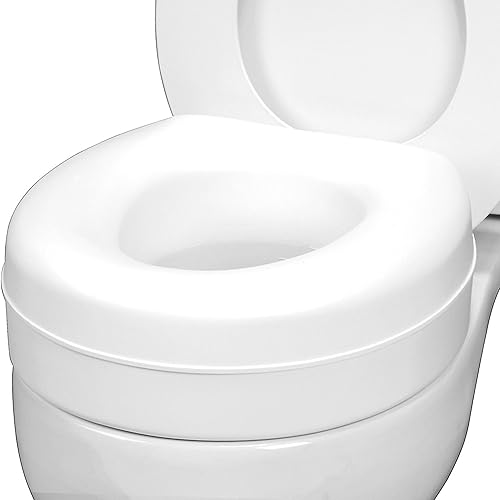
HealthSmart 5-inch Padded Raised Toilet Seat Riser
Raised toilet seat vs commode: what is the main difference?
A raised toilet seat changes the height of a toilet, while a commode creates a separate toileting station. That difference matters more than the names used for individual products.
A raised toilet seat works when the user can get to the bathroom and use the existing bowl. It can reduce the distance needed to sit down and stand up, but it does not solve a long walk to the bathroom or a difficult transfer from a bed.
A commode gives you another location for toileting. A bedside model can reduce nighttime walking, and a drop-arm design may help when the user transfers from a wheelchair or another seat.
Before choosing, watch the full movement from bed or wheelchair to the toilet. The best aid is the one that makes the whole route manageable, not only the final sitting position.
When should you choose a raised toilet seat?
Choose a raised toilet seat when toilet height is the main problem and the bathroom remains usable. It suits someone who can reach the bathroom but needs less bending at the knees, hips or back during a toilet transfer.
The HealthSmart 5-inch Padded Raised Toilet Seat Riser is the simplest option here. It adds 5 inches to a standard round toilet, needs no assembly and uses 5 slip-resistant pads.
It supports up to 300 lb and weighs 16 oz, so it is also easy to move when needed.
A basic riser works best when the user already has enough balance to sit and stand without armrests. If pushing down on handles would make the transfer safer, a frame-style raised seat may be more suitable.
The HealthSmart riser is made for a round toilet. Measure the bowl and check the fit before ordering, since a round-seat riser is not the same choice as a model designed for an elongated bowl.
For more options in this category, compare these best raised toilet seats for seniors. If comfort is the main concern, a best raised toilet seat cushion guide can help you compare padded designs.
When is a commode the better choice?
Choose a commode when bedside access, portable toileting or assisted transfers matter more than keeping the user at the bathroom toilet. A commode can reduce the distance between the bed and the toileting surface.
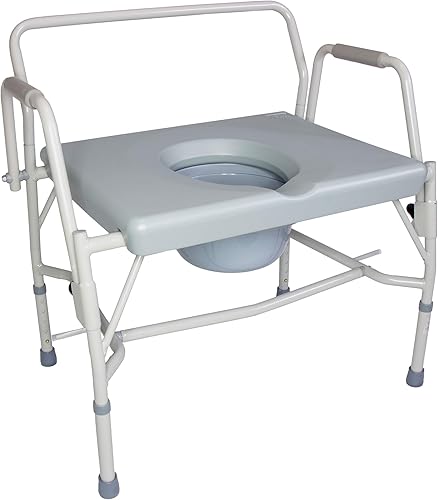
The DMI Drop Arm Portable Toilet Commode is the strongest fit for assisted transfers in this comparison. Its drop arms lower with a release button, and its seat is 23.25 inches wide by 18.5 inches deep.
The frame adjusts from 20 to 24 inches, supports up to 500 lb, and includes a removable 5-liter bucket with a lid and carry handle.
Drop arms can create a clearer path from a wheelchair or another adjacent surface. The caregiver still needs to follow a safe transfer method and ensure the commode is stable before the user sits.
A bedside commode also adds a cleanup routine. Empty the bucket carefully, use its lid for handling where appropriate, and rinse it with mild soap and water as directed for the DMI system.
The What Is a Commode Wheelchair? What to Keep in Mind guide explains how commode features relate to wheelchair use.
If liners make cleanup easier for your routine, compare the best absorbent commode liners.
Which option gives better hand support?
A raised toilet seat with handles is the better match when the user needs hand support at the toilet but does not need bedside toileting. Handles can provide a place to push from or hold while lowering, standing and turning.
The HOMLAND Raised Toilet Seat with Handles offers a height range of 18.1 to 23 inches and an adjustable width of 19.1 to 23.2 inches. It has a 16.5-inch padded seat, non-slip armrests and a stated capacity of 400 lb.
The adjustable frame lets you match the seat height to the user rather than accepting one fixed rise. Measure the bathroom around the toilet, because a wider frame needs space for the user to approach, turn and leave.
Handles are helpful only if the user can use them safely. Avoid pulling the frame sideways, and check that the feet stay planted before each transfer.
A frame can also be useful when the user needs a stable place to pause after standing. It does not provide the bedside access of a commode, so it cannot replace that function when the bathroom route is too difficult.
Our guide to the best raised toilet seats for men covers fit and support choices for male users. For more frame-based options, see the best raised toilet seat with frame guide.
Which product gives you the most flexibility?
Choose a 3-in-1 commode when your needs may change between bedside toileting, toilet elevation and hand support. A multi-use frame can reduce the need to buy separate bathroom aids, but it also takes more planning than a simple riser.
The Carex 3-in-1 Folding Bedside Commode and Raised Toilet Seat works as a bedside commode, raised toilet seat or toilet safety frame. Its height adjusts from 17 to 23.5 inches, it folds for storage, supports up to 300 lb, and includes a bucket, lid, splash guard and trial pack of commode liners.
The Carex design suits households where needs may vary during recovery or where storage space matters. Folding helps when the frame needs to be put away between uses.
Its 3-in-1 role also means you should decide which setup will be used most often. A bedside configuration requires bucket care, while an over-toilet configuration requires enough space and a suitable toilet arrangement.
The product measures 17 x 22 x 25 inches and weighs 8.5 lb. Measure doorways, bathroom clearances and the space beside the bed before bringing it into regular use.
Which option is easier to install?
A basic raised riser is usually the quickest setup, while a commode requires height adjustment and a safe placement decision. Setup time should not be the only factor, but it matters when the aid is needed quickly.
The HealthSmart riser needs no assembly. You lift the current seat and place the riser on the round toilet bowl, then check that the pads sit correctly before use.
A frame-style seat needs more care because the width, height and leg position affect the transfer. Adjust both sides evenly, keep the feet flat and make sure the user can approach without catching a foot on the frame.
A commode needs a stable floor location with enough room to sit and stand. For bedside use, keep the route clear and position the commode so the transfer does not require a twist or long reach.
Follow the instructions for each exact product. Never assume that an aid fits every toilet, bed height or wheelchair without measuring first.
How do cleanup and storage compare?
A raised toilet seat keeps waste in the toilet bowl, while a commode adds bucket emptying and cleaning. That makes the riser simpler for daily bathroom use, but a commode can be worth the extra care when access is the bigger problem.
Clean the raised seat with the method recommended for its material. The HealthSmart riser is plastic and is described as easy to clean, while the HOMLAND seat has a non-absorbent pad surface.
A commode bucket needs to be removed, emptied and rinsed after use. The DMI bucket has a secure snap-on lid and carry handle, while the Carex system includes a bucket, lid, splash guard and trial liners.
Store a folding commode where it can be reached without lifting it over obstacles. Keep the bathroom route clear, and avoid placing a stored frame where it blocks the toilet, sink or doorway.
For related shower safety planning, see the best shower chair Carex options. Toilet safety is only one part of making the full bathroom route easier to use.
How should you decide between height and bedside access?
Pick the aid that solves the first unsafe movement in the routine. If lowering onto the toilet is the problem, start with height; if reaching the bathroom or transferring sideways is the problem, start with commode access.
Choose the HealthSmart riser when you want a fixed 5-inch increase on a round toilet and do not need armrests. Choose the HOMLAND model when you need adjustable height, adjustable width and handles at the toilet.
Choose the DMI commode when drop arms, an extra-wide seat, adjustable legs or a 500 lb capacity match the user’s needs. Choose the Carex model when you want one folding frame that can serve 3 bathroom roles.
Do not choose by capacity alone. Confirm the user’s weight, required seat height, toilet shape, approach space and transfer method before ordering.
Raised toilet seat or commode: which should you choose?
Choose a raised toilet seat for a reachable bathroom and a commode for bedside access or more complex transfers. A basic riser is the simplest answer, a handled frame adds support, and a multi-use commode offers more locations and setups.
The HealthSmart is the clearest choice for simple toilet elevation. It adds height for a round toilet without adding bedside bucket care or a wider frame.
The DMI is the better match for drop-arm transfers and a higher stated capacity. Its drop arms can aid lateral movement, and its wider seat may suit users who need more room.
The HOMLAND adds adjustable hand support at the toilet. Adjustable height and width can help match the frame to the user, provided the bathroom has enough space around the bowl.
The Carex is the most flexible when your needs may change between bedside use, raised seating and a safety frame. That flexibility helps during recovery, but it also asks for more setup decisions.
Choosing by flexibility alone can create extra work. A user who only needs toilet height may do better with a simpler setup that is quick to place and easy to clean.
Choosing by capacity alone can also mislead. The stated limit should be checked against the user, but seat size, height, stability and transfer method matter just as much.
Measure the approach route before ordering any option. Check the bedside space, bathroom doorway, toilet shape and room for turning with a walker or wheelchair.
Also check the final sitting position. Feet should be supported, knees should not be forced into deep bending, and the user should be able to stand without twisting or reaching too far.
For a commode, plan the cleanup routine as part of the decision. Bucket emptying, lid use and rinsing need a safe place and a clear path to a sink.
For a raised seat, plan the cleaning routine for the seat surface and the fit on the bowl. A secure placement matters more than a quick placement each time.
Whichever option you choose, measure the space and plan the complete transfer before using it. The best aid is the one that makes the whole routine, from the bed or chair to standing again, feel steady and manageable.
Frequently asked questions
Is a raised toilet seat better than a commode?
A raised toilet seat is better when you can reach the bathroom safely and only need extra toilet height. A commode is better when walking to the bathroom is difficult, bedside access is needed or transfers require features such as drop arms.
Choose based on location and transfer needs first.
Can a commode be used over a toilet?
Some commodes can fit over a standard toilet, but you must check the exact design and height range before using one that way. The DMI commode has adjustable legs from 20 to 24 inches, while the Carex model is designed as both a bedside commode and raised toilet seat.
What is easier to clean, a raised toilet seat or commode?
A raised toilet seat is usually simpler to clean because it stays over the toilet bowl. A bedside commode adds a bucket and, depending on the model, a lid or splash guard, so emptying and washing the bucket become part of regular care.
Do raised toilet seats have handles?
Some raised toilet seats include handles or a surrounding safety frame, while basic risers do not. The HOMLAND model has handles, and the Carex 3-in-1 can work as a toilet safety frame.
Check the available bathroom space before choosing a wider frame.
How high should a raised toilet seat or commode be?
Set the seat so the user can sit with feet supported and stand without excessive knee or hip bending. Raised toilet seats may add a fixed amount, such as 5 inches, while commodes can offer adjustable ranges.
Measure the user and bathroom before selecting the height.