What Is a Power Assist Wheelchair? The Essentials
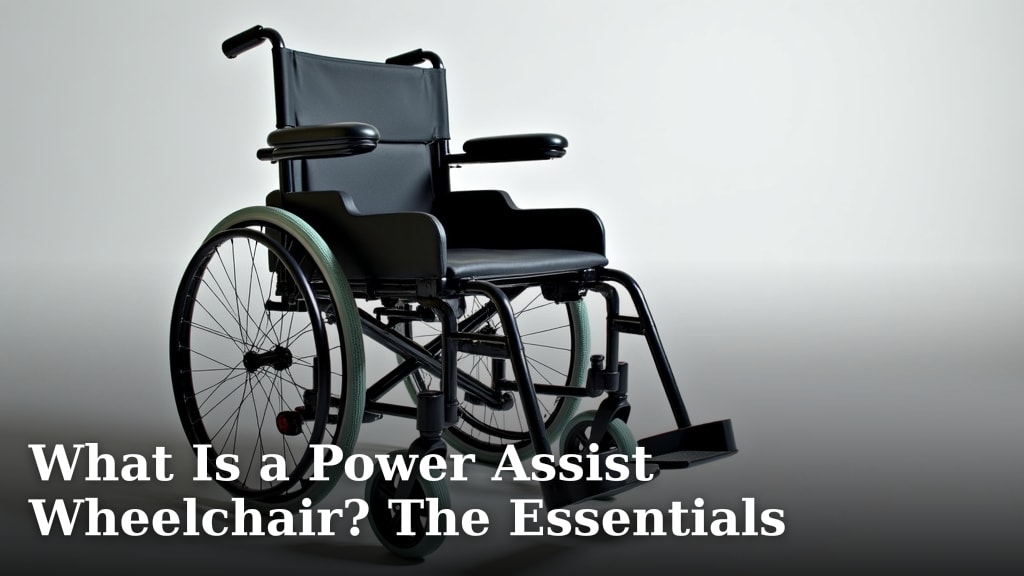
A power assist wheelchair is a manual wheelchair that uses electric motors to help you push the wheels. It is not a fully motorized power chair. Instead, it gives a boost to your own arm power, making it easier to move.
This technology helps conserve your energy for longer outings and tackle tough terrain like hills or thick carpet. It bridges the gap between a standard manual chair and a heavy power chair. Many users find it offers greater independence with less fatigue.
- A power assist device adds motorized help to a regular manual wheelchair.
- It is activated when you push the handrims, providing a boost.
- Key benefits include reduced strain and more energy for daily activities.
- It is a lighter, more flexible alternative to a traditional power wheelchair.
- Common uses are for travel, hills, and preserving shoulder health.
Below, we’ll walk through exactly how this technology works, the different types available, and how to decide if it’s the right choice for your mobility needs.
How Power Assist Technology Actually Works
Think of it as a **turbo button for your arms**. A power assist system doesn’t replace your effort; it senses when you start to push and gives you a proportional boost. You stay in control, and the chair feels lighter with every push.
Most systems use **sensors in the handrims**. When you apply pressure, the onboard computer tells the motor to activate. The more force you use, the more power it gives you. It’s designed to feel natural, like pushing a much lighter chair.
The Core Components of a Power Assist System
Every kit has a few key parts working together. They are typically compact and installed on your existing manual wheelchair frame.
- Motors: Small, powerful electric motors located at the wheels. They provide the push.
- Battery: A rechargeable lithium-ion battery. It usually sits under the seat and provides enough power for several miles.
- Control Unit: The “brain” that reads your handrim input and manages power delivery.
- Handrim Sensors: These detect the pressure and speed of your push.
Why It Feels So Different From a Power Chair
A traditional power wheelchair is fully motorized; you use a joystick to steer. You don’t need to push at all. A power assist chair is still a **manual wheelchair at heart**. The motors are there to help *you* move the wheels, not to move them for you.
This difference is huge. It means you can still fold the chair (usually), pop off the wheels for a car trunk, and get the benefits of active propulsion. You’re still driving, just with a helpful co-pilot.
Exploring the Main Types of Power Assist
Not all power assist systems are the same. They generally fall into two categories based on where the motors are located. Your best choice depends on your chair type and lifestyle.
Wheel-Based Systems
This is the most common and flexible type. The motor and drive mechanism are built directly into a replacement wheel. You swap out your standard wheels for these smart ones.
This setup is great for **portability**. You can easily remove the power wheels for travel or if you want a lighter chair for a while. Many models are compatible with a wide range of manual chairs.
Frame-Based Systems
Here, the motors and battery are mounted onto the wheelchair’s frame, often near the rear axle. The handrims remain the control point. This can sometimes offer more power or a smoother ride for specific chair types.
This style often requires a chair designed to be compatible. It can be a heavier, more integrated solution. It’s excellent for users who need **maximum assist on challenging terrain** daily.
Quick Comparison
| Feature | Wheel-Based System | Frame-Based System |
|---|---|---|
| Primary Advantage | Portability & Flexibility | Potential for Greater Power |
| Installation | Usually replaces rear wheels | Integrated onto chair frame |
| Portability | Very high; easy to remove | Moderate; may add bulk |
| Best For | Travel, variable needs, most users | Specific chair models, heavy daily use |

Real-World Benefits and Who They Help Most
The advantages go beyond just “easier pushing.” This technology can genuinely change your daily experience. We found research from the National Institute on Disability, Independent Living, and Rehabilitation Research highlights how assistive tech can **reduce physical strain** and expand activity participation.
Conserving Energy for What Matters
Ever stopped an outing early because your arms were tired? Power assist directly fights that **upper body fatigue**. You save your strength for opening doors, carrying groceries, or playing with grandkids. It helps make longer days possible.
Tackling Hills and Rough Terrain
Inclines, gravel paths, or thick carpet can be exhausting. The boost from a power assist system helps you maintain momentum without exhausting effort. It turns a major obstacle into just another part of the path.
Protecting Your Shoulders for the Long Haul
Prolonged manual wheelchair use can lead to overuse injuries in the shoulders. Studies cited by the Arthritis Foundation note that repetitive pushing motion is a common cause of shoulder pain in long-term users. Power assist **reduces the load** on your shoulder joints with every push.
Key Considerations Before You Buy
This isn’t a one-size-fits-all purchase. A few practical questions will help you decide if it’s the right fit for you and your chair.
Chair Compatibility and Weight
Your current manual wheelchair must be compatible. Most systems work with standard folding chairs. Also, consider the added weight of the motors and battery. It will make the chair heavier than a standard manual chair, though still lighter than most power chairs.
Your Typical Outing and Terrain
Do you mostly roll on flat, smooth floors? Or do you regularly face hills, grass, or long distances? Be honest about where you’ll use it most. A system’s **battery range** (often 8-15 miles) and power level should match your typical day.
Budget and Insurance
Power assist systems are a significant investment. Prices vary widely. Check with your insurance or Medicare, as they sometimes cover these devices as durable medical equipment with a prescription. Having a medical need documented helps.
Your Power Assist Readiness Checklist
Use this simple list to see if you might be a good candidate for power assist technology.
- You have good upper body and arm strength to initiate pushes.
- You find yourself limiting outings due to arm fatigue or shoulder pain.
- You regularly travel over distances longer than a few hundred feet.
- You encounter inclines, hills, or uneven surfaces in your daily route.
- You want to maintain the portability of a manual chair.
- You have a prescription or letter of medical necessity from a doctor.
Making the right choice is about matching the technology to your life. Understanding these essentials puts you in the driver’s seat.