Power Wheelchair vs Manual Wheelchair: What It Involves
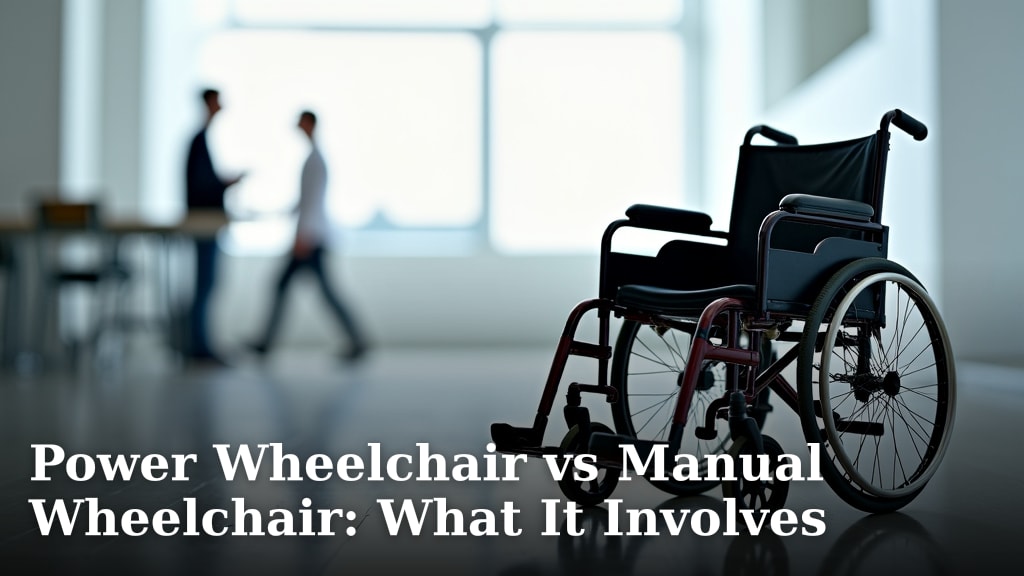
When choosing between a power wheelchair and a manual wheelchair, the key difference lies in how you move. A power wheelchair uses a battery and motor for propulsion, offering independence with less physical effort. A manual wheelchair relies on your upper body strength to push the wheels, providing a good workout but requiring more energy. A power assist wheelchair offers a middle ground, blending manual effort with electric help.
Understanding these distinctions is vital for selecting the best mobility aid for your needs. Each type has unique benefits regarding mobility, maintenance, and suitability for different environments. We’ve researched the main points to help you decide.
- Power wheelchairs use motors and batteries for movement.
- Manual wheelchairs require user strength for propulsion.
- Power chairs offer easier mobility with less physical strain.
- Manual chairs provide exercise but demand more energy.
- Your lifestyle and physical abilities are key factors.
Let’s break down what each type of wheelchair involves so you can make the best choice for your situation.
Understanding Your Mobility Options: Power vs. Manual Wheelchairs
Choosing the right wheelchair is a big decision for your independence. You want to know what each option truly involves. We’ve researched the differences between power and manual wheelchairs to help you decide. The main thing to consider is how you’ll be moving around.
Manual Wheelchairs: How They Work and Who They’re For
Manual wheelchairs are the classic choice for many. You might picture them as simple and straightforward. But there’s more to them than meets the eye. They rely on your own physical effort to get around.
The Mechanics of Manual Mobility
A manual wheelchair has a seat, frame, and wheels. The large rear wheels have hand rims around them. You push these rims with your hands to move forward. The smaller front wheels, called casters, help you steer. It’s a design that’s been around for a long time. It’s a direct connection between your effort and your movement.
Who Benefits Most from a Manual Wheelchair?
Manual wheelchairs are often a great fit for people with good upper body strength. This includes your arms, shoulders, and back. If you can push yourself for extended periods without too much strain, a manual chair can work well. Many younger, more active individuals choose this option. It can also be a good choice if your mobility needs are less constant.
We found that manual wheelchairs are typically lighter. This makes them easier to lift into a car. They don’t need charging. This means you’re not limited by battery life. If you have a caregiver, they can also push you easily. It’s a reliable system for many.
When a Manual Wheelchair Might Not Be Ideal
However, if you have limited upper body strength, a manual wheelchair can be challenging. Pushing yourself for long distances or up inclines can become very tiring. It can also put a lot of stress on your joints over time. Many experts suggest consulting a physical therapist to assess your strength before committing to a manual chair (CDC).
If you experience fatigue quickly or have conditions affecting your strength, like arthritis or muscular dystrophy, you might find a manual wheelchair too demanding. It’s important to be honest about your physical capabilities. You don’t want to choose something that causes pain or makes daily tasks harder.
Power Wheelchairs: What Makes Them Different
Power wheelchairs, sometimes called electric wheelchairs, are a different breed. They use a battery and motors to do the hard work for you. This offers a lot of independence for people who might struggle with manual propulsion.
The Technology Behind Power Wheelchairs
At its core, a power wheelchair has a motor and a rechargeable battery. You control the chair’s direction and speed using a joystick. This joystick is usually mounted on the armrest. It’s similar to how some video game controllers work. You simply move the joystick in the direction you want to go. The motors then propel the chair.
These chairs often have a more robust frame. They are designed to be sturdy and comfortable for all-day use. Many come with advanced seating systems. These can offer better support and pressure relief. This is important for long-term comfort and health. We found that battery technology has improved greatly. This means longer travel times between charges.
Who Benefits Most from a Power Wheelchair?
Power wheelchairs are ideal for individuals who cannot use a manual wheelchair effectively. This includes people with significant weakness in their arms or legs. It’s also a good choice for those who experience fatigue easily. If you need to travel longer distances daily, a power chair offers a reliable way to stay mobile.
Many individuals with conditions like advanced multiple sclerosis, spinal cord injuries, or severe arthritis find power wheelchairs life-changing. They restore a sense of autonomy. You can go places and do things without needing constant assistance. This can greatly improve your quality of life. Many users report feeling more freedom and less dependence on others (NIH).
Considerations for Power Wheelchair Users
While power wheelchairs offer incredible benefits, there are things to keep in mind. They are heavier and bulkier than manual chairs. Transporting them can be more challenging. You often need a specialized ramp or lift system in your vehicle. Regular charging of the batteries is essential. You need to plan your outings around charging times or ensure you have access to a power outlet.
Maintenance can also be a bit more involved. You have motors and batteries to consider. However, many models are designed for durability. We found that regular professional servicing is recommended. This helps ensure the motors and batteries stay in good working order. This is key to keeping your chair running smoothly.

Key Differences at a Glance
To help you visualize the choice, let’s look at some direct comparisons. These are the core things that set power and manual wheelchairs apart.
| Feature | Manual Wheelchair | Power Wheelchair |
|---|---|---|
| Propulsion | User’s upper body strength | Electric motor and battery |
| Effort Required | High | Low (joystick control) |
| Weight | Lighter, easier to transport | Heavier, may require lift/ramp for vehicle |
| Maintenance | Simpler, tire pressure, cleaning | More complex, battery charging, motor checks |
| Cost | Generally lower initial cost | Generally higher initial cost |
| Independence | Dependent on user strength and endurance | Less dependent on physical strength |
Making the Right Choice for Your Lifestyle
Your daily routine and personal preferences are huge factors. Think about where you spend most of your time. Are you mostly indoors or outdoors? Do you travel a lot? Do you have help available if you need it?
Assessing Your Environment and Needs
If your home and community are relatively flat and easy to navigate, a manual chair might be sufficient. If you encounter a lot of hills, rough terrain, or need to cover long distances at a mall or large facility, a power chair could offer more freedom. We found that assessing your typical environment is a critical first step.
Consider your goals. Do you want a workout as you move? A manual chair provides that. Do you want to conserve energy and focus on your destination? A power chair is built for that. It’s all about what helps you live your life with the most ease and joy.
A Quick Checklist to Guide Your Decision
To wrap up, ask yourself these questions. Jot down your answers to see where you land.
- Can you comfortably push a manual wheelchair for 30 minutes?
- Do you have good arm, shoulder, and back strength?
- Do you need to travel long distances daily?
- Is vehicle transport a major concern?
- What is your budget for the initial purchase and potential maintenance?
- How important is minimal physical effort for your mobility?
Answering these can bring clarity. It helps you narrow down which type of wheelchair will best support your day-to-day life and long-term well-being.
Conclusion
Choosing between a power and manual wheelchair comes down to your personal needs and lifestyle. A manual chair offers a physical connection to your movement, ideal if you have good upper body strength and prefer a lighter option. A power chair provides effortless mobility for longer distances or challenging terrains, giving you greater independence with less physical strain. We’ve highlighted the key differences in how they work, who they suit best, and important considerations like maintenance and transport. Carefully assess your environment, daily activities, and physical capabilities. This will help you make an informed decision that supports your comfort and freedom.
Frequently Asked Questions
How often do I need to charge a power wheelchair?
Charging frequency depends on usage and the specific battery. Most power wheelchairs can last a full day on a single charge with moderate use. It’s a good practice to charge it nightly to ensure it’s ready for the next day.
Can a manual wheelchair be pushed uphill easily?
Pushing a manual wheelchair uphill requires significant upper body strength and endurance. For frequent inclines, a power wheelchair is generally a much more practical and less strenuous option.
What kind of maintenance do manual wheelchairs require?
Manual wheelchairs require simpler maintenance. You should regularly check tire pressure, keep the frame clean, and ensure wheels spin freely. For more complex issues, consult a professional.
Are power wheelchairs difficult to transport in a car?
Yes, power wheelchairs are much heavier and bulkier than manual ones. Transporting them often requires a vehicle with a lift or ramp system, and sometimes disassembly of certain parts.
Is it better to consult a doctor before buying a wheelchair?
It’s highly recommended to consult with your doctor or a physical therapist. They can assess your physical condition and help determine which type of wheelchair best meets your mobility needs and safety requirements.