Different Types of Electric Wheelchairs: A Short Guide
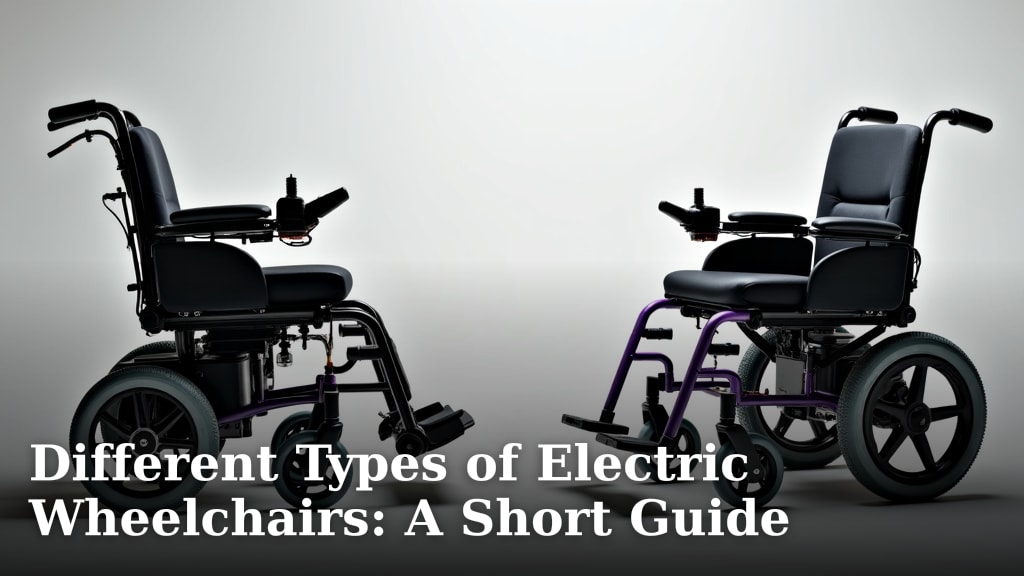
Choosing the right electric wheelchair depends on your specific needs. Generally, electric wheelchairs fall into categories like front-wheel drive, mid-wheel drive, and rear-wheel drive, each offering different benefits for maneuverability and stability. Understanding these types can help you find the perfect fit for your lifestyle.
When looking at different types of electric wheelchairs, consider where you’ll be using it most. Indoor spaces often benefit from compact designs and tighter turning circles. Outdoor adventures might require more power and robust suspension systems. We found that the drive wheel’s position is key to how the chair handles.
- Front-wheel drive: Good for climbing obstacles.
- Mid-wheel drive: Offers the tightest turning radius.
- Rear-wheel drive: Often provides the best straight-line stability.
- Consider your daily environment and activity level.
- Check weight capacity and battery range for your lifestyle.
Let’s walk through the main types of electric wheelchairs to help you make an informed decision. For a different approach, learn about what is a power assist wheelchair.
Understanding the Main Types of Electric Wheelchairs
When you’re looking for an electric wheelchair, you’ll quickly notice they aren’t all the same. The biggest difference comes down to how they are designed to move. This design is centered around the location of the drive wheels. We found that the drive wheel position is the key factor that determines how a wheelchair turns, handles different terrains, and feels to the user.
Front-Wheel Drive (FWD) Electric Wheelchairs
Front-wheel drive electric wheelchairs have their drive wheels at the front. This design is often favored for its ability to easily climb over obstacles. Think of small curbs, rugs, or thresholds. The front wheels pull the chair forward and up. This can make navigating uneven surfaces feel less bumpy.
FWD chairs tend to have a larger turning radius compared to mid-wheel drive models. This means they need more space to turn around. However, they can offer a smoother ride over rough patches. We found that many users appreciate the forward stability that FWD provides.
Pros of Front-Wheel Drive
- Good at climbing over obstacles like small curbs or thick carpets.
- Can offer a stable and smooth ride on varied surfaces.
- The front drive can help pull the chair forward effectively.
Cons of Front-Wheel Drive
- Generally have a larger turning radius, needing more room to maneuver.
- May feel less intuitive for some users when steering.
- Can sometimes feel less stable when going downhill.
Mid-Wheel Drive (MWD) Electric Wheelchairs
Mid-wheel drive electric wheelchairs are perhaps the most popular choice for many. As the name suggests, the drive wheels are located in the center, directly beneath the seat. This placement gives MWD chairs a unique advantage: an incredibly tight turning radius.
Imagine trying to turn your chair around in a small room or a narrow hallway. With MWD, it’s much easier. The chair pivots around its center point. Many experts say this makes them ideal for indoor use where space is often limited (National Institute on Aging).
The seating position feels natural for many users. The front and rear casters (smaller wheels) act like stabilizers. This can provide a good balance of maneuverability and stability. We found that the feeling of the chair moving is very intuitive, almost like walking.
Pros of Mid-Wheel Drive
- The tightest turning radius, making them very agile in confined spaces.
- Feels natural to steer, as it pivots around the user.
- Offers good stability due to the central drive wheel placement.
- Often provides a smooth ride.
Cons of Mid-Wheel Drive
- Can struggle more with larger obstacles compared to FWD.
- May not handle very rough terrain as well as other types.
- The turning point is directly under you, which can take a little getting used to.
Rear-Wheel Drive (RWD) Electric Wheelchairs
Rear-wheel drive electric wheelchairs have their drive wheels at the back. This design is known for offering excellent straight-line stability and traction. The rear wheels push the chair forward. This can give a very confident feeling when traveling in a straight line.
RWD chairs often have a good turning radius, though typically not as tight as MWD. They can handle outdoor terrain and inclines well. Many users find the steering feels similar to driving a car, with the rear wheels leading the way. Research suggests RWD chairs are often favored for their performance outdoors (CDC).
Some users may notice a slight “fishtailing” effect when turning sharply. This is where the rear of the chair might swing out a bit. However, for many, this is a minor point compared to the stability and performance they offer.
Pros of Rear-Wheel Drive
- Excellent straight-line stability and good traction.
- Often performs well on inclines and outdoor surfaces.
- Can feel very intuitive to steer, much like a car.
- Typically has good forward momentum.
Cons of Rear-Wheel Drive
- Turning radius may be larger than MWD chairs.
- Can experience some “fishtailing” during sharp turns.
- May not feel as agile in very tight indoor spaces.
Considering Other Important Factors
While the drive wheel position is a major factor, there are other elements you’ll want to think about. Your daily activities and the places you visit most will influence your choice. Let’s break down a few more considerations we found to be important.
Indoor vs. Outdoor Use
Where do you plan to spend most of your time? If your life is primarily indoors, a chair with a compact size and a tight turning radius, like a mid-wheel drive, might be your best bet. This will help you navigate furniture and doorways with ease. Many experts recommend MWD for indoor navigation.
If you spend a lot of time outdoors, you might need something more robust. Look for chairs with larger wheels, better suspension, and more powerful motors. Front-wheel or rear-wheel drive chairs can often handle outdoor challenges better than MWD. They might offer a smoother ride over grass, gravel, or uneven paths.
Maneuverability and Turning Radius
This is closely tied to the drive wheel type. Maneuverability refers to how easily a chair can move around. The turning radius is the diameter of the circle the chair makes when it turns in place. A smaller turning radius means you can turn in tighter spaces.
For example, if you live in a smaller apartment or frequently visit crowded places, a chair with a tight turning radius is a must-have. Mid-wheel drive chairs excel here. If you mainly travel in open areas, a larger turning radius might not be a concern.
Speed and Range
How fast do you need to go? Most electric wheelchairs have a top speed that’s safe for pedestrian areas. We found that speeds typically range from 3 to 5 miles per hour. Consider if you need to keep up with fast walkers or if a slower pace is fine.
Battery range is another critical piece of information. This tells you how far you can travel on a single charge. If you take long trips or are often away from charging points, you’ll want a chair with a longer battery range. Always check the manufacturer’s specifications for realistic estimates.
Weight Capacity and Seat Size
It’s essential that the wheelchair can safely support your weight. Every model has a maximum weight capacity. Ensure the chair you choose is well above your current weight for safety and optimal performance. Many sources recommend leaving a buffer of at least 50 lbs (National Highway Traffic Safety Administration).
Seat size is also important for comfort. You want a seat that is wide and deep enough for you to sit comfortably for extended periods. Your feet should be able to rest on the footrest without your knees being too cramped or too far away. Proper seating can prevent discomfort and pressure sores.
Suspension and Ride Comfort
If you’ll be using your wheelchair on uneven surfaces or for long distances, suspension plays a big role. Some chairs have advanced suspension systems that absorb shocks. This can lead to a much smoother and more comfortable ride.
Think about how bumpy your typical routes are. If you often encounter rough patches, look for chairs that explicitly mention good suspension. This can make a huge difference in your overall experience and reduce fatigue.
Here’s a quick checklist to help you organize your thoughts:
- Where will you use it most: indoors or outdoors?
- How much space do you have for turning?
- Do you need to navigate tight spaces frequently?
- What is your typical daily travel distance?
- What is the maximum weight capacity you require?
- How important is ride comfort on uneven surfaces?

Conclusion
You’ve learned that the drive wheel position is the most important factor when choosing an electric wheelchair. Front-wheel drive chairs excel at climbing obstacles. Mid-wheel drive chairs offer the best maneuverability in tight spaces. Rear-wheel drive chairs provide excellent stability on straight paths. Consider your daily environment, activity level, and personal comfort. We found that thinking through where you’ll use the chair most often will guide your decision. Take your time, and don’t hesitate to test drive different types if possible to find the perfect fit for your needs.
Frequently Asked Questions
What is the difference between FWD, MWD, and RWD electric wheelchairs?
The main difference lies in where the drive wheels are located. Front-wheel drive (FWD) chairs have drive wheels at the front, good for climbing. Mid-wheel drive (MWD) chairs have drive wheels in the center, offering the tightest turns. Rear-wheel drive (RWD) chairs have drive wheels at the back, providing great straight-line stability.
Which type of electric wheelchair is best for indoor use?
For indoor use, a mid-wheel drive (MWD) electric wheelchair is often recommended. Its central drive wheels allow for a very tight turning radius, making it easy to navigate narrow hallways, doorways, and around furniture. MWD chairs pivot around their center, which feels intuitive in confined spaces.
Are electric wheelchairs difficult to steer?
Steering an electric wheelchair is generally quite intuitive, especially with practice. Mid-wheel drive models often feel natural because they pivot around you, much like walking. Rear-wheel drive chairs can feel similar to driving a car. Many users find they adapt to the steering quickly.
How do I know if an electric wheelchair has enough battery range for my needs?
To determine if a chair has enough battery range, consider your typical daily travel distance. Check the manufacturer’s specifications for the chair’s estimated range on a full charge. If you travel long distances or are often away from a charging point, look for models that explicitly offer a longer battery range.
What is a turning radius and why is it important?
The turning radius is the diameter of the circle a wheelchair makes when it turns in place. A smaller turning radius means the chair can turn in tighter spaces. This is very important if you need to maneuver in confined areas like small rooms, elevators, or crowded public spaces.