9 Best Drive Manual Wheelchairs (November 2026)
The best drive manual wheelchairs include the Drive Medical Blue Streak Foldable Wheelchair for daily comfort and transfers, the Medline Lightweight Foldable Transport Wheelchair with Handbrakes for caregiver-assisted travel, and the Drive Medical Lightweight Expedition Folding Transport Wheelchair for the lightest lifting.
On this page (10 sections)
- The best Drive manual wheelchair models compared
- The best Drive manual wheelchairs for different needs
- How we compared these manual wheelchairs
- How do you choose between self-propelled and transport wheels?
- What seat width fits you best?
- Which frame material matters for lifting?
- How do brakes and footrests affect daily use?
- What should you check for folding and storage?
- Manual or power: which drive should you choose?
- Verdict: which Drive manual wheelchair should you buy?
The best Drive manual wheelchair for most buyers is the Drive Medical Blue Streak Foldable Wheelchair, because its 18 in seat, padded desk arms and swing-away elevating leg rests cover daily comfort and transfers. For a lighter Drive chair, choose the Expedition transport model.
For a wider seat, choose the Medline 20 in model.
Our score weighs specs, features and buyer feedback. We compared frames, seat widths, wheel sizes, brakes, folded size and capacity across these models.
If you are new to manual chairs, start with our Types of Manual Wheelchairs: A Helpful Guide. It explains transport and self-propelled designs in plain terms.
The wrong type can limit independence or add strain for a caregiver. A transport chair uses push handles and small rear wheels.
A self-propelled chair uses handrims and large rear wheels.
Our picks at a glance
-
1
 Best for daily comfort and transfers
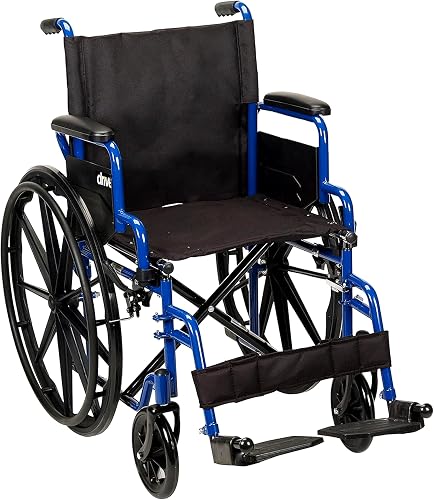
Drive Medical Blue Streak Foldable Wheelchair
9.7/10 our score
See it on Amazon -
2
 Best for caregiver-assisted travel
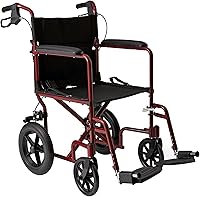
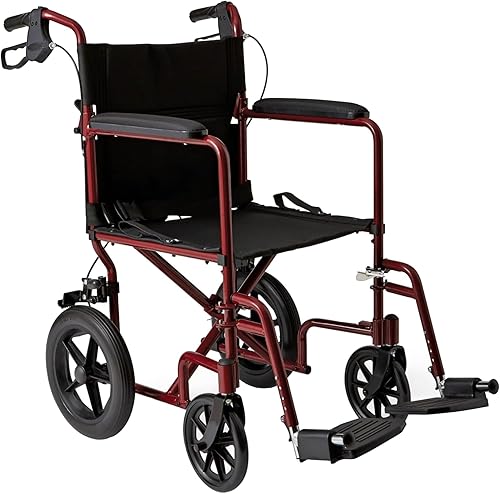
Medline Lightweight Foldable Transport Wheelchair with Handbrakes
9.6/10 our score
See it on Amazon -
3
 Best for the lightest lifting
Drive Medical Lightweight Expedition Folding Transport Wheelchair
9.5/10 our score
See it on Amazon
- 4
 Check it
Drive Medical Blue Streak Lightweight Wheelchair
Best for self-propulsion at home - 5
 Check it
Medline Comfortable Folding Wheelchair with Swing-Back Desk-Length
Best for a wider 20 in seat - 6
 Check it
Drive Medical Cruiser III Lightweight Wheelchair
Best for adjustability - 7
 Check it
Invacare Wheelchairs for Adults
Best for easy-clean vinyl seating - 8
 Check it
Karman 24 pounds LT-980 Ultra Lightweight Wheelchair
Best for ultra-light self-propulsion - 9
 Check it
Medorol Wheelchairs for Adults
Best for extra-wide bariatric support
The best Drive manual wheelchair models compared
The Drive Blue Streak leads for daily use because it pairs comfort features with a folding steel frame. Transport models win on weight, while wider models win on fit.
Seat depth also changes fit, even when seat width looks the same. Most 18 in models here pair that width with about 16 in of depth.
That depth leaves room for the thigh while keeping pressure off the back of the knee. A deeper seat can feel more supportive for taller users, but it can also press on the legs if the footrest height is wrong.
Frame material creates the clearest split in this group. Aluminum transport models weigh from 19 lb to 26 lb and are easy to lift.
Steel self-propelled models weigh from 36 lb to 44 lb and feel more solid under daily load. The right choice depends on who lifts the chair and how often that lift happens.
Transport chairs versus self-propelled chairs
Transport chairs use 12 in rear wheels and push handles. They are light, but the rider does not propel the chair.
Self-propelled chairs use 22 in to 24 in rear wheels with handrims. They give more independence but weigh more and need more room to turn.
Turning radius follows wheel size and frame length. Large rear wheels need a wider arc at the back of the chair.
Small rear wheels turn in tighter indoor spaces and fit more easily into lifts and short corridors. That difference can matter more than a small gap in listed weight.
Brake placement follows the same split. Transport brakes are made for a caregiver standing behind the chair.
Self-propelled brakes are made for a rider seated in the chair. Knowing who will use the brakes each day helps you rule out half of this list quickly.
The best Drive manual wheelchairs for different needs
Each write-up below explains who the chair suits, what its specs mean in daily use and where it trades off against the others.
Drive Medical Blue Streak Foldable Wheelchair: Best for daily comfort and transfers
- 18 in seat width
- Padded desk arms
- Swing-away elevating leg rests
- Push-to-lock brakes
- 300 lb capacity
A folding steel-frame chair with elevating leg rests, padded desk arms and an 18 in seat for long daily use at home.
Pros
- Elevating leg rests with calf pads
- Padded flip-back desk arms
- Folds for storage and transport
Cons
- Heavier than transport models
- Steel frame is less light to lift
This is the top pick for long daily use rather than short transport trips. The 18 in seat fits most adults, and padded desk arms let you pull up to a table or counter.
Swing-away elevating leg rests help with transfers and let you raise your legs during extended sitting. The alloy steel frame weighs 41.3 lb and supports up to 300 lb, so it feels sturdy but is harder to lift into a car than aluminum transport models.
Push-to-lock brakes and low-maintenance tires keep daily care simple. The 19.5 in seat height gives standard reach to tables, while the 16 in depth supports the thigh without crowding the knee.
Choose it for home use, appointments and everyday independence. Skip it if you need the lightest chair for frequent lifting.
For leg support options, see our best manual wheelchair with elevating leg rest guide.
Medline Lightweight Foldable Transport Wheelchair with Handbrakes: Best for caregiver-assisted travel
- 26 lb lightweight frame
- 12 in rear wheels
- Hand brakes and rear-wheel locks
- 19 in wide seat
- 300 lb capacity
A light aluminum transport chair with 12 in rear wheels, hand brakes and a swing-away footrest for easy entry.
Pros
- Light aluminum frame
- Large rear wheels for pushing
- No assembly required
Cons
- Transport design is not self-propelled
- Smaller front wheels feel less stable on rough ground
This Medline transport chair is a strong non-Drive alternative for caregiver-assisted travel. At 26 lb with a sturdy aluminum frame, it is much easier to lift than steel self-propelled chairs.
The 19 in wide seat gives extra room for clothing and padding.
Large 12 in rear wheels help the chair roll over bumps and ramps. Easy-to-squeeze hand brakes and rear-wheel locks help with safe transfers.
The swing-away, detachable footrest makes entry and exit simpler.
The 16 in seat depth and full-length cushioned armrests add comfort for longer outings. Easy-clean nylon upholstery helps after travel, and the chair folds with the footrest locked in place for trunk storage.
No assembly is needed.
Its main trade-off is propulsion. The rider does not push this chair, so it suits medical visits, airports and short outings.
For senior-focused picks, compare our best wheelchairs for seniors list.
Drive Medical Lightweight Expedition Folding Transport Wheelchair: Best for the lightest lifting
- 19 lb transport weight
- 12 in rear wheels
- Loop lock brakes
- Curb assist
- 300 lb capacity
The lightest Drive model here, built as a caregiver-pushed transport chair with padded armrests and fold-down footrests.
Pros
- Very light to lift and store
- Curb assist helps over small steps
- Loop locks work from push handles
Cons
- Transport chair, not for self-propulsion
- Light frame suits short outings best
The Drive Expedition is the lightest Drive model here at 19 lb, which matters if a caregiver lifts the chair often. It still supports up to 300 lb, so the light weight does not limit use for short trips.
Padded armrests and fold-down footrests add comfort for outings. The 12 in rear wheels help it glide over bumps, and curb assist near the wheels helps lift the front over small obstacles.
Loop lock hand controls let a companion secure the rear wheels without bending.
The aluminum frame folds quickly with a rear lever, so storage in a small car or closet takes less effort than with a steel chair. That compact fold helps families who travel each week.
Lifting does not become a barrier to errands and appointments.
Choose it for travel, appointments and daily assistance. Skip it if you want to propel yourself.
Transport chairs need a caregiver, and that is the core trade-off against self-propelled models.
Drive Medical Blue Streak Lightweight Wheelchair: Best for self-propulsion at home
- 18 in seat width
- Flip-back desk arms
- Swing-away footrests
- Push-to-lock brakes
- 300 lb capacity
A self-propelled Blue Streak with desk arms and swing-away footrests in a folding steel frame.
Pros
- Desk arms for tables and counters
- Solid wheels need little upkeep
- Folds to 12.5 in wide
Cons
- Same weight as the elevating-leg-rest version
- No elevating leg rests on this model
This Blue Streak model suits buyers who want self-propulsion with the basic Drive frame of the top pick. The 18 in seat and flip-back desk arms support table access and transfers.
Swing-away footrests clear the way when you move to a bed, toilet or car seat.
The steel frame weighs 41.3 lb and supports 300 lb. Solid wheels need little upkeep and work well on indoor floors and level outdoor ground.
Push-to-lock brakes hold the chair still during transfers.
The single axle frame and smooth rolling wheels help in tight rooms and at home. The chair folds to 12.5 in wide, which helps with storage in a closet or beside a wall.
Padded seating and ergonomic push handles support longer days.
The trade-off against the top pick is comfort. This model has swing-away footrests, not elevating leg rests.
Choose this version for simpler leg support.
Medline Comfortable Folding Wheelchair with Swing-Back Desk-Length: Best for a wider 20 in seat
- 20 in wide seat
- Swing-back desk-length arms
- Swing-away footrests
- Dual axle
- 300 lb capacity
A folding Medline chair with a 20 in seat, swing-back arms and swing-away footrests for easier transfers.
Pros
- Wider seat than most picks
- Swing-back arms clear tables
- Folds for trunk or closet storage
Cons
- Wider frame needs more doorway room
- No elevating leg rests
This Medline chair is the pick if an 18 in seat feels tight. Its 20 in wide seat gives more room at the hips and thighs, while the 16 in depth supports the legs without pressing behind the knees.
Swing-back, desk-length arms make it easier to sit at a table or transfer sideways. If you need arms that detach, compare manual wheelchairs with removable arms.
Swing-away footrests help you step in and out without tangling your feet.
The hammertone frame weighs 38 lb and supports 300 lb, which makes it lighter than the Blue Streak models while keeping a wide seat. The dual axle allows a change in seat height, and smooth flat-free tires reduce inflation checks on paths, ramps and indoor floors.
It folds for trunk or closet storage. The trade-off is width, as a wider chair needs wider doorways and more turning space than the 18 in Drive models.
Drive Medical Cruiser III Lightweight Wheelchair: Best for adjustability
- 18 in seat
- Folds to 12 in wide
- Adjustable casters and seat height
- Elevating leg supports
- 300 lb capacity
A Drive chair with tool-free height and leg support adjustments, detachable flip-back arms and Mag-style wheels.
Pros
- Many fit adjustments
- Compact folded width
- Elevating leg supports included
Cons
- More adjustments to set up
- Carbon steel frame is heavier than aluminum
The Cruiser III is an adjustable Drive manual wheelchair for buyers who need a custom fit. Its seat extends 2 extra inches, and 8 in casters adjust to three heights.
A dual axle lets you change seat height to hemi-level for easier foot placement.
Detachable flip-back arms lift for transfers to a bed, toilet or car. Elevating leg supports can be raised or lowered.
The carbon steel frame weighs 36 lb, folds to 12 in wide and supports 300 lb.
Precision-sealed wheel bearings help the chair roll smoothly over time, while Mag-style wheels and 8 in front casters handle most indoor and outdoor surfaces. The padded nylon seat is easy to clean for daily use at home.
Mag-style wheels fit through most doorways. The trade-off is setup time.
You get more fit options, but you also need to check each adjustment before daily use. Measure your doorway first.
Invacare Wheelchairs for Adults: Best for easy-clean vinyl seating
- 18 in seat
- Removable padded L-shaped desk arms
- Swing-away footrest
- 265 lb capacity
- Vinyl upholstery
A fully assembled Invacare manual chair with removable desk arms, vinyl upholstery and 24 in rear wheels.
Pros
- Vinyl is stain and water resistant
- Arrives fully assembled
- Large rear wheels for control
Cons
- Lower 265 lb capacity
- Heaviest frame in this group
The Invacare Essential EX1 suits buyers who want a ready-to-use chair with easy-clean seating. It arrives fully assembled, so there is no setup work before first use.
Vinyl upholstery resists stains and water, which helps in care settings. Removable, padded L-shaped desk arms let you sit closer to desks and tables.
The swing-away footrest supports transfers, and 24 in MAG PU rear wheels give full control for self-propulsion. An integrated wheel lock helps prevent rolling.
The 18 in seat width and 18 in seat depth give a standard fit for most adults. A rear step tube gives a caregiver extra leverage when lifting over curbs or small steps.
The trade-off is capacity and weight. It supports up to 265 lb and weighs 44 lb, so it suits cleanable, assembled convenience more than heavier users or frequent lifting.
Karman 24 pounds LT-980 Ultra Lightweight Wheelchair: Best for ultra-light self-propulsion
- 24 lb without footrest
- 18 in seat width
- 22 in rear wheels
- Height-adjustable footrest
- 250 lb capacity
An ultra-light aluminum chair at 24 lb without the footrest, with 22 in rear wheels and a folding backrest.
Pros
- Very light for self-propulsion
- Large rear wheels
- Folding backrest and seat
Cons
- 250 lb capacity is lower
- Fixed armrest limits table access
The Karman LT-980 is the ultra-light self-propelled option at 24 lb without the footrest. That weight makes a real difference if you lift the chair into a car every day.
Its 22 in rear wheels and 6 in front casters support smooth movement on varied surfaces. Hand brakes at the wheels are within easy reach for user-controlled stopping.
A seatbelt adds safety, and padded nylon upholstery is easy to clean. The folding backrest and folding seat reduce folded size for travel and compact storage.
The swing in and away removable footrest has height adjustable footplates, which helps fit users from about five feet to six feet tall. A backrest pouch adds space for small items during outings.
The trade-off is capacity and armrests. It supports up to 250 lb, and the fixed armrest does not flip back for table access.
Medorol Wheelchairs for Adults: Best for extra-wide bariatric support
- 22 in wide seat
- 400 lb capacity
- 24 in rear wheels
- Caregiver hand brakes
- Foldable cross frame
The widest and strongest pick here, with a 22 in seat, 400 lb capacity and dual braking for added stability.
Pros
- 400 lb capacity
- 22 in seat gives more room
- Anti-tip wheels and lap belt
Cons
- Wide frame needs more space
- Breathable mesh differs from padded nylon
The Medorol is the bariatric pick here with a 22 in wide seat and 400 lb capacity. That extra width and strength suit larger adults who need more room without giving up self-propulsion.
Large 24 in rear wheels let the user turn and maneuver independently.
Breathable mesh upholstery and a padded seat support everyday sitting. Padded armrests add support during extended use.
Dual braking combines caregiver hand brakes with user wheel locks, and anti-tip wheels add stability.
The cross-frame folds to about 10.4 in wide by 39.4 in long by 33.3 in high, which helps with storage despite the wide seat. A lap belt helps keep the user positioned during daily mobility.
The 40 lb frame is lighter than the Invacare model.
The trade-off is space. A 22 in seat needs wider doorways and more turning room than the 18 in models, so measure before you choose this chair.
How we compared these manual wheelchairs
We compared seat width, frame material, weight, capacity, wheel size, brake style, folded width and armrest design. We gave more weight to Drive models because the search is for a Drive manual wheelchair, but we included strong Medline, Invacare, Karman and Medorol alternatives.
We checked that each weight capacity matched the seat width and frame. A 300 lb capacity is common here, while the Karman stops at 250 lb and the Medorol reaches 400 lb.
We also separated transport chairs from self-propelled chairs, because they serve different users.
Folded dimensions were compared in the same way, with width treated as the key figure for trunks and closets. Length and height were then checked for cars with a short opening or a low shelf.
A narrow fold does not help if the chair is still too long for the space.
How capacity and seat width were weighed together
Capacity only matters when the seat gives enough room to sit safely. A high capacity on a narrow seat may still leave a larger user uncomfortable.
Width, depth and armrest height were therefore read together before any model was ranked.
We also looked at whether the listed weight included the footrest, because that detail changes lifting effort. The Karman weight is listed without the footrest, while other models list a complete chair weight.
That note affects a fair comparison for daily car lifts.
Brake style was grouped by who operates it during a transfer. Push-to-lock brakes suit a seated rider, while loop locks and hand brakes suit a caregiver behind the chair.
Models with both styles scored well for homes where roles change through the day.
How do you choose between self-propelled and transport wheels?
Self-propelled wheels give independence. Choose 22 in to 24 in rear wheels if you can push with your arms and want control over speed and direction.
These chairs are heavier and need more turning space.
Transport wheels give light weight. Choose 12 in rear wheels if a caregiver will push and you need easy lifting.
The Drive Expedition at 19 lb is the clearest example.
Arm strength and endurance matter as much as the wheel choice. A rider who can propel for short indoor trips may still need help outdoors.
In that case, a transport chair for outings and a self-propelled chair for home can work as a pair.
Caregiver strength matters in the opposite direction. A light transport chair is easier to push uphill and lift over a curb.
That ease reduces strain during frequent trips to clinics and shops.
What seat width fits you best?
Measure your hips while seated and add about 2 in for clothes and movement. An 18 in seat fits most adults and appears on most Drive models here.
A 19 in or 20 in seat suits larger users or those who use padding. A 22 in seat is a bariatric choice, as the Medorol uses that width with a 400 lb capacity.
Wider seats need wider doorways, so measure your home before you buy. Seat depth should be checked at the same time, as a seat that is too deep can change posture and a seat that is too shallow can leave the thigh without support.
The 16 in depth on many models here is a useful middle point. Padded nylon gives a softer surface for extended use, while mesh gives more airflow in warm weather but less cushion under the thigh.
Desk arms, full arms and flip-back arms
Desk-length arms slide under tables and counters. Full-length arms give more support but block table access.
Flip-back arms combine both uses because they lift or swing back for transfers and dining.
Armrest height also affects transfers and pushing. Arms that are too high can lift the shoulders during self-propulsion.
Arms that are too low give less support when standing or shifting weight. Padded arms reduce pressure, but the height still needs to suit the rider.
Removable arms add another option for tight transfers. The Invacare and Cruiser III use this design for bed and car moves.
That feature helps when space beside the chair is limited and a caregiver needs clear access.
Which frame material matters for lifting?
Aluminum frames are lighter and easier to lift. The Medline transport chair and Karman LT-980 use aluminum for that reason.
Steel frames are sturdy and common on Drive self-propelled models, but they weigh more.
Carbon steel, as on the Cruiser III, balances durability and cost. It still weighs more than aluminum.
If you lift the chair daily, weight should rank above extra features.
Frame weight should be read with folded size, not on its own. A light chair that folds wide can still be hard to fit into a small trunk.
A heavier chair that folds to 12 in wide may fit storage more easily.
Solid tires need less upkeep than pneumatic tires, but they can feel firmer on rough ground. Flat-free tires are a middle option for many daily riders.
The best match depends on where the chair will be used most often.
How do brakes and footrests affect daily use?
Push-to-lock brakes secure the rear wheels for transfers. Hand brakes on transport chairs let a caregiver control the chair from the push handles, while user-accessible brakes help self-propelled riders stop without help.
Swing-away footrests clear your feet for transfers. Elevating leg rests support your legs at a raised angle, and detachable footrests give more legroom for tight transfers.
Footrest height changes comfort more than most buyers expect. Feet that hang too low can strain the knees and hips, while feet that rest too high can press on the thigh.
Height adjustable footplates help, but they need to be set after the seat height is chosen. Brake location should match the transfer routine at home, so test reach while seated before you buy.
What should you check for folding and storage?
Folded width matters more than folded length for most trunks and closets. The Cruiser III folds to 12 in wide and the Blue Streak folds to 12.5 in wide.
The Medorol folds to about 10.4 in wide. Measure your trunk opening, closet door and hallway width before you buy, as a chair that folds narrow still needs length and height to fit.
Store it dry and check brakes and tires before travel. Some chairs arrive fully assembled, while others need the footrest or armrest fitted.
Weight distribution in the folded chair changes lifting, as a chair with large rear wheels can feel unbalanced when carried by the frame. A caregiver should practice lifting in the home before the first car trip.
If you use a tray with your chair, check our best tray for drive wheelchair guide for fit and armrest fit. Tray fit depends on armrest style and seat width, because desk arms and full arms sit at different heights.
Manual or power: which drive should you choose?
Manual chairs cost less, weigh less and need no charging. They suit users with enough arm strength or a caregiver who pushes.
Power chairs suit users who cannot propel a manual chair for long distances. Our Power Wheelchair vs Manual Wheelchair: What It Involves guide explains the trade-offs.
Front-wheel drive is also a power chair term, covered in What Is a Front Wheel Drive Wheelchair? What’s Involved.
A manual Drive wheelchair does not use front-wheel drive.
A power chair needs charging, storage checks and battery replacement over time. A manual chair needs brake checks, tire checks and occasional tightening instead.
Distance is another key factor. A manual chair works well for indoor use and short trips when arm strength is good, while a power chair becomes more useful when daily distance grows or slopes are part of the route.
Verdict: which Drive manual wheelchair should you buy?
Buy the Drive Medical Blue Streak Foldable Wheelchair for daily comfort, the Drive Expedition for the lightest lifting, and the Cruiser III for adjustable fit. Buy the Medorol only if you need a 22 in seat and 400 lb capacity.
For most buyers, the Blue Streak with elevating leg rests gives the best mix of seat width, comfort and transfer features. The Expedition wins when lifting and travel are the main concern.
The Cruiser III wins when fit adjustments matter more than simple setup.
For a non-Drive comparison, our medline wheelchair reviews cover Medline transport and standard models in more detail. Use seat width, propulsion type and folded size as your final decision rules.
Our top 3 picks at a glance
-
1
Best for daily comfort and transfers
Drive Medical Blue Streak Foldable Wheelchair
9.7/10 our score
See it on Amazon -
2
Best for caregiver-assisted travel
Medline Lightweight Foldable Transport Wheelchair with Handbrakes
9.6/10 our score
See it on Amazon -
3
Best for the lightest lifting
Drive Medical Lightweight Expedition Folding Transport Wheelchair
9.5/10 our score
See it on Amazon
Frequently asked questions
Is a Drive manual wheelchair good for seniors?
Yes, many Drive models suit seniors well. The Blue Streak and Cruiser III offer 18 in seats, desk arms and 300 lb capacity.
Pick a model based on self-propulsion or caregiver pushing, seat width and doorway space.
What is the difference between a transport wheelchair and a self-propelled wheelchair?
A transport wheelchair has small rear wheels and is pushed by a caregiver. A self-propelled wheelchair has large rear wheels the user pushes by hand.
Transport models are lighter, while self-propelled models give more independence.
How wide should a manual wheelchair seat be?
Measure your hips while seated and add about 2 in for clothing and movement. Most adults fit an 18 in seat.
A 20 in seat suits larger users, and the 22 in Medorol suits bariatric needs up to 400 lb.
Can a manual wheelchair fold into a car trunk?
Most models here fold compactly. The Drive Expedition and Cruiser III fold to about 12 in wide.
The Medline transport chair folds with its footrest locked in place.
Always measure your trunk opening before you buy.