9 Best Patient Lifts for Home Use (November 2026)
The best patient lift devices for home use include the Joerns Hoyer Advance Electric Portable Patient Lift for full body home transfers, the Vive Patient Lift Sling (best sling for shower and home use), and the ProHeal Electric Lift for higher weight capacity.
On this page (8 sections)
- How to choose patient lift assist devices for home use
- All 9 patient lift devices for home use
- Sling lifts vs sit to stand lifts vs transfer chairs: which type fits?
- How much weight capacity and height range do you need?
- Electric, hydraulic or manual: which power type is safest at home?
- What slings, straps and accessories do you need?
- How do you set up and use a home patient lift safely?
- Verdict: best patient lift devices for home use
The best patient lift devices for home use are the Joerns Hoyer Advance for full body transfers and the Vive Mobility Sit to Stand for partial weight bearing transfers. Our score weighs specs, features and buyer feedback against what you are shopping for.
A patient lift is not one product. It covers sling lifts, stand assists and seated transfer chairs, each for a different level of ability.
Start with what the person can do now.
Our picks at a glance
-
1
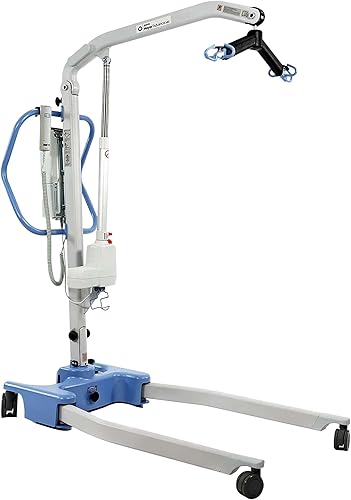 Best for full body home transfers
Joerns Hoyer Advance Electric Portable Patient Lift
9.7/10 our score
See it on Amazon -
2

-
3

- 4
 Best sit to stand with split seatCheck it
- 5
 Check it
Vive Mobility Sit to Stand Patient Lift
Best for bed to wheelchair transfers - 6
 Check it
VOCIC AY05 Electric Patient Lift for Home
Best foldable floor to bed lift - 7
 Check it
ArjoHuntleigh Sara Stedy Sit to Stand Manual
Best manual stand assist for tall users - 8
 Check it
Invacare Hydraulic Patient Lift
Best hydraulic lift without batteries - 9
 Check it
Mosfer Electric Patient Lift Transfer Chair Lift
Best electric transfer chair
How to choose patient lift assist devices for home use
Patient lift assist devices fall into 3 groups. Sling lifts support a person who cannot stand.
Stand assists guide a person who can bear partial weight. Transfer chairs carry a seated person between surfaces.
Check 4 facts first. Weight capacity, lowest and highest lift height, base width for doorways and under bed clearance.
A lift that cannot fit through a door or under a bed will not help at home.
How these were compared
We compared capacity, height range, weight, power type and base width across all 9 models. A 330 lb lift and a 500 lb lift serve different households.
A 22 in leg width and a 26 in base show what will pass through a standard home doorway. We also filtered for manual emergency lowering, locking casters, folding designs and included slings.
All 9 patient lift devices for home use
The Joerns leads for light weight full body use. The ProHeal leads on capacity.
Stand assists lead when the person can help. The table below shows the trade offs side by side.
| Product | Best for | Capacity | Weight | Power | Our score |
|---|---|---|---|---|---|
| Joerns Hoyer Advance Electric Portable Patient Lift | full body home transfers | 340 lb | 69.9 lb | Battery powered | 9.7 |
| Vive Patient Lift Sling | sling for shower and home use | 400 lb | 9.5 | ||
| ProHeal Electric Lift | higher weight capacity | 500 lb | 108 lb | Electric with manual backup | 9.4 |
| VOCIC Sit to Stand Lift | sit to stand with split seat | 400 lb | 58 lb | 9.0 | |
| Vive Mobility Sit to Stand Patient Lift | bed to wheelchair transfers | 400 lb | 60 lb | 8.9 | |
| VOCIC AY05 Electric Patient Lift for Home | foldable floor to bed lift | 330 lb | 85 lb | 8.8 | |
| ArjoHuntleigh Sara Stedy Sit to Stand Manual | manual stand assist for tall users | 400 lb | 65 lb | 8.7 | |
| Invacare Hydraulic Patient Lift | hydraulic lift without batteries | 450 lb | 68 lb | 8.3 | |
| Mosfer Electric Patient Lift Transfer Chair Lift | electric transfer chair | 330 lb | 90.3 lb | 8.2 |
Joerns Hoyer Advance Electric Portable Patient Lift: Best for full body home transfers
- 340 lb capacity
- 69.9 lb foldable aluminum body
- Battery powered
- Swan legs with adjustable width
- No tools needed to fold
A foldable electric sling lift that moves a person from floor to bed, bed to chair, commode or shower seat. Its light weight and adjustable legs suit small homes.
Pros
- Folds without tools
- Adjustable leg width
- Light aluminum frame
Cons
- Sling not included
- Car transfers may need a different sling
The Joerns Hoyer Advance suits a person who cannot stand and needs floor to bed, bed to chair, commode or shower transfers. Its 69.9 lb aluminum body folds without tools and pushes easily on large wheels.
The 340 lb capacity covers most adults. The swan legs get close to the person, and the pedal adjusts leg width around wheelchairs and furniture.
Two batteries are included for battery powered use.
At 31 x 41 x 22 inches, model HOY-ADVANCE-E is compact enough for a closet in a small home. The oversize handle helps with pushing and pulling on different floor types.
It is compatible with numerous slings, which gives choice for positioning.
Trade off: a sling is not included, and car transfers may need a different sling. For portable options, see best portable patient lifting devices.
For floor rescues, see best patient lift from floor.
Vive Patient Lift Sling: Best sling for shower and home use
- Supports up to 400 lb
- 48 x 30 in mesh
- Four sling points
- Three underside handles
- Machine washable
A mesh full body sling with four attachment points and extra handles for repositioning. It works with most floor lift models and suits shower use.
Pros
- 400 lb capacity
- Breathable mesh
- Extra repositioning handles
Cons
- Sling only, no lift frame
- Needs a compatible lift
The Vive Patient Lift Sling suits anyone who already owns a floor lift and needs a washable mesh sling for shower and home use. It supports up to 400 lb and measures 48 x 30 in.
Four sling points fit most floor lift models. Three extra handles under the sling help you reposition the person from any angle.
The mesh is water resistant, breathable and machine washable.
Reinforced corners and stitching add durability for daily transfers. The light blanket design is easier to place under a person than a stiff padded sling.
The 1 year Vive guarantee and HSA or FSA eligibility add practical value.
Machine washing helps with accident cleanup and shower use. The blue adult sling, model LVA2000BLU, is sold as a pack of 1.
Trade off: this is a sling only. You still need a lift frame with a spreader bar, so check hookup compatibility first.
ProHeal Electric Lift: Best for higher weight capacity
- 500 lb capacity
- 6 point spreader bar
- Manual emergency lowering
- Dual rear locking casters
- Fits under low beds
An electric full body lift with a 500 lb capacity and clip free sling hookups. It fits under most beds in the lowest position and can do floor lifts.
Pros
- 500 lb capacity
- Emergency manual lowering
- Compatible with all slings
Cons
- Heavier at 108 lb
- Large footprint in small rooms
The ProHeal Electric Lift suits homes that need higher capacity and low bed access. It supports 500 lb, the highest limit in this group, and fits under most beds in the lowest position.
Clip free sling hookups connect fast. Dual rear locking casters and an adjustable locking base add stability.
In a power loss, manual emergency lowering lets you lower the person safely.
The 6 point spreader bar works with a wide range of ProHeal or other brand slings. That compatibility helps for floor to chair, bed, commode and other transfers.
The foot pedal opens the base hands free.
The frame carries a 3 year warranty and sturdy welding for long lasting use. The modular design allows easy parts replacement over time.
At 108 lb, it needs more storage space than lighter models.
Trade off: at 108 lb it is the heaviest lift here. Confirm it fits your smallest room before ordering.
VOCIC Sit to Stand Lift: Best sit to stand with split seat
- 400 lb capacity
- Split seat cushions
- 2 level adjustable knee pad
- Dual lock braking
- 6 cm low base
A manual sit to stand aid for people who can sit up and support their upper body. The split seat and padded shin pads help with toilet and chair transfers.
Pros
- 400 lb capacity
- Adjustable knee pad
- Low profile base
Cons
- Not for fully immobile people
- No safety belt restraint
The VOCIC Sit to Stand Lift suits a person who can sit up and support their upper body. It supports 400 lb on a reinforced steel frame and weighs 58 lb.
Soft foam handgrips, padded shin pads and split seat cushions help with comfort. The knee pad adjusts in 2 levels from 51 to 56 cm.
Dual locks on front and rear casters prevent sliding during positioning.
The rear 3 inch and front 4 inch casters lock firmly. The 6 cm low base slides under most furniture and helps where bed and sofa clearance is tight.
The aluminum frame and 31 x 17 x 43 inch dimensions keep the unit manageable at home. A tool kit and clear instructions make assembly quicker.
The split back design gives access for toileting and clothing changes.
Trade off: it has no safety belt and is not for completely immobile people. The open design needs a person who can hold on and bear weight.
Vive Mobility Sit to Stand Patient Lift: Best for bed to wheelchair transfers
- Supports up to 400 lb
- For 60 to 70 percent weight bearing
- 26 in wide base
- Foam handrails
- Dual locking brakes
A stand assist for people who can support 60 to 70 percent of their weight. It helps with bed to wheelchair, toilet and sofa transfers at home.
Pros
- 400 lb capacity
- Cushioned shin rests
- Locking brakes
Cons
- 26 in base may not fit narrow doors
- Needs partial weight bearing
The Vive Mobility Sit to Stand Patient Lift suits bed to wheelchair, toilet and sofa transfers for people who can support 60 to 70 percent of their weight. It supports 400 lb.
Foam covered handrails and cushioned shin rests and split seat pads help reduce fatigue. Dual locking brakes hold the unit in place.
Four swivel casters glide across floors.
The steel frame weighs 60 lb and measures 30 x 25 x 44 inches. That size fits most home rooms while still feeling stable during a transfer.
Hooks for side support straps add security for some users.
It is designed for home and nursing facility use. The enclosed foam handrails give a secure grip without hard edges.
Cushioned shin rests reduce pressure on the legs during standing.
Trade off: the base is 26 in wide at its widest point. Measure doorways before purchase, as narrow doors may block passage.
VOCIC AY05 Electric Patient Lift for Home: Best foldable floor to bed lift
- 330 lb capacity
- 29.5 to 61 in height range
- Detachable lithium handset
- Manual emergency crank
- Adjustable base 24.4 to 38 in
A foldable electric lift with a detachable lithium handset and a floor to bed range. It includes a mesh sling and a manual override for power loss.
Pros
- Wide height range
- Lithium handset charges in 3 hours
- Foldable for storage
Cons
- 330 lb capacity is lower than others
- Check bed height before purchase
The VOCIC AY05 Electric Patient Lift for Home suits a single caregiver who needs floor to bed recovery in a small home. Its range runs from 29.5 in at floor level to 61 in at full height.
The detachable lithium handset charges in 3 hours and runs about 40 lifting cycles per charge. A manual override crank lowers the person in a power loss.
The base adjusts from 24.4 in to 38 in.
The carbon steel frame supports 330 lb. It comes with a breathable mesh sling with head support strips and thickened leg padding.
That included sling saves a separate purchase.
Foldable storage helps in limited space. The 3 inch silent front casters slide under low beds and sofas.
At 44.6 x 38.1 x 61 inches, check ceiling and bed height alignment.
Trade off: capacity is 330 lb, lower than the 400 lb and 500 lb models. It folds for storage and includes a mesh sling with head support.
ArjoHuntleigh Sara Stedy Sit to Stand Manual: Best manual stand assist for tall users
- 400 lb capacity
- For users 4 ft 11 in to 6 ft 6 in
- Fully assembled
- Pivoting seat
- Soft knee supports
A fully assembled manual stand assist that encourages the person to pull up using a cross bar handle. It suits partially weight bearing users in a wide height range.
Pros
- Fully assembled
- Wide user height range
- Pivoting seat eases entry
Cons
- User must hold the support bar
- Manual only, no powered lift
The ArjoHuntleigh Sara Stedy suits partially weight bearing users from 4 ft 11 in to 6 ft 6 in. It holds up to 400 lb and arrives fully assembled.
The pivoting seat eases entry. Soft knee supports hold stability during the stand.
A cross bar handle lets the person pull up, which may reduce leakage risk compared with pushing up.
The aluminum build weighs 65 lb and measures 41.5 x 36.5 inches in the data. Fully assembled delivery removes setup time and errors.
Pedal operated chassis legs let the caregiver adjust access without bending down.
Handgrips in the seat help the caregiver turn the aid during use. Total lock castors create stability when anchored.
Small castors help with a lower profile in tight spaces.
Trade off: the user must hold the support bar and steady themselves. Pedal operated legs and total lock castors help the caregiver, but this is a manual aid only.
Invacare Hydraulic Patient Lift: Best hydraulic lift without batteries
- 450 lb capacity
- 20 to 64 in lift range
- Bent mast design
- Legs close to 22 in wide
- 68 lb lightweight build
A hydraulic sling lift with a bent mast for a wider lift path and a 20 to 64 in range for floor recovery. Legs adjust from 22 in to 62 in for doorways.
Pros
- 450 lb capacity
- No battery needed
- Wide floor to bed range
Cons
- Manual pumping takes effort
- Sling sold separately
The Invacare Hydraulic Patient Lift suits a home that wants no battery to charge or replace. It supports 450 lb and weighs only 68 lb.
The bent mast creates a wider lift path so the person does not swing into the frame. The range runs 20 in to 64 in for floor recovery.
A shifter handle closes legs to 22 in for doorways or opens them to 62 in for stability.
The 5 inch low friction casters reduce break force, even on carpet. The ergonomic padded push handle reduces strain on the back and shoulders.
The rotating pump handle allows operation from either side in tight spaces.
The steel build is designed for easy disassembly and transport in a vehicle. Model 9805P carries a 3 year limited warranty on the frame.
Trade off: you pump to lift, which takes effort with a heavy load. The rotating pump handle helps in tight spaces.
Mosfer Electric Patient Lift Transfer Chair Lift: Best electric transfer chair
- 330 lb capacity
- 40 to 54 in adjustable height
- Base widens 23.6 to 38 in
- Foldable
- IPX54 waterproof rating
An electric transfer chair that lifts a seated person from bed to chair, toilet or car. It folds for trunk storage and suit shower use with its waterproof rating.
Pros
- One button electric lift
- Folds for travel
- Two wheel sizes included
Cons
- Not for fully paralyzed users
- Needs 5 in under bed clearance
The Mosfer Electric Patient Lift Transfer Chair Lift suits a seated person who needs bed to chair, toilet, car and outdoor moves. It supports 330 lb and adjusts from 40 in to 54 in with one button.
The base widens from 23.6 in to 38 in on a joystick. It comes with 4 in wheels for carpets and 3 in wheels for low clearance.
Front wheel brakes lock with a pedal step.
The steel frame includes an automotive grade safety belt and an extended padded backrest. Non slip locking swivel casters help prevent swaying during movement.
The foldable structure fits in most car trunks after folding.
The IPX54 waterproof rating supports shower chair use. Cover the charging port with its silicone cover before wet use.
The 18.5 in backrest width and 90.3 lb weight show a substantial chair that needs floor space.
Trade off: it is not for completely paralyzed people or those unable to sit upright.
Sling lifts vs sit to stand lifts vs transfer chairs: which type fits?
Sling lifts fit people who cannot stand or bear weight. Stand assists fit people who can bear 60 to 70 percent or more.
Transfer chairs fit seated people who need a lift between surfaces.
Ask a doctor or therapist about weight bearing before you choose. If in doubt, a sling lift is the safer default because it supports full weight.
Learn how to lift patient from chair safely with each type.
Sling lifts for non weight bearing users
Choose a sling lift such as the Joerns, ProHeal or Invacare if the person cannot stand. You will also need a sling such as the Vive mesh sling.
Check that the spreader bar and sling points match.
Capacity should still be checked against the person plus sling weight. The Joerns is rated at 340 lb while the ProHeal reaches 500 lb.
Pick the frame that leaves clear headroom above the expected load.
Sit to stand aids for partial weight bearing
Choose a stand assist such as the Vive Mobility, VOCIC or ArjoHuntleigh if the person can hold on and bear partial weight. These aids reduce caregiver strain but still need the person's help.
A stand assist works best when the person understands the routine. Practice the grip on the cross bar or handrails before a real transfer.
Stop and switch to a sling lift if the person cannot hold on safely.
Transfer chairs for seated moves
Choose a chair such as the Mosfer if the person can sit upright and the main job is moving between bed, toilet and car. It raises and lowers the seated person without a sling.
A transfer chair also helps when a sling is hard to place under the person. The Mosfer range of 40 in to 54 in must match bed and toilet heights.
Measure both surfaces before you order.
How much weight capacity and height range do you need?
Buy capacity above the person's weight with room to spare. A 340 lb lift suits most adults, while 400 lb or 500 lb lifts suit heavier users.
Never exceed the stated limit.
Check height range for floor rescues and bed height. The Invacare reaches 20 in to 64 in, and the VOCIC AY05 reaches 29.5 in to 61 in.
Measure your bed top and floor clearance first.
A lift used several times a day puts more wear on casters, pumps and batteries. Also check sling width, as a sling that is too small will not support the head and legs well.
Low beds and low clearance
Look for a low profile base and front casters. The VOCIC Sit to Stand has a 6 cm base.
The VOCIC AY05 has 3 in front casters. Confirm clearance under your bed and sofa.
Measure from the floor to the lowest point of the bed frame. The Mosfer guidance asks for more than 5 inches of space under a bed or sofa.
If clearance is less, a sling lift with a lower base may fit better.
Doorways and hallways
Measure every doorway on the transfer path. The Vive Mobility base is 26 in wide.
The Invacare legs close to 22 in. The Mosfer needs doorways over 26 in.
Test the path with the lift empty before the first transfer. Open doors fully and move rugs or furniture that narrow the route.
A lift that fits in the bedroom but not the bathroom door will not solve the main problem.
Electric, hydraulic or manual: which power type is safest at home?
Electric lifts lift with a button and reduce caregiver effort. Most include manual emergency lowering for power loss.
Hydraulic lifts need no power and work as a backup. Manual stand assists rely on the person's pull.
For car moves, see best patient lift for car transfers. A transfer chair such as the Mosfer folds for trunk storage, while a sling lift may need a different sling for vehicles.
Safety comes from control in every power type. Electric controls should be easy to reach and stop quickly.
Hydraulic pumps should hold position without drifting. Manual aids should lock casters so the unit does not roll during a stand.
Electric units also need battery care and eventual replacement.
Battery and charging care
Keep the handset or battery charged and store the manual crank with the lift. The VOCIC AY05 handset detaches for charging anywhere.
The Joerns includes 2 batteries.
Label the charger and keep it in a fixed place. A lift with a flat battery during a fall is not useful.
Check charge level as part of a weekly routine, not only after a failed lift.
Emergency lowering
Confirm the lift has a manual way to lower the person. The ProHeal and VOCIC AY05 both state manual emergency lowering.
Test the backup method with no load before you need it.
Practice the manual method with a second adult present. Make sure both caregivers know where the crank or release is stored.
Keep instructions taped inside a cabinet near the lift storage spot.
Manual and hydraulic effort
Hydraulic lifts trade effort for simplicity and no battery. The Invacare weighs 68 lb and supports 450 lb, but pumping under load takes time.
Manual stand assists rely on the person pulling up on a bar.
If the caregiver has back or shoulder limits, electric power may be safer. A button lift reduces repetitive strain during multiple daily transfers.
Match the power type to the caregiver as well as the person being lifted.
What slings, straps and accessories do you need?
Most sling lifts need a sling. The Vive sling supports 400 lb with 4 points and 3 repositioning handles.
The VOCIC AY05 includes a mesh sling with head support and leg padding.
For leg support during rehab, see best leg lifter after knee replacement. For sliding help between bed and chair, see best tubular slide sheet.
Check hook type before you buy a spare sling. A sling that does not match the spreader bar will not attach safely, even if the capacity looks right.
Keep a spare sling if transfers happen daily, as mesh slings dry faster than padded slings.
Sling fit and skin checks
Choose a sling size that supports the head and legs without bunching. Check skin after the transfer for redness or pressure marks.
Wash mesh slings as directed and air dry before reuse.
Look at stitching before each use. Frayed edges, loose handles or stretched loops are signs to retire a sling.
A sling is a safety part, not a comfort extra, so replace it when wear shows.
Toileting and shower use
Mesh slings drain water and suit shower use. The Vive mesh is water resistant and machine washable.
The Mosfer chair has an IPX54 rating for shower use with the charging port covered.
For toileting, a split seat or open design can help. Stand assists with split seat pads give access without removing the whole aid.
Plan the transfer path from bed to toilet before you start.
How do you set up and use a home patient lift safely?
Set up on a flat surface, lock the casters and open the base wide enough for the wheelchair or bed. Place the sling with help from a second person if you can.
Raise slowly and check the person's comfort before moving.
If you want a power assist wheelchair for daily mobility alongside a lift, read What Is a Power Assist Wheelchair? The Essentials.
A lift and a wheelchair solve different parts of the day.
Use a clear verbal routine for every transfer. Tell the person when you will raise, move and lower.
Keep the lift path clear of cords, rugs and pets, and lock the wheelchair brakes before you approach.
Daily checks
Check sling stitching, hooks and spreader bar before each use. Check caster locks and battery charge.
Store the lift folded or parked where it will not tip or block a hallway.
Write a simple checklist and keep it with the lift. Check the same points in the same order each time.
A routine reduces missed steps when you are tired or rushed.
When to get help
Get a second caregiver for floor lifts, heavy loads or a person who cannot communicate discomfort. Ask a doctor about ongoing pain, skin breakdown or repeated falls.
This guide does not replace medical advice.
Call for help if the lift stops mid transfer or a sling slips. Do not try to force a powered lift or continue with a damaged hook.
Keep the person supported and call a second adult or a professional.
Storage and transport between rooms
Foldable models such as the Joerns and VOCIC AY05 store in less space. The Mosfer folds for trunk storage and travel.
Store a lift where the battery can stay charged and the sling stays clean.
Transporting a lift by car needs two people for heavier models. The ProHeal at 108 lb is a two person carry.
Lighter models near 58 to 69 lb are easier to move between a home and a family member home.
Verdict: best patient lift devices for home use
Pick the Joerns Hoyer Advance if you need a light, foldable full body lift for most home transfers. Pick the ProHeal for 500 lb capacity.
Pick the Vive Mobility Sit to Stand for partial weight bearing transfers.
Pick the Invacare hydraulic for no battery and a 20 in to 64 in range. Pick the Mosfer transfer chair for seated moves to toilet and car.
Match type to weight bearing first, then check capacity, height and doorway fit. Read next: our full patient lift guide for more detail before you order.
Our top 3 picks at a glance
-
1
Best for full body home transfers
Joerns Hoyer Advance Electric Portable Patient Lift
9.7/10 our score
See it on Amazon -
2
-
3
Frequently asked questions
What is the best patient lift device for home use?
The best patient lift device for home use depends on weight bearing. Choose a sling lift such as the Joerns Hoyer Advance if the person cannot stand.
Choose a sit to stand aid such as the Vive Mobility model if they can support 60 to 70 percent of their weight.
Measure doorways and bed height first.
Can a patient lift be used for a floor rescue?
Yes, several models here reach floor level. The Invacare hydraulic lift ranges from 20 in to 64 in.
The VOCIC AY05 ranges from 29.5 in to 61 in.
Confirm the lowest boom height clears your floor space and sling placement before you rely on it for fall recovery.
Do I need a sling with my lift?
Most sling lifts need a separate sling. The Vive Patient Lift Sling supports up to 400 lb and fits most floor lift models with four sling points.
The VOCIC AY05 includes a mesh sling.
Check compatibility and capacity before pairing a sling with a lift frame.
Electric or hydraulic for home use?
Electric lifts raise and lower with a button and often include manual emergency lowering. Hydraulic lifts need no battery and suit backup use.
The Invacare hydraulic model weighs 68 lb and supports 450 lb.
Electric models such as the ProHeal include emergency lowering for power loss.
Who should not use a sit to stand lift?
People who cannot sit up, support their core or bear partial weight should not use a sit to stand aid. The VOCIC Sit to Stand Lift states it is not for completely immobile or paralyzed people.
A full body sling lift is the safer choice for non weight bearing users.


