How Much Do Lightweight Wheelchairs Weigh?
Lightweight wheelchairs often weigh about 19 to 35 lb, but the number depends on the chair style and which parts are included. Check the weight of the chair as you'll lift it, with removable footrests or wheels handled separately.
On this page (8 sections)
- How much do lightweight wheelchairs weigh?
- What does a wheelchair's weight include?
- Why can two lightweight wheelchairs weigh so differently?
- How should you compare chair weight for lifting?
- Which wheelchair features affect carrying and loading?
- How can you tell if a wheelchair is light enough for you to lift?
- Is the lightest wheelchair always the best choice?
- How much should a lightweight wheelchair weigh for your needs?
Lightweight wheelchairs often weigh about 19 to 35 lb, but the total depends on the chair style and which parts are included. To judge lifting effort, find out whether the figure includes footrests, wheels, and other removable pieces.
A chair may feel manageable to push but awkward to lift into a car. The number on a scale also may not match the weight of the main frame if some parts come off first.
How much do lightweight wheelchairs weigh?
A lightweight wheelchair can weigh about 19 to 35 lb, with transport chairs often toward the lower end and self-propelled chairs often heavier. Treat that as a rough range, not a guarantee for every model.
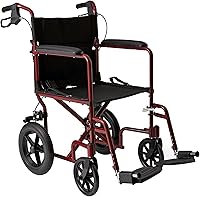
For example, the Drive Medical Lightweight Expedition Folding Transport Wheelchair is described as weighing 19 lb. The Drive Medical Blue Streak Lightweight Wheelchair has a listed item weight of 41.3 lb, showing how much wheel and frame style can change the total.
The category label alone doesn't tell you how easy a chair will be to lift. Check the exact weight and whether it describes the assembled chair or a lighter configuration with some parts removed.
What does a wheelchair's weight include?
A wheelchair's weight may include its frame, seat, wheels, footrests, and armrests, but the measurement method can vary. Look for a clear statement of what was attached when the chair was weighed.
For lifting, focus on the heaviest piece you'll need to handle at one time. If footrests or wheels detach, the frame alone may weigh less, but removing parts adds steps and requires storage space.
Compare the chair's complete weight with its transport setup. If you plan to place it in a trunk, consider whether you'll lift it folded whole or carry the frame and parts separately.
Why can two lightweight wheelchairs weigh so differently?
Wheel size, frame material, and chair purpose can all affect weight. A transport chair has small rear wheels for a companion to push, while a self-propelled model has larger rear wheels the rider can reach.
The Drive Medical Expedition uses 12-inch rear wheels and is described as weighing 19 lb. By comparison, the Drive Medical Blue Streak has a steel frame and is designed as a self-propelled wheelchair.
A folding frame makes a chair easier to store, but folding doesn't necessarily make it lighter to lift. If you need a chair that fits in a vehicle, see best lightweight adult manual wheelchair options and compare each model's weight and folding setup.
Does a transport chair weigh less than a self-propelled wheelchair?
A transport chair can weigh less because it uses smaller rear wheels and is pushed by a companion. The chair's purpose matters, so compare models by their actual weight rather than assuming all transport chairs are lighter.
If the rider needs to push the chair independently, a transport model may not fit that need. Our guide to lightweight vs ultra lightweight wheelchairs explains how to compare chair types and weight categories.
How should you compare chair weight for lifting?
Compare the weight of the chair in the exact setup you'll lift. Check whether removable wheels or footrests are included, then consider how many separate pieces you'll have to carry.
A chair that separates into lighter parts may be easier for one caregiver to load, but loose components can take extra time to remove and store. If taking off wheels matters to you, compare wheelchairs with removable wheels and confirm how the parts attach.
The space you have matters too. Measure the car opening, trunk, and storage area, then check the folded dimensions alongside the weight.
Which wheelchair features affect carrying and loading?
Removable parts, folding design, and rear-wheel size affect how a chair is handled during loading. They don't make one model right for everyone, so start with the transfer and lifting tasks you'll do most often.
The Drive Medical Folding Transport Wheelchair has a folding frame, swing-away footrests, and a fold-flat backrest. Its stated weight is 26 lb.
The Drive Medical Lightweight Expedition Folding Transport Wheelchair is described as weighing 19 lb and has a folding frame with 12-inch rear wheels. Its fold-down footrests and rear lever support a compact travel setup.
The Drive Medical Blue Streak Lightweight Wheelchair weighs 41.3 lb and has a steel frame, swing-away footrests, and an 18-inch seat. Its self-propelled design suits a different use than a companion-pushed transport chair.
For a chair the rider can propel, compare lightweight folding self-propelled wheelchairs. A larger seat may also affect the overall fit and weight, so review options for a 22-inch seat wheelchair or an 18-inch seat wheelchair if seat width is a key need.
How can you tell if a wheelchair is light enough for you to lift?
Try to match the chair's weight and lifting setup to the person who will load it. If possible, practice lifting a similar weight with safe technique before choosing a chair.
Consider the full task: opening the vehicle, folding the chair, removing parts, lifting each piece, and placing it inside. A lighter chair may still be difficult if you have to reach far into a trunk or lift from a low position.
Ask the supplier or manufacturer whether the stated weight includes detachable parts if that detail isn't clear. Also check the chair instructions for how it folds and which parts are designed to come off.
Is the lightest wheelchair always the best choice?
No, the best weight is one you can manage while the chair still suits the rider and the way it will be used. A transport chair may be easier for a companion to load, while a self-propelled chair has larger rear wheels for the rider to reach.
Compare weight with seat size, wheel setup, and the need for independent propulsion. For a scooter instead of a wheelchair, read what a lightweight mobility scooter is.
How much should a lightweight wheelchair weigh for your needs?
For a lightweight wheelchair, start by checking its complete weight and the weight of the parts you'll lift together. Then compare the folded size, wheel style, and whether the rider needs to propel the chair.
Choose a transport chair if a companion will push it and a compact loading setup matters. Choose a self-propelled model if the rider needs rear wheels they can reach, and compare seat width before settling on a weight.
Frequently asked questions
How much do lightweight wheelchairs weigh?
Many lightweight wheelchairs weigh about 19 to 35 lb, though the exact number depends on the chair style and its frame, wheels, footrests, and other parts. A transport chair may be lighter than a self-propelled chair because its smaller rear wheels are designed for a companion to push.
Does wheelchair weight include footrests?
It depends on how the chair's weight is reported. Check whether the footrests are attached for the quoted weight, and whether you can remove them before lifting; removable parts can reduce the weight of the main frame you need to place in a vehicle.
Are transport wheelchairs lighter than manual wheelchairs?
Some transport chairs weigh less because they use smaller rear wheels and are pushed by a companion. The difference varies by model, so compare the complete chair weight and the weight of any parts you can remove before loading it.
What is the easiest part of a wheelchair to lift?
The easiest part depends on the chair's design and what can be removed. Take off detachable footrests or wheels only if the chair is designed for it, and check the maker's instructions before lifting or separating parts.