Lightweight vs Ultra Lightweight Wheelchair: Choose (November 2026)
Choose an ultra lightweight wheelchair when lifting and transport weight matter most; choose a standard lightweight chair when its features and frame suit your daily use. Compare the chair's weight, who will push it, and how it fits the user before choosing by label.
On this page (7 sections)
Choose an ultra lightweight wheelchair when lifting and transport weight matter most; choose a lightweight wheelchair when its fit and features matter more. The label alone won't tell you which chair suits your routine, so compare the actual weight, frame, wheel setup and adjustments.
For model-specific details, read the Karman LT-980 wheelchair review.
The examples here range from a 15 lb transport chair to a 41.3 lb self-propelled wheelchair. That spread reflects different chair types as well as different construction, so start with who will push the chair and where it needs to go.
Lightweight vs ultra lightweight wheelchair: what changes?
The main difference is often how much chair a caregiver needs to lift, but the category names don't set one universal weight limit. Compare exact weights and features rather than relying on the label.
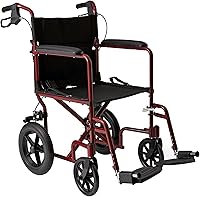
The Medline lightweight folding transport chair is stated at 26 lb, and the Medline ultra lightweight transport chair at 15 lb. Both use aluminum frames and fold for transport, but the lighter option has 8 in rear wheels while the 26 lb chair has 12 in rear wheels and hand brakes.
A separate Medline lightweight wheelchair weighs 33 lb and adds a height-adjustable seat, swing-back arms and elevating leg rests. These features may matter more than a lower lifting weight if you need more fit or transfer options.
How much does a lightweight wheelchair weigh?
There isn't one weight that defines every lightweight chair. In these examples, the weights range from 15 lb for an ultra lightweight transport chair to 41.3 lb for a steel-frame self-propelled wheelchair.
The weight a caregiver lifts may differ from the total chair weight if parts detach. Check whether the footrests come off or swing away, and whether you need to lift the chair in one piece.
Who will push and lift the wheelchair?
Choose a transport chair when a caregiver will push it; choose a self-propelled wheelchair when the user needs to push the large rear wheels. The person handling the chair changes which features matter most.
Transport chairs are designed for a helper to push. Their smaller rear wheels can keep the chair compact, but they aren't meant for the seated user to propel in the same way as a standard manual wheelchair.
For powered assistance, compare power attachments for manual wheelchairs.
If the user plans to push independently, explore the differences among types of manual wheelchairs. A power chair is another option when manual propulsion doesn't fit the user's needs; our guide to power wheelchair vs manual wheelchair explains what that choice involves.
When is an ultra light folding wheelchair useful?
An ultra light folding wheelchair can make sense when a caregiver regularly lifts it into a car, carries it over a threshold or stores it between outings. Lower weight can help, but check folded dimensions and the grip points too.
The 15 lb Medline transport chair is the lightest of these options and folds for storage. Its 8 in rear wheels and transport-chair design make it a caregiver-pushed option, rather than a substitute for a self-propelled chair.
For outings where the vehicle and route matter, compare our guide to the best lightweight wheelchair for travel. For more options built around folding, see best lightweight wheelchairs that fold.
Which frame and wheels fit your routine?
Frame material and wheel size affect the chair's weight and how you plan to use it. An aluminum frame appears on the 15 lb and 26 lb Medline transport chairs, while the Drive Medical Blue Streak has an alloy steel frame.
The Blue Streak weighs 41.3 lb and is self-propelled, with an 18 in seat, swing-away footrests and flip-back desk arms. That makes it a different comparison from the two lighter caregiver-pushed transport chairs.
Wheel size also differs: the Medline transport chair at 26 lb has 12 in rear wheels, while the 15 lb version has 8 in rear wheels. Consider where the chair will be used and who will push it; don't assume a lighter chair has the wheel setup you want.
For a closer look at an adult manual chair, read our best lightweight adult manual wheelchair guide. If the user will push the chair, our guide to the best self propelled lightweight folding wheelchair focuses on that use.
How important are adjustability and transfers?
A lighter chair isn't automatically easier to transfer into or better fitted to the user. Look at arm position, leg support, seat dimensions and how the chair moves out of the way.
The 33 lb Medline wheelchair has swing-back, desk-length arms for lateral transfers and access to tables, plus elevating leg rests. Compare extra long elevating leg rests if the standard length does not fit.
Its seat height is adjustable from 16 to 20 in, according to the product information.
The 26 lb transport chair has full-length cushioned armrests and swing-away, detachable footrests. The 15 lb chair has desk-length cushioned armrests and swing-away footrests, but the details here don't specify those same seat or leg-rest adjustments.
Which chair may be easier to get in and out of?
Swing-away or detachable footrests and arms that move out of the way can help create space for a transfer. Confirm which parts move and whether that arrangement works with the transfer method you use.
The 33 lb Medline chair's swing-back arms are described as supporting easier lateral transfers. The 26 lb transport chair's footrests swing away and detach, while the 15 lb chair's footrests swing away.
Fit matters alongside moving parts. Check seat width and depth against the user's needs, and ask a qualified mobility professional for guidance if you're unsure about fit or safe transfers.
What should caregivers check before lifting?
Measure the car opening and consider the full lifting motion before choosing a chair. A low weight helps only if you can reach, grip and place the folded chair safely.
Check the chair's folded dimensions and whether footrests detach. Think through lifting from the storage spot, through the doorway and into the vehicle, including whether another person can help.
The 15 lb Medline transport chair is a lower-lift option among these examples. The Blue Streak's stated weight is 41.3 lb, so lifting that chair may be a different task even though it folds.
Do not lift beyond your ability. Ask a clinician or mobility equipment professional about safe handling options if lifting causes pain or feels unstable.
Which wheelchair should you choose?
Choose by chair type first, then balance weight against fit, transfers and transport. A low number on the scale can't replace the wheel setup or adjustments the user needs.
Consider the 15 lb Medline ultra lightweight transport chair if a caregiver will push and frequent lifting is the main concern. The 33 lb Medline wheelchair may suit someone who values its adjustable seat, swing-back arms and elevating leg rests.
For caregiver-assisted trips with hand brakes and 12 in rear wheels, the 26 lb transport chair offers a different feature set. If the user needs to self-propel, consider the Drive Medical Blue Streak or compare other lightweight folding self-propelled wheelchairs.
For another weight comparison, see how much a Medline Excel wheelchair weighs. A model's weight is useful, but the best choice still depends on who pushes, who lifts and how the chair fits.
How we scored these wheelchair options
Our score weighs specs and features against what you're shopping for. We compared chair weight, frame, wheel setup, transfer features and whether the chair is designed for caregiver pushing or self-propulsion.
Frequently asked questions
What is the difference between lightweight and ultra lightweight wheelchairs?
The labels aren't a universal weight standard, so compare the exact chair weights and features. In these examples, the Medline lightweight wheelchair weighs 33 lb, while the Medline ultra lightweight transport chair is stated at 15 lb.
They also differ in chair type and features.
Is an ultra lightweight wheelchair easier to lift into a car?
A lower chair weight can reduce the load a caregiver lifts, but the folded shape and vehicle access matter too. Check the weight of the exact chair, then consider whether you can grip it and place it in your trunk without twisting or reaching awkwardly.
Can you self-propel a transport wheelchair?
Transport chairs are intended to be pushed by a caregiver, while self-propelled wheelchairs have larger rear wheels the seated user can push. Check the chair type and wheel setup before buying, especially if the user expects to move independently.
Does a lighter wheelchair always have more adjustments?
No. Weight and adjustability are separate choices.
The 33 lb Medline wheelchair includes a height-adjustable seat, swing-back arms and elevating leg rests, while the 15 lb transport chair prioritizes low weight and folding for caregiver-assisted trips.
How do you choose between a transport chair and a manual wheelchair?
Choose a transport chair if a caregiver will push and lift it for outings.
Choose a self-propelled manual wheelchair if the user needs large rear wheels to move the chair. Compare fit, transfer needs and who will handle daily pushing.