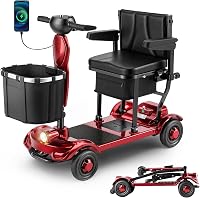
How to Travel with a Mobility Scooter
Prepare your scooter, confirm battery rules, protect loose parts, and coordinate transport with each carrier before you travel. The steps vary by airline, cruise line, train, and ground carrier, so check their current instructions for your exact scooter and battery.
On this page (7 sections)
- How do you prepare a mobility scooter for a trip?
- What battery information should you give the carrier?
- How do you pack a scooter for transport?
- How should you coordinate with an airline or other carrier?
- What should you do at check-in and arrival?
- Which travel details matter for different trips?
- Which travel plan fits your scooter?
Here's how to travel with a mobility scooter: confirm the carrier's rules, document the battery, prepare the scooter, and agree on handoff and return before departure. Start with the scooter manual and the carrier's current instructions because battery handling and loading procedures differ.
Write down the scooter's make and model, dimensions, weight, and battery details. Bring the manual, take photos of the assembled scooter and battery label, and ask the carrier how it wants the scooter prepared.
How do you prepare a mobility scooter for a trip?
Check the manual, inspect the scooter, and make a transport plan before packing. Confirm which parts detach, how to fold or disassemble the scooter, and whether it needs any special steps before it can be moved.
Make a short checklist of the scooter, charger, keys, battery, and removable parts. Note any existing marks or damage with photos, and keep those photos until the scooter is back home.
If you are comparing portable models before a trip, start with what is a travel size mobility scooter. A travel sized design may be easier to handle, but its folded size and total lifting weight still need to suit your route and storage space.
If your trip includes rough outdoor surfaces, compare all-terrain mobility scooters. For foldable models, compare folding all-terrain mobility scooters.
What should you check before leaving?
Check tires, controls, brakes, battery connections, and folding latches using the scooter manual. Don't travel with a part that feels loose or a control that isn't working as expected.
Charge the battery as directed and pack the charger if you will need it at your destination. Confirm that the charger works with the available power supply, and ask the hotel or host where you can charge safely.
The SuperHandy Passport is a foldable option that disassembles into 5 pieces, according to SuperHandy. The brand gives a 35 lb total weight and says the parts fit in a sedan trunk, so check whether you can manage its heaviest piece and whether your vehicle's trunk opening fits.
This scooter has no armrests, and its brand says the rider holds the handlebars. Review that layout, the 275 lb capacity, and the lifting needs with the rider and a clinician before choosing it for travel.
If a four-wheel design better suits your needs, compare four-wheel mobility scooters for seniors.
What battery information should you give the carrier?
Give the carrier the battery chemistry and rating before you travel. For replacement options, compare mobility scooter batteries.
Ask what documents it needs and whether the battery can stay attached, must be disconnected, or must travel separately.
Find the battery label and record every marking, including voltage, amp-hour rating, and watt-hours if present. Take a clear photo, and ask the scooter manufacturer for written details if the label is worn or incomplete.
Don't guess at watt-hours or rely on a general product description. Share the exact scooter and battery model with the carrier, then keep its reply with your travel documents.
Can you bring a mobility scooter battery on a plane?
Ask the airline about your exact battery before booking or checking in. Airline rules can depend on battery chemistry, rating, removability, and the way the battery is installed or protected.
For air travel, review best mobility scooters for air travel to compare features that may matter. Even a scooter described as airline friendly needs approval against the airline's current battery and handling rules.
Request written confirmation when possible. Ask whether staff need to inspect the battery, how to protect exposed terminals, and whether a spare battery is allowed.
How do you pack a scooter for transport?
Secure removable parts and protect the controls before the scooter is loaded. Follow the manual and carrier directions for folding, disassembly, wrapping, and battery removal.
Remove a basket, cup holder, key, or other loose accessory if the manual allows it. Put small parts in a labeled bag, and keep that bag with you or attach it securely as the carrier instructs.
A travel bag can help keep detachable pieces together. Compare best folding mobility scooter storage bags after measuring the folded scooter and checking whether the bag's shape works for the carrier's loading process.
The Rimwig cover measures about 49 x 22 x 39 in, with a bottom drawstring and waterproof fabric. It may suit outdoor storage between travel legs if your scooter fits, but confirm the size and remove the cover before transport unless the carrier approves it.
A cover is for storage, not a substitute for transport packing. Compare mobility scooter covers for outdoor storage.
Keep it dry before folding, and don't cover the scooter while charging.
Should you remove the scooter seat?
Remove the seat only if the manual and carrier instructions allow it. Some scooters need parts secured in place, while others are designed to come apart for transport.
The AlveyTech 18 in seat assembly is described for select Pride Victory and Go-Go Elite Traveller scooters. It includes a seat frame and two armrests, so it may be relevant if you need a compatible replacement seat before a trip.
Confirm compatibility with your scooter model before ordering. This seat is a replacement part, not a travel bag or a way to secure the scooter during loading.
How should you coordinate with an airline or other carrier?
Contact each carrier directly and agree on the handoff, loading, and return process. Tell staff you are traveling with a mobility scooter and share the battery details and any disassembly steps.
For an airline, ask where to check in, where staff will take the scooter, whether you can use it to the gate, and where it will be returned. Ask what happens during a connection and whether you need to collect and recheck the scooter.
For a train, cruise, bus, rideshare, or shuttle, ask about accessible boarding, storage space, weight limits, tie-downs, and battery rules. Don't assume one carrier's approval applies to another.
If you need help choosing a model for your route, compare best mobility scooters for travel. Consider the scooter's folded or disassembled size, weight of each part, battery setup, and your ability to lift it.
What details should you confirm with the carrier?
Get clear instructions for the scooter, battery, and every transfer point. Keep the carrier's instructions with your booking details so you can refer to them during check-in.
Ask these questions:
- What scooter and battery details do you need?
- Does the battery stay attached, or must it be removed?
- How should loose parts and controls be protected?
- Where does the scooter go at check-in, boarding, and arrival?
- Can you use it up to the gate or boarding area?
- Who can help with loading and unloading?
- How will the scooter be returned, and what should you do if it is delayed or damaged?
Share the scooter's dimensions and weight rather than relying on a general label like “portable.” If the scooter disassembles, ask whether staff need it separated before arrival or whether they will handle that step.
What should you do at check-in and arrival?
Photograph the scooter before handing it over and confirm the return location. Keep the key, paperwork, and any parts the carrier says you should retain.
Point out the power switch, folding latch, and battery release only as needed, using the manual to explain safe handling. Don't ask anyone to lift or disconnect a part in a way that conflicts with the manufacturer's instructions.
At arrival, inspect the scooter before using it. Check the seat, controls, wheels, battery connection, and detachable parts, then report any damage promptly using the carrier's process.
Which travel details matter for different trips?
The transport method determines which details need the most attention. A car trip often centers on lifting and trunk space, while air travel requires early battery coordination and a clear handoff plan.
For a car, measure the opening and storage area, then check the weight of each piece you need to lift. Ask for help if a part is too heavy to move safely.
For a cruise or train, confirm accessible routes, storage, and boarding procedures with the operator. Ask whether the scooter can stay nearby during the trip and how charging works at your destination.
For a flight, provide battery details well in advance and reconfirm the procedure before departure. Keep enough time for check-in and any inspection the airline requires.
Which travel plan fits your scooter?
If you can lift each part and the carrier confirms the battery and handoff plan, a foldable or disassembling scooter may fit your trip. For demanding outdoor routes, compare heavy-duty all-terrain mobility scooters.
If lifting, fit, or battery approval is uncertain, ask the carrier and scooter manufacturer before traveling.
Choose a cover for storage protection only when its dimensions suit the scooter. For trip planning, review what to expect from a heavy duty mobility scooter if you are considering a larger model, and what a four wheel mobility scooter is if you are comparing layouts.
For a scooter already in your travel plan, check the best Pride mobility scooter battery for replacement options that match your model, or compare best Pride Go-Go mobility scooters if you are still choosing a scooter. Confirm compatibility and carrier approval before you set off.
Frequently asked questions
Can you take a mobility scooter on a plane?
Often, yes, but you must coordinate with the airline before departure and follow its current rules for the scooter, battery, and handling. Share the scooter make and model, battery chemistry and rating, and whether the battery can be removed.
Ask how to check in, where to meet staff, and what needs to be detached.
How do I find the battery details for my mobility scooter?
Check the battery label and scooter manual for chemistry, voltage, amp-hour rating, and watt-hours if shown. Photograph the label and bring the manual or manufacturer documentation.
If the label is unreadable or the rating is unclear, ask the scooter maker for written battery specifications before booking.
Should I remove the battery before transporting a mobility scooter?
Follow the carrier's instructions and the scooter manual; battery removal rules vary by carrier and battery type. If removal is required, ask how to protect and carry the battery, and whether terminals need covering.
Don't disconnect or pack a battery in a way the manufacturer or carrier prohibits.
How should I pack a mobility scooter for a trip?
Remove or secure detachable parts according to the manual, protect controls and exposed connectors, and label each piece with your name and contact details. Use a fitted travel bag only if it suits the scooter's dimensions and transport method.
Keep essential documents and any permitted battery with you.