Rollator vs Rolling Walker: What Do Terms Mean? (November 2026)
A rollator and a rolling walker usually mean the same thing: a wheeled walker with brakes. In rollator vs rolling walker searches, the key differences are wheel size, a seat, weight capacity and how the brakes lock.
On this page (11 sections)
- Rollator vs rolling walker: the quick verdict
- The two terms side by side
- Is a rollator a rolling walker in practice?
- Wheel size: where the choice really changes
- Seats and backrests: when a rollator earns its name
- Frame weight and capacity: steel, aluminum and daily lifting
- Brakes and handles: control you will use every step
- Folded size and storage: will it fit your car and home?
- Who should buy which model?
- Set-up, fit and care in general terms
- Rollator vs rolling walker: final decision rule
A rollator and a rolling walker are usually the same type of aid: a walker with wheels and brakes. In rollator vs rolling walker searches, you should compare wheel size, seat, frame weight and capacity rather than the name on the box.
Most four wheel rollators have hand brakes that slow the wheels and lock for sitting. A simple wheeled walker may have two small wheels and no seat, so the label alone does not tell you much.
This guide compares four seated models with steel, aluminum and larger wheels. They show how the same basic idea changes in daily use.


Rollator vs rolling walker: the quick verdict
Pick a rollator with a seat if you need rests during walks, and pick wheel size based on your surfaces. The Drive Medical and Medline steel models offer 350 lb capacity, while the VOCIC Z21 adds 8 inch wheels for rough ground.
The Medline aluminum model is the lightest at 14 lb, but its capacity is 250 lb. That trade-off matters if you lift the walker often or need a higher limit.
Our score weighs specs, features and buyer feedback against what you're shopping for. Higher scores here reflect stronger capacity, better adjustment and wheels suited to outdoor use.
You can also check types of walkers for disabled if you want the broader picture first. That guide separates standard walkers from wheeled models.
The two terms side by side
The two names overlap, so a side by side table helps more than a dictionary definition. A rollator versus rolling walker comparison should focus on wheels, brakes, seat and frame.
| Feature | Typical rollator | Typical rolling walker |
|---|---|---|
| Wheels | Four wheels, often 6 to 8 in | Two to four wheels |
| Brakes | Hand brakes, often locking | Hand brakes or drag tips |
| Seat | Often included | Often not included |
| Use | Indoor and outdoor walks with rests | Short indoor moves |
| Weight | Varies by frame material | Often lighter if simple |
Retailers do not use the terms in one fixed way. One seller may call a seated model a rollator, while another calls the same shape a rolling walker.
That is why rolling walker vs rollator searches can get confusing. Read the specs for wheel diameter, seat size, folded size and capacity.
All four models in this guide use four wheels, hand brakes and a seat. That shared design is why they appear under both search terms.
Is a rollator a rolling walker in practice?
Yes, a four wheel rollator is a type of rolling walker when it has wheels that let it roll forward. The seat and brakes are what make it more than a simple wheeled frame.
A standard walker without wheels requires you to lift or slide it with each step. A rolling walker removes that lifting step, but you must control speed with the brakes.
Rollator versus rolling walker wording often points to the same product family in stores. The safest approach is to ignore the label and check the features you need.
For a wider view of styles, see best 4 wheel walkers. Those models cluster around seated rollators with larger wheels.
Wheel size: where the choice really changes
Choose 8 inch wheels for outdoor bumps, 7.5 inch for mixed use and 6 inch for mainly indoor paths. Larger wheels roll over cracks and thresholds with less effort.
The VOCIC Z21 uses 8 inch puncture-proof tires and 360 degree rotating front wheels. That design suits gravel paths, grass edges and uneven pavement better than 6 inch wheels.
The Drive Medical model uses 7.5 inch caster wheels, which sit between indoor and outdoor needs. You get smoother outdoor rolling without the bulk of the largest wheels.
The two Medline models use 6 inch wheels. They turn easily indoors and cost less space, but they may catch on rough outdoor surfaces.
The VOCIC Z21 also uses a textured tire surface for slip resistance on slippery ground. Reflective strips on the front wheels and storage bag add visibility for night walks.
Rolling walker and rollator wheel trade-offs
Smaller wheels turn in tighter spaces, while larger wheels clear obstacles more easily. Measure your doorways and hallway turns before you choose.
A 6 inch wheel can fit through narrow indoor areas with counted room on each side. An 8 inch wheel needs more turning room and more folded space in a car.
If you walk mostly on smooth floors, 6 inch wheels are often enough. If you walk outside daily, larger wheels can reduce the effort at each bump.
Puncture-proof tires on the VOCIC Z21 reduce worry about sharp stones on paths. The Medline 6 inch wheels rely on general terrain use without that puncture-proof claim.
Seats and backrests: when a rollator earns its name
A seat turns a walking aid into a place to rest, which is why many buyers search for rollator walker with seat. A padded seat helps during shopping, sidewalk walks and longer appointments.
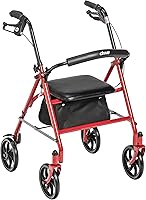
The Drive Medical model has a padded seat with a fold-down backrest. That backrest adds support when you sit, and it folds away when you walk.
Both Medline models have a 12x12 inch padded seat and backrest. The VOCIC Z21 has a 1.6 inch thick seat and a wider breathable backrest.
Lock the brakes before you sit on any of them. The Medline models use push down to lock, while the VOCIC model describes free, deceleration and stop modes.
The VOCIC Z21 seat height adjusts among three levels from 20 to 22 inches. That range helps shorter and taller users sit with feet flat on the ground.
If you need a seat for longer rests, compare our best rollator walker with seat for seniors. Seat width and backrest shape matter as much as padding.
Frame weight and capacity: steel, aluminum and daily lifting
Steel frames give higher capacity for more weight, while aluminum frames save weight with a lower limit. The Medline aluminum model weighs 14 lb and holds 250 lb.
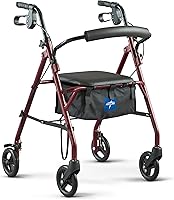
The Medline steel model weighs 16.5 lb and holds 350 lb. That extra capacity comes with a steel frame that may feel steadier during standing and sitting.
The Drive Medical model weighs 20 lb and holds 350 lb. Its steel frame and 7.5 inch wheels add bulk, but they suit daily outdoor use.
The VOCIC Z21 weighs about 22 lb and holds 350 lb. It is the heaviest here, so car lifting and tight storage need a closer look.
Weight in the car and at home
Frame weight matters most when you lift the walker several times a day. A 14 lb aluminum frame is easier to carry up a step than a 22 lb model.
The Drive Medical model lists product dimensions of 25.5 x 23.5 x 31 inches at 20 pounds. The Medline steel model lists 23 x 21 x 31 inches at 16.5 pounds.
The Medline aluminum model lists 24.8 x 7.5 x 30.4 inches at 14 pounds. Its narrower listed profile can help in tight closets and hallway corners.
Choose aluminum if you lift the walker into a trunk each day. Choose steel if capacity and a firm frame matter more than carrying weight.
For lighter seated options, see best lightweight rollator with seat. Weight can decide whether you use the aid or leave it at home.
Brakes and handles: control you will use every step
Hand brakes are the main safety feature on a rollator, so grip and lock action matter. Ergonomic handles should be easy to squeeze without slipping.
The Medline models use ergonomic handles with push up to brake and push down to lock. That system helps fragile hands, and locking prevents movement when you sit or stand.
The Drive Medical model has a secure locking hand brake and ergonomic handles. Height adjustment helps you keep your posture upright.
The VOCIC Z21 has a braking system with free, deceleration and stop modes. Its handles adjust from 31.5 to 36.6 in, which fits a wider height range.
Set handle height so your arms bend slightly when you hold the grips. Bent elbows help you brake and steer without leaning forward.
Both Medline models adjust handles from 31 to 35 inches for a perfect fit. The VOCIC dual adjustment covers users from 4 feet 11 inches to 6 feet 3 inches tall.
Folded size and storage: will it fit your car and home?
A rollator only helps if it fits where you store and carry it. Folding design differs more than many buyers expect.
The VOCIC Z21 folds in 3 seconds to 31.5 x 23.6 x 13.8 inches. That size can fit in many car trunks, but it is still a large folded package.
The Medline aluminum model folds easily for transport and storage. Its 14 lb weight makes that folding easier to handle.
Both Medline models include storage under the seat. The Drive Medical model adds an under-seat pouch for essentials during travel or errands.
Measure your trunk opening, not just the trunk floor. A folded walker must pass through the opening before it can sit inside.
The VOCIC storage bag includes reflective strips for night visibility. The Drive Medical pouch keeps essentials close without adding a large bag under the seat.
Who should buy which model?
Buy the Drive Medical model for balanced daily use, the Medline steel model for value, the VOCIC Z21 for terrain and the Medline aluminum model for light lifting. Each one solves a different problem.
Choose the Drive Medical Rollator Walker with Seat if you want 7.5 inch wheels, a steel frame and a pouch for daily errands. It suits indoor and outdoor walking with a 350 lb capacity.
Choose the Medline Steel Rollator Walker with Seat if you want a lighter steel frame at 16.5 lb with a 12x12 inch seat. It suits buyers who want storage and locking brakes without the largest wheels.
Choose the VOCIC Z21 Rollator Walker for Seniors if you walk on rough surfaces often. Its 8 inch wheels, thick seat and wide adjustment range fit outdoor use and taller or shorter users.
Choose the Medline Aluminum Rollator Walker with Seat if lifting matters most. At 14 lb, it is easier to carry, but you must stay within the 250 lb capacity.
If Medline is your preferred brand, see best medline rollator walker with seat. That page compares Medline seat and frame choices in more detail.
Set-up, fit and care in general terms
Set the handles to your height, lock the brakes to sit and check fasteners before each walk. Good fit helps you stay upright and control the walker safely.
Stand tall with your arms relaxed, then adjust the handles until your elbows bend slightly. Both Medline models adjust from 31 to 35 in, while the VOCIC Z21 adjusts from 31.5 to 36.6 in.
Before each use, make sure the frame is fully unfolded and locked. Check that wheels turn smoothly and brakes hold when you push down to lock.
Clean wheels and wheel housings with a damp cloth, and wipe the seat and handles with a mild cleaner. Check tire wear and tighten loose knobs to keep the frame firm.
Do not use the walker if you notice cracked parts, loose fasteners or brakes that do not hold. Ask a qualified person to check it before you walk again.
Confirm the seat, backrest, storage bag and brake cable are correctly installed before use. That check matters on the VOCIC Z21, where the bag and seat are part of the set-up notes.
Rollator vs rolling walker: final decision rule
Choose by surfaces, seat needs, lifting and capacity, not by the name rollator or rolling walker. The right term matters less than the right wheel size and frame for your routine.
Pick 8 inch wheels for rough outdoor ground, 7.5 inch for mixed daily use and 6 inch for smooth indoor paths. Pick aluminum if you lift often, and pick steel if you need 350 lb capacity.
If you want a transport option instead of a walking aid, see best rollator transport chair combo. That design is for being pushed, not for walking support.
For wheelchair terms that often appear in the same searches, read What Is an Ultralight Wheelchair? What This Means and [What Does Wheelchair Accessible Mean?
What You Need to Know](/what-does-wheelchair-accessible-mean/). Those guides help when a walker is no longer enough.
In short, a rollator versus rolling walker choice is really a choice between wheel size, seat design, weight and capacity. Match those four points to your home, car and daily routes, and the right model becomes clear.
Frequently asked questions
Is a rollator a rolling walker?
Yes, in most shopping listings a rollator is a rolling walker. Both names describe a walker with wheels and hand brakes, usually four wheels, often with a seat.
Check wheel size, capacity and brakes instead of relying on the name alone.
What is the difference between a rollator and a rolling walker?
There is no strict medical difference between the terms. Some sellers use rollator for seated models with larger wheels and rolling walker for simpler wheeled frames.
Compare the frame, wheels, seat and weight capacity for each model.
Which wheel size is better for outdoor use?
Larger wheels usually roll over bumps and uneven ground more easily. An 8 inch wheel can cross obstacles that a 6 inch wheel may struggle with, while smaller wheels can turn in tighter indoor spaces.
Match wheel size to where you walk most often.
Can I sit on a rollator?
Many rollators have a padded seat and backrest for short rests, but not every wheeled walker does. Lock the brakes before sitting, and check the seat size and weight capacity.
Sit only when the frame is stable on a level surface.
How heavy should a rollator be?
Weight depends on frame material and capacity. Aluminum models can be near 14 lb, while steel models with larger wheels may be 20 lb or more.
If you lift it into a car often, a lighter frame can make daily use easier.