Walkers and Rollators: The Complete Buying Guide
The right walker depends on how much support you need and where you will use it: standard walkers give the most support, rollators add wheels and a seat for longer walks, and specialized models fit balance, recovery, weight or terrain needs. Measure your height, check your doorway and floor, and choose the type that matches your strength and daily routine.
On this page (13 sections)
- What are the main types of walkers for disabled adults?
- Which types of walkers for seniors fit daily use at home?
- How do you size a walker for your height and stride?
- How do you use a walker correctly for safe steps?
- How do you walk with a rollator without losing balance?
- When do balance problems call for a stronger walker?
- Which walker suits you after knee replacement?
- Which walker suits you after hip replacement?
- When is a cane enough and when is a walker better?
- Which features matter on folding walkers and rollators?
- Which specialty walkers fit weight, terrain and upright posture?
- Which accessories and spare parts are worth buying?
- How do you choose the right type in one decision?
The right walker depends on how much support you need and where you will use it: standard walkers give the most support, rollators add wheels and a seat for longer walks, and specialized models fit balance, recovery, weight or terrain needs.
This guide explains the types of walkers for disabled adults in plain terms. You will learn what each type does, how to size it, which features matter, and when a cane or knee scooter could be a better fit.
We compared specs and features across the main types. We did not test these aids in person, so we label maker claims and buyer patterns as such.
What are the main types of walkers for disabled adults?
Standard walkers, two-wheel walkers and four-wheel rollators cover most needs: standard models have no wheels and give the strongest support, two-wheel models help you slide forward, and rollators roll on four wheels with brakes and often a seat.
A walker for kids serves a very different user from an adult model, because height, weight and supervision needs differ. Families shopping for a child should read our guide to a walker for kids before comparing adult sizes.
Types of walkers for seniors often overlap with the adult types above. The difference is usually seat height, handle shape, weight of the frame, and how easy it is to fold for a car.
Most buyers start with three questions. How much weight can you put through your arms?
Will you use it indoors, outdoors, or both? Do you need to sit and rest during longer walks?
If you can bear weight through both arms and move slowly, a standard walker gives you the most stability. If you can use brakes and want to walk farther, a rollator may suit you better.
If you need help keeping an upright posture, an upright walker may help you stand taller. If you need a higher weight limit, a bariatric model is built for that need.
Terrain matters too. Smooth indoor floors suit many models, while gravel, grass or uneven paths call for larger wheels and a stronger frame.
Which types of walkers for seniors fit daily use at home?
For home use, choose a walker you can move through your doors and lift into a car: a standard or two-wheel walker is light and narrow, while a rollator adds a seat but takes more width and turning space.
Our guide to types of walkers for seniors explains the senior-focused options in more detail. Read it if you are shopping for a parent, spouse or yourself after a change in mobility.
Indoor floors are usually smooth, so small wheels can work well. Watch for rugs, thresholds and cords, because they can catch small wheels or feet.
A standard walker has four legs and no wheels. You lift it, step forward, set it down, and repeat.
That pattern gives you support at every step.
A two-wheel walker has wheels at the front and glides or rubber tips at the back. You push it forward and it slides a short distance, then you set it down again.
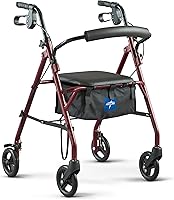
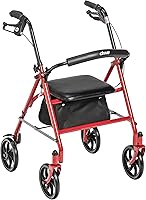
A rollator has four wheels, hand brakes and usually a seat. You walk continuously without lifting the frame, and you can lock the brakes and sit when you need a rest.
For many older adults, the seat on a rollator is the feature that makes longer walks possible. Park trips, medical visits and shopping trips all get easier when you can sit along the way.
Our roundup of the best walkers for seniors compares models that many buyers shortlist for home and community use. Use it after you decide on basic type and size.
How do you size a walker for your height and stride?
A correct height puts your elbows at a slight bend when you stand tall: set the handles near your wrist crease, then check that your shoulders stay down and your back stays fairly straight.
Our detailed guide to how tall should a walker be walks through the measurement step by step. Do that check before you order, because a frame that is too tall or too short changes how you walk.
Stand in shoes you wear most often, with your arms relaxed at your sides. The top of the walker handles should line up close to the crease on the inside of your wrist.
When you grip the handles, your elbows should bend about 15 to 30 degrees. If your shoulders rise toward your ears, the walker is too tall.
If you hunch forward, it may be too short or set too far ahead.
Check the width against your home. Measure your narrowest doorway, hallway and bathroom entry.
A walker that fits the front door may still be too wide for the bathroom.
Check the user weight limit as well. The limit must cover your weight plus any bag, oxygen tank or other item you carry on the frame.
Check the folded size too. A frame that folds flat is easier to store in a closet or car trunk.
A frame that folds to a tall shape may not fit under a seat.
Your stride also matters. If you take short steps, a frame with a wide stance can feel stable.
If you take longer steps, make sure the frame does not catch your heels.
How do you use a walker correctly for safe steps?
Safe use means keeping the walker close, moving it first, then stepping: place the frame a short step ahead, grip both handles, step forward with your weaker leg first if a clinician advised it, and lock brakes before you sit or stand.
Our step guide to how to use a walker correctly covers standing, sitting, stairs and turning in small spaces. Read it before your first walk, not after a near fall.
Keep your weight through your arms, not by hanging on the handles. The frame is a support, not a crutch you lean on with all your weight.
On a rollator, lock the brakes every time you sit down or stand up. Unsecured brakes can let the frame roll as your weight shifts.
When you turn, take small steps and pivot the frame with your arms. Do not twist your body while your feet stay planted, especially on smooth floors.
When you sit, back up until the seat touches the backs of your legs. Lock the brakes, check that the frame cannot roll, then lower yourself using the handles for support.
When you stand, push down through both handles, lean slightly forward, and stand in stages if you feel dizzy. Sit back down if you need a moment.
How do you walk with a rollator without losing balance?
Walking with a rollator means letting the wheels roll while your hands guide and brake: keep the frame close to your body, look ahead, and use the brakes to slow down before you turn or stop.
Our guide to walking with a rollator explains stride, braking and seat use in plain steps. It suits anyone who is new to four wheels after using a standard walker.
Do not push the rollator far ahead of you to reach for something. That reach is a common cause of a fall, because your center of balance moves beyond your feet.
Keep your elbows slightly bent and your shoulders relaxed. If you must stretch to reach the handles, the frame is too far forward or too low.
Use the brakes early on slopes. Rollators can gain speed downhill, and a late brake may not stop you in time.
Walk slowly and face the frame when you go down a ramp.
A seat is for resting, not for riding. Sit only when the brakes are locked and the frame is on level ground, and stand up using the handles rather than pulling on the seat.
When do balance problems call for a stronger walker?
Greater balance needs often call for a standard walker or a rollator with lockable brakes and a stable seat: the key is support from both hands, a frame that will not roll away, and a seat you can trust when you rest.
Our picks for the best walker for seniors with balance issues focus on stability features and ease of use. Read them if you have had falls, dizziness or a recent hospital stay.
A standard walker cannot roll away from you. That alone makes it a safer choice for some people who cannot reliably use brakes or who move very slowly.
A rollator can suit balance needs if you can lock the brakes, keep the frame close, and sit down in a controlled way. Practice braking on level ground before you go out.
Watch for signs that a rollator is too much. If you forget the brakes, if the wheels run ahead of you, or if you cannot stand up from the seat without help, step back to a standard model.
Talk with a doctor or physical therapist if you have frequent falls. They can check your gait, your strength and whether a walker, cane or other aid fits your needs.
Which walker suits you after knee replacement?
After knee replacement, most people need a walker that supports both arms while they heal: a standard or two-wheel walker gives slow, controlled steps, and your care team will tell you when to move to a rollator or cane.
Our roundup of the best walker to use after knee replacement compares options for the recovery weeks. Use it to narrow choices, then follow your surgeon's weight-bearing rules.
Early recovery is about short indoor steps, not distance. A frame you can lift and place by hand helps you move at the pace your knee allows.
Height matters more after surgery. Pain can make you hunch, and a frame set too high can strain your shoulders.
Recheck the handle height as swelling and pain change.
Our step guide to how to use a walker after knee replacement explains sitting, standing and toilet transfers. Those daily moves are where many setbacks happen.
Ask your care team about stairs before you try them. Many people learn a specific step pattern with a therapist first, rather than guessing at home.
Which walker suits you after hip replacement?
After hip replacement, choose a walker that keeps your steps short and your posture steady: a standard walker is common at first, and a rollator may come later when your surgeon clears it.
Our picks for the best walker to use after hip replacement focus on frames that are easy to place and easy to grip during the first weeks. Compare them with your surgeon's advice in hand.
Hip precautions can limit how far you bend, cross your legs or turn your foot. A walker does not remove those limits, so follow the full list you were given.
Our guide to how to use a walker after hip replacement covers chair height, bed transfers and bathroom trips. A chair that is too low can make standing much harder.
Keep the frame close when you turn. Big pivots put stress on the hip and can catch your feet on rugs or cords.
When is a cane enough and when is a walker better?
A cane suits mild balance needs on one side, while a walker suits needs on both sides or slower healing: the test is whether you can walk safely with support from one hand alone.
Our side-by-side comparison of walker vs cane explains the trade-off in one page. Read it if you are unsure which aid to buy first.
A cane adds a third point of contact and can help you feel the ground. It works best for short walks, good leg strength, and balance that is mostly steady.
A walker supports both arms and gives a wider base. It suits longer recovery, weakness on both sides, recent surgery, or a history of falls.
Two foldable canes show how a cane can still help in daily life without replacing a walker for greater needs.
The HurryCane Freedom Edition Foldable Walking Cane has a patented SteadiGrip base and a WhisperFlex pivoting design, according to the brand. It adjusts from 30.5 to 37.5 inches and folds to 13.7 inches for travel.
It weighs 16 ounces, has an aluminum shaft and a rubber handle, and it can stand on its own when you need your hands free. The base is 4.25 inches, which gives it a wider footprint than a single tip.
The HONEYBULL Walking Cane for Men & Women adjusts from 30 to 36 inches, folds to 12.5 inches, and has an aluminum shaft with a push-button lock. The brand says it fits people from 5 feet to 6 feet 5 inches.
Its three-prong base is 4 inches wide and pivots to stay flat on angled ground. It stands on its own, which helps when you open a door or sit down.
Neither cane replaces a walker when you need support from both hands. Think of them as tools for lighter needs, errands, travel days, or as a backup when a walker stays at home.
Which features matter on folding walkers and rollators?
The features that matter most are height range, brakes, seat size, wheel size and folded size: each one changes how the aid fits your home, your car and your daily walks.
Our picks for the best folding walkers for seniors focus on frames that fold flat for storage and travel. Folding matters if you drive to appointments or live in a small home.
Our picks for the best 4 wheel walkers focus on models with seats for rest during longer walks. A seat helps only if you can lock the brakes and stand up from it safely.
Hand brakes should be easy to reach and firm to squeeze. Test the squeeze before you buy, because weak hands need brakes that lock with less force.
Wheel size changes outdoor use. Larger wheels roll over cracks and grass more easily, while smaller wheels suit smooth indoor floors and tighter turns.
Curb clips, storage bags and trays can help, but they add weight and width. Add only the features you will use on most walks.
Maintenance is simple. Check the brakes, tighten loose bolts, and replace worn glides or tips before they lose grip.
Our guide to best replacement glides for walkers helps you match the right parts.
Spare parts wear out with use, so keep the frame clean and ask the maker which parts fit your model. Our list of best rollator walker replacement parts covers common wear items.
Which specialty walkers fit weight, terrain and upright posture?
Specialty walkers fit specific needs that standard models do not cover: bariatric frames carry higher loads, all-terrain rollators handle rough ground, upright walkers support taller posture, and transport chair combos can carry a seated passenger.
Our picks for the best bariatric rollator walker focus on wider frames and higher weight limits. Never guess the limit.
Check the maker spec for your exact model before you buy.
Our picks for the best all terrain rollator with seat focus on larger wheels and stronger frames for outdoor paths. Terrain use also needs stronger brakes, because speed builds fast on slopes.
Our picks for the best upright walkers for seniors focus on frames that help you stand taller with forearm supports. They suit people who hunch forward but can still walk with support.
Our picks for the best rollator transport chair combo focus on models that switch between a rollator and a chair for a passenger. The passenger should be able to sit safely, and a helper should control the chair.
A knee scooter is another mobility option after a foot or ankle injury, but it is not a walker. Our best knee scooters roundup compares those models, and our guide to how to use a knee scooter explains the riding position.
Choose specialty types only when the need is clear. A standard walker or rollator with the right size and brakes will serve most buyers well.
Which accessories and spare parts are worth buying?
Worthwhile accessories are the ones you will use on most walks: a storage bag, curb clips, a cane holder, replacement glides and spare brake parts solve real daily problems.
Our picks for the best folding walker accessories focus on add-ons that fit folding frames without adding much weight. Check the fit for your exact model before you order.
Our picks for the best rollator walker accessories cover bags, trays and holders for four-wheel models. A bag keeps small items off your lap and within reach.
Replace glides and tips as soon as they wear smooth. Worn tips slide on tile and hardwood, and a loose tip can shift the frame as you step.
Clean the frame with a damp cloth and check bolts monthly. Dust in the wheels and brakes can make a rollator feel stiff or slow to stop.
Buy spare parts from the maker when you can, because parts are often model specific. Our best rollator walker replacement parts list helps you spot the common items to keep on hand.
How do you choose the right type in one decision?
Pick a standard walker for the most support, a rollator for longer walks with a seat, and a specialty model only for a clear need: then size it to your wrist, check your doors, and practice brakes and sitting before you go out.
For greater balance needs or early recovery, start with a standard walker. For longer community walks where you can use brakes well, a rollator with a seat often fits better.
For lighter balance needs on short walks, a cane may be enough, and the two canes above show the foldable, free-standing style many buyers choose for travel. For a foot or ankle injury where you cannot bear weight, a knee scooter may fit instead of a walker.
Types of walkers for disabled adults come down to support, wheels, brakes, seat and size. Match those five points to your strength, your home and your daily routes, and you will choose with confidence.
Frequently asked questions
What are the main types of walkers for disabled adults?
The main types are standard walkers without wheels, two-wheel walkers, rollators with four wheels and a seat, upright walkers that support an upright posture, bariatric walkers for higher weight capacity, all-terrain rollators for outdoor use, and rollator transport chair combos that can also carry a seated passenger. Your mobility, balance and environment decide which type fits.
How tall should a walker be for correct use?
Set the handles so your elbows bend about 15 to 30 degrees when you stand tall with your arms relaxed at your sides. The handles should sit near the crease on the inside of your wrist.
Ask a clinician or physical therapist to check the fit if you have pain, surgery or balance problems.
Is a rollator better than a standard walker?
A rollator is better for many people who can bear weight through both arms and walk longer distances, because the wheels roll forward and many models have a seat. A standard walker is better when you need more support, cannot use brakes reliably, or are recovering and must move slowly step by step.
When should you choose a cane instead of a walker?
A cane can suit mild balance needs or short walks when you have good strength on one side and do not need support from both hands. A walker suits greater balance needs, weakness on both sides, longer recovery, or falls.
Our walker vs cane guide compares the two side by side.