Transport Chair vs Transfer Chair: Which Do You Need? (November 2026)
Choose a transport chair for caregiver-assisted travel and a transfer chair or bench for moving into a bath or shower. The names overlap, so match the device to where and how you need help.
On this page (8 sections)
- What is the difference between a transport chair and a transfer chair?
- Which chair is right for travel and appointments?
- Which chair is right for getting into a tub or shower?
- How does a transfer bench help with bathing?
- Can one chair do both jobs?
- What should you check before choosing either type?
- How do you make a safer transfer plan?
- Which should you choose?
Choose a transport chair for caregiver-assisted travel and a transfer chair or bench for moving into a bath or shower. The phrase “transfer chair” can refer to different equipment, so look at its design and the task it supports.
A transport wheelchair has small wheels and is pushed by another person. A bath transfer bench sits across a tub edge to help with a seated move into or out of the shower.
The word “transfer” describes the task, not one standard chair design. This guide compares travel seating with bathing transfer equipment so you can identify what to measure and which type to consider.


What is the difference between a transport chair and a transfer chair?
A transport chair moves a seated person along a route; a bath transfer chair or bench helps with a change of seat at the tub. The two devices serve different settings and are not interchangeable.
A transport wheelchair has a seat, wheels and handles for a caregiver to push. Models may fold for a car trunk or storage, and some include swing-away footrests for getting in and out.
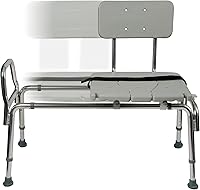
A tub transfer bench is placed with part of its seat outside the tub and part inside. The seated user moves across the tub edge according to the bench instructions, often with caregiver support.
The product name alone may not tell you which kind of transfer chair a seller means. Check whether it has wheels for travel, a bench that spans a tub edge, or a seat that swivels or slides.
Is a transport chair a wheelchair?
A transport chair is a type of wheeled mobility chair, but it differs from many standard wheelchairs in how it is pushed. Its small wheels are generally intended for caregiver use rather than independent self-propulsion.
If you are comparing travel chairs with a self-propelled option, see our guide to transport chair vs wheelchair. Think about who will push, how far you travel and where the chair needs to fit.
What does “transfer chair” mean?
“Transfer chair” can mean equipment designed to assist with moving between surfaces. In bathing, that often means a bench or chair that helps someone cross a tub edge while seated.
Other transfer equipment can have different designs and uses. Before choosing one, confirm the location and movement it is intended to support, then read the setup and safety instructions for that exact device.
Which chair is right for travel and appointments?
Choose a transport chair when another person will push you during outings, appointments or trips between rooms. Its wheels and folding frame are meant for movement over a route, not for use in a shower.
A transport chair may fit your routine if you need a seat for longer distances but do not plan to propel yourself. If you need a higher-capacity model, compare bariatric transport chairs.
Consider who will push it, whether the route includes ramps or uneven ground, and how the chair will be stored.
The Drive Medical Folding Transport Wheelchair has a folding frame, 8-inch front and rear wheels, swing-away footrests and a fold-flat backrest. The Medline Lightweight Foldable Transport Wheelchair with Handbrakes has 12-inch rear wheels, handbrakes and rear-wheel manual locks.
For more options, compare our guides to the best transport chairs for seniors and best transport chairs for adults. For a specific fit, check the stated chair dimensions, seat width and capacity against the user and storage space.
The Medline chair's weight can matter when lifting it into a vehicle. See how much a Medline transport chair weighs and check the exact model details before planning storage or lifting.
Which chair is right for getting into a tub or shower?
Choose a bath transfer bench when the main challenge is crossing the tub edge while seated. The bench needs a suitable tub and enough bathroom space, and it must be installed and used as directed.
A conventional transfer bench has legs on both the floor outside the tub and inside the tub. The user sits on the outside portion, then moves across the seat toward the shower area with any assistance the instructions require.
The DMI Tub Transfer Bench and Shower Chair has a sliding seat and adjustable height from 19 to 23.5 inches. Its setup can be configured for right or left side use, and it has a 400 lb capacity.
The Platinum Health Carousel Sliding Shower Chair Tub Transfer uses a sliding design with a swivel seat. It also has padded seat, back and armrests, and a reversible setup for either side of the tub or shower.
Measure the tub, doorway and clear floor area before choosing either bench. Also check seat height, capacity and the space the chair occupies when installed.
How does a transfer bench help with bathing?
A transfer bench creates a seated route across the tub edge. It can reduce the need to step over the wall, but the person still needs a safe transfer plan and the setup must fit the bathroom.
Place the bench as its instructions describe, with the legs level and stable. The DMI bench is positioned with one end outside the tub and the other inside, so the user can sit and slide across with caregiver help.
A swivel seat works differently from a fixed seat. It can turn the user toward the tub, but it still requires enough space and careful setup for the person using it.
A bench does not remove every fall risk. If the person has trouble sitting, shifting weight, following directions or maintaining balance, ask a clinician or trained transfer professional to review the plan before use.
For related mobility topics, browse the manual specialty wheelchair guide. It can help you explore other chair types, though a wheelchair and a bathing bench solve different tasks.
Can one chair do both jobs?
Usually, you need separate equipment for travel and bathing because the devices are built for different surfaces and movements. A wheeled transport chair is not designed to sit across a tub, while a bathing bench is not a travel chair.
A transport chair has rolling wheels and a push handle for moving on the floor. Bath benches have a base designed for stable placement around a tub, with parts exposed to water and a seat arrangement for transfer.
A product name may combine words such as “transport,” “transfer,” “shower” or “wheelchair.” Read the design description and confirm where the device is intended to be used before you buy.
Don't try to adapt a travel chair for bathing or roll a bench across a room with someone seated unless its instructions explicitly allow that use. Use each device only for its stated purpose.
What should you check before choosing either type?
Start with the task, then verify fit, support needs and the manufacturer's instructions. A chair that solves one transfer may be wrong for another.
For a transport chair, consider:
- Who will push it and how often.
- The route, including doorways, ramps and outdoor surfaces.
- Seat width, chair weight and folded dimensions.
- Footrest design and any caregiver brake features.
- The user's weight and ability to sit securely.
For a bath transfer chair, consider:
- Tub edge height and tub width.
- Bathroom floor space on both sides of the tub.
- Seat height and the user's ability to sit and slide or turn.
- Weight capacity and the way the bench locks or stabilizes.
- Whether the caregiver can assist with the planned movement.
Measure the narrowest doorway and the exact storage area, not just the room in general. For bathing, check that every leg can rest securely and that the seat reaches the needed position.
How do you make a safer transfer plan?
Plan the movement around the person's abilities and the device instructions. If a transfer feels uncertain, get guidance from a clinician or trained professional before attempting it.
Keep the floor clear and dry where possible, position the chair or bench as directed, and lock any brakes when the design includes them. Don't pull on removable parts or use armrests as lifting handles unless the instructions say they are meant for that purpose.
For a transport chair, check that the person is seated and positioned before moving. Use footrests as directed and take extra care at thresholds, ramps and uneven ground.
For bathing, follow the bench's setup instructions each time it is moved or adjusted. A caregiver should know how the person will sit, shift and return from the tub before the transfer begins.
Which should you choose?
Pick a transport chair if you need caregiver-pushed seating for trips; pick a transfer bench if you need help crossing a tub edge while seated. If you need both types of support, choose each device for its own setting and task.
Compare transport chair dimensions, wheel layout and caregiver controls for travel. For bathing, start with tub measurements, seat height, weight capacity and a transfer plan that fits the person's abilities.
If the term “transfer chair” is unclear, confirm whether the item is a wheeled chair, a sliding bath bench or a swivel shower seat. That detail is the quickest way to avoid choosing equipment for the wrong job.
Frequently asked questions
Is a transport chair the same as a transfer chair?
No. A transport chair is a wheeled seat that a caregiver pushes for trips, while a transfer chair or bench usually helps a person move between a wheelchair, walker or other seat and a bath or shower.
Some product names use the terms loosely, so check the device's actual design and intended setting.
Can a transport chair be used to get into a bathtub?
A standard transport chair is for travel on a floor, not for crossing a tub wall. For bathing, consider a transfer bench designed to span the tub edge, and follow its instructions for setup, stability and caregiver assistance.
Can you use a transfer bench without a caregiver?
That depends on the person's balance, strength, transfer ability and the bench instructions. The DMI bench describes sliding with caregiver help, so don't assume the device makes a solo transfer safe.
Ask a clinician or trained transfer professional to assess the setup when you are unsure.
What should you measure before choosing a tub transfer chair?
Measure the tub edge, bathroom floor space and the route into the room, then compare them with the chair's full dimensions and setup instructions. Check seat height and weight capacity too.
Keep enough space to approach, sit and move the chair as directed.
How do you choose between a transport wheelchair and a regular wheelchair?
Choose a transport wheelchair when a caregiver will push the user and compact folding matters. A regular wheelchair may better suit independent propulsion, depending on its design.
Compare wheel size, controls, transfer needs and the expected route; our transport chair vs wheelchair guide explains the distinction.