Transport Chair vs Wheelchair: Which Should You Choose? (November 2026)
Choose a transport chair when a caregiver will push you; choose a manual wheelchair when you need to propel yourself. The transport chair vs wheelchair choice also depends on your routes, transfer needs and how often you’ll lift the chair into a vehicle.
On this page (9 sections)
- Transport chair vs wheelchair: who moves the chair?
- Which chair fits your routes and daily use?
- How do the wheels affect pushing and control?
- Which chair is easier to transport in a car?
- What should you check before choosing a transport chair?
- Can you use a transport chair indoors and outdoors?
- How do transfers and comfort affect the choice?
- More guides on this topic
- Which one should you choose?
Choose a transport chair when a caregiver will push you; choose a manual wheelchair when you need to propel yourself. The transport chair vs wheelchair decision depends on who will move the chair, where you’ll go and how you’ll store it.
A transport chair usually has small wheels and handles for a companion. A manual wheelchair often has large rear wheels with hand rims that let the user push.
That difference affects independence, caregiver effort and travel. Compare your usual routes and transfers before focusing on frame material or folding size.

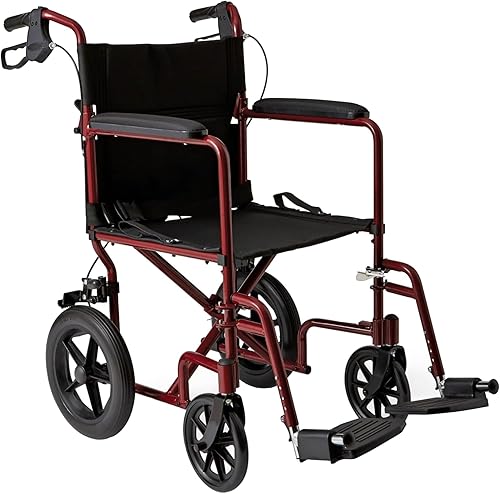 Best for handbrake control
Medline Lightweight Foldable Transport Wheelchair with Handbrakes
Transport chair vs wheelchair: who moves the chair?
A companion pushes a transport chair, while many manual wheelchair users propel themselves with the rear wheels. Choose based on who needs to control movement during a typical outing.
Transport chairs are built around caregiver pushing. Their smaller wheels can make the chair compact, but they don’t give most users the same hand-rim access as a self-propelled manual wheelchair.
Manual chairs vary by design and fit. Read our guide to Types of Manual Wheelchairs: A Helpful Guide to compare common layouts and think about which one suits your mobility and environment.
Some people use a manual chair with help from a caregiver, and some use a transport chair for specific trips. The key question is whether the person sitting in the chair needs to move independently during those trips.
Which chair fits your routes and daily use?
A manual wheelchair may suit independent movement across regular routes; a transport chair may suit outings where a companion can push. Surface, distance and doorways all affect the decision.
Small wheels can work well on smooth floors and level paths. Rough pavement, thresholds and long distances can make pushing harder, so consider the routes you actually travel.
When is a transport chair the practical choice?
A transport chair can be useful for appointments, short trips and vehicle travel when a caregiver stays with the user. Folding frames help with storage, but the person pushing still needs to manage the route and any transitions.
The Drive Medical Folding Transport Wheelchair has 8-inch wheels, a compact folding frame, swing-away footrests and a fold-flat backrest.
The Medline Lightweight Foldable Transport Wheelchair has 12-inch rear wheels, handbrakes and rear-wheel locking brakes. Its listed weight is 26 lb, so include lifting effort in your comparison.
For more context on the chair style, read What Is a Transfer Wheelchair? The Facts.
A transport chair and a transfer chair can serve related mobility needs, but the terms don’t always mean the same design. For a direct comparison, see transfer chair vs wheelchair.
When does a manual wheelchair make more sense?
A manual wheelchair may be a better fit when the user needs to move without a companion pushing. For a lighter model, compare lightweight manual wheelchairs.
The right setup depends on strength, reach, posture, fit and the surfaces along the route.
A manual wheelchair’s large rear wheels and hand rims can support self-propulsion. They also take more room than small transport-chair wheels, so check vehicle storage and home access.
If you’re weighing self-propulsion against powered movement, see Power Wheelchair vs Manual Wheelchair: What It Involves. A clinician or mobility specialist can help assess fit and propulsion needs.
How do the wheels affect pushing and control?
Larger rear wheels and hand rims can let a manual wheelchair user propel the chair; transport chair wheels are generally set up for a companion to push. Wheel size also affects storage and how a chair handles your route.
A transport chair’s smaller wheels reduce the space the chair takes when folded. Larger rear wheels may make it easier for a companion to guide a chair over minor route changes, but they don’t guarantee it will suit every surface.
The Drive Medical Lightweight Expedition Folding Transport Wheelchair has 12-inch rear wheels, curb assist and companion-activated loop lock brakes. It weighs 19 lb, which may matter if a caregiver often lifts it into a vehicle.
For a manual chair, wheel setup is only one part of the choice. Compare lightweight and ultra-lightweight wheelchairs when weight is a deciding factor.
Consider the user’s reach, seating position and ability to propel over the surfaces they encounter.
Which chair is easier to transport in a car?
A folding transport chair may take less space than a manual wheelchair, but compare its folded dimensions and weight before choosing. The person lifting it needs to handle the chair safely.
Measure the trunk opening, storage space and route from the car to the user. Check whether the folded chair fits without blocking essential items or requiring an awkward lift.
Transport chairs differ in weight and folding features. The Medline Durable Folding Steel Transport Wheelchair weighs 30 lb and folds, with a backrest that folds down and detachable footrests.
If storage is a priority, compare best transport chair for seniors and best transport chair for adults for options aimed at those readers. Check the measurements and weight against your car and lifting ability.
What should you check before choosing a transport chair?
Check seat fit, user weight limits, footrest access, brakes and the caregiver’s ability to push and lift the chair. A chair that folds neatly still needs to suit the person and the route.
Measure the user and compare seat width and depth with the chair’s dimensions. Leave room for comfortable positioning, but avoid a seat that makes the user slide or sit unevenly.
Check how the user will get in and out. Swing-away or detachable footrests can clear the front of the chair during transfers, and removable arms may help with some transfer setups.
See how to choose a transport chair with removable arms if arm access is a deciding factor.
Review brake placement and operation with the caregiver. The brakes should be reachable by the person responsible for stopping or securing the chair, and the user should be positioned safely during transfers.
For additional chair options, compare the best lightweight transport chair and best transport chair replacement wheels guides. Match any choice to the chair’s intended use and dimensions.
Can you use a transport chair indoors and outdoors?
Either chair should match the surfaces and clearances where you plan to use it. Doorways, thresholds, turning space and uneven paths can change how manageable a chair feels.
Measure narrow doorways and turning areas at home or at regular destinations. For outdoor use, think about curb cuts, path condition and how much effort the companion can safely manage.
A transport chair can work for indoor trips and level outdoor paths, depending on its wheel design and the caregiver’s ability. A manual wheelchair may give its user more control on familiar routes, but it also needs to fit the environment and user.
For room-specific ideas, see best transport chairs for indoor use. A chair designed for transport still needs enough space to turn and park safely.
How do transfers and comfort affect the choice?
Choose a chair that supports safe transfers and a comfortable seated position for the expected trip. Footrests, armrests, seat width and cushion needs all matter.
Swing-away footrests can make it easier to approach the seat during a transfer. Follow the chair’s instructions and get help when the user needs support moving between surfaces.
Arm style can affect access beside a bed, toilet or car seat. If a transfer chair is also under consideration, read Transport Chair vs Transfer Chair: Which Do You Need? to compare the intended roles.
A cushion may change seat height and fit. Check the chair’s seat dimensions and the cushion’s size before adding one; our guide to best transport chair cushions covers options for this chair type.
More guides on this topic
- Best Medline Transport Chairs
- Best Drive Transport Chairs
- Best NOVA Transport Chairs
- Best Transport Chairs for Tall People
Which one should you choose?
Pick a transport chair if a companion will push you and compact vehicle storage matters; pick a manual wheelchair if self-propulsion is a priority. Then confirm fit, route access and transfer needs with a qualified mobility professional.
A caregiver-pushed chair can make sense for planned outings where someone can stay with the user. A manual wheelchair may offer more independence when the user can propel and control a suitable chair.
Compare best transport chair for kids if choosing for a child, or best bariatric transport chair when a higher capacity is needed. For a more specialized setup, an electric transport chair may be another option to research.
Consider where the chair will be used, who will push or propel it, and how transfers will happen. Those answers are more useful than choosing by the word “lightweight” alone.
Frequently asked questions
Can you propel a transport chair yourself?
Most transport chairs are designed for a companion to push, with small rear wheels that aren't made for the user to reach and propel like the large wheels on a manual wheelchair. If you need to move independently, compare manual wheelchair designs and discuss fit and safe use with a qualified mobility professional.
Is a transport chair the same as a wheelchair?
A transport chair is a type of wheeled mobility chair, but its push setup differs from a standard self-propelled manual wheelchair. Transport chairs usually have a companion handle and small wheels, while manual wheelchairs commonly have large rear wheels with hand rims for user propulsion.
Which is easier to put in a car?
A folding transport chair can be easier to store because its compact frame and smaller wheels take less room, though its weight still matters when lifting. Compare folded dimensions and weight for the exact chair, then measure your trunk opening and the space you can lift into.
Are transport chairs suitable for everyday use?
A transport chair can suit frequent trips when a companion is available to push and the chair fits the user's needs. Consider all-day comfort, route surfaces, transfers and caregiver effort.
For independent movement or varied daily routes, a properly fitted manual wheelchair may be a better match.