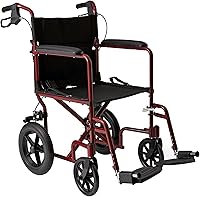
How to Choose a Transport Chair with Removable Arms
Choose a transport chair with removable arms when side transfers and seat access matter most. Check the arm design, seat width, transfer clearance, footrest setup, folded size and caregiver handling before you buy.
On this page (10 sections)
- What should you check first on a transport chair with removable arms?
- Do removable arms always make transfers easier?
- Which products can help with transfers and caregiver transport?
- How do you compare arm design with footrest design?
- How should a caregiver handle the chair?
- What seat and chair measurements matter most?
- Is a transport chair with removable arms right for seniors?
- What other transport chair features should you compare?
- How do you choose between the 3 products here?
- Final decision rule for a transport chair with removable arms
A transport chair with removable arms is a good choice when side access matters during transfers, but the arm design is only one part of a safe fit. Compare the seat width and depth, transfer clearance, footrests, wheel locks, folded size and caregiver handling before choosing.
Removable arms can help a caregiver move closer to the user from the side. They may also make it easier to transfer between the chair and a bed, toilet or another seat.
The chair still needs a stable base, a suitable seat fit and enough room for the caregiver to work.
A transport chair is usually pushed by a caregiver rather than driven by the seated user. If you are still comparing chair types, start with this guide to transport chair vs wheelchair before focusing on arm design.
What should you check first on a transport chair with removable arms?
Start with the transfer path and seat fit, then check how the arms, footrests and brakes affect that path. A chair that has removable arms but cannot fit the user or the room will not solve the main problem.
Use this order when comparing models:
- Measure the user's seated width and depth.
- Check whether the arms detach, swing away or move in another way.
- Confirm the chair's overall width for doors and hallways.
- Check whether the footrests clear the transfer area.
- Look for wheel locks that can hold the chair during transfers.
- Compare the folded size and chair weight with the caregiver's lifting needs.
- Consider the surfaces where the chair will be used.
The goal is not to remove every part of the chair. The goal is to create enough space for a controlled transfer while keeping the user supported during transport.
How much side clearance do you need?
You need enough side clearance for the user's transfer method and for the caregiver to stand close without twisting. Measure the actual space beside the bed, toilet or seat, rather than relying only on the chair's overall width.
If the user transfers by sliding sideways, a removable arm may reduce the barrier between the chair and the destination seat. If the user stands and pivots, the footrests and front frame may matter more than the arms.
Keep the chair close to the destination surface, but do not let the chair touch a door, wall or unstable object. Apply the wheel locks before the user begins the transfer.
The correct clearance depends on the person's strength, balance and transfer method. A qualified health professional can help assess the safest technique when transfers are difficult or changing.
How should you measure the seat?
Measure the user's seated width at the widest point and compare it with the chair's seat width. The seat should provide room without allowing the user to slide sideways, especially when the chair will be used for appointments or longer outings.
Seat depth also matters. A seat that is too deep can make it harder to sit with the back supported, while a seat that is too short may not support the thighs well.
Do not confuse the seat width with the chair's outside width. The outside measurement determines whether the chair passes through doorways, while the seat measurement helps determine whether the user fits comfortably.
A cushion or bulky clothing can change the fit. Include those items when measuring, but do not add a cushion unless it is suitable for the chair and does not affect stability or foot placement.
Do removable arms always make transfers easier?
Removable arms can make side transfers easier, but they do not remove the need for proper positioning. The chair must be close, stable and ready before the arm is moved or detached.
Check these details before choosing:
- Does the arm come off completely or move out of the way?
- Can the caregiver release it without tools?
- Does the arm stay secure during normal use?
- Is there a clear place to store the arm during a transfer?
- Can the arm be replaced securely before the chair moves?
- Do the armrests support the user when the chair is being pushed?
A chair with padded or fixed armrests may provide a comfortable place to rest the arms, but it may not give the same side access as a removable design. A chair with no useful arm support may also feel less secure during movement.
Look for a design that matches the user's routine. If transfers happen several times each day, simple arm operation and a clear transfer sequence may matter more than a very compact fold.
For more options focused on this feature, see our guide to manual wheelchairs with removable arms. Manual wheelchairs and transport chairs are not interchangeable, so compare the wheel layout and intended use carefully.
Which products can help with transfers and caregiver transport?
The best match depends on where the transfer problem occurs. A bathroom transfer may need a bench with a sliding seat, while everyday trips may call for a folding transport chair with swing-away footrests and a manageable frame.
DMI Tub Transfer Bench and Shower Chair
The DMI is designed for transfers into a tub or shower rather than for moving through a building. Its plastic seat and non-slip aluminum body suit a bathing setup where the user needs to move across the tub edge while seated.
Its seat can be configured for a right- or left-side installation. The frame uses suction cup rubber anti-slip feet, and the design includes a backrest, safety belt, nylon strap locks and a handle for stability.
The overall dimensions are 39 in wide, 18 in deep and 37 in high. Measure the bathroom first, including the tub edge, floor space and the area outside the shower.
Choose this product for bathroom transfers, especially when the main challenge is crossing the tub wall. It is not a replacement for a transport chair for appointments, hallways or vehicle trips.
Drive Medical Folding Transport Wheelchair
The Drive Medical chair suits caregiver-led trips where folding and handling matter. Its swing-away footrests can open the front transfer area, while the padded armrests support the user's arms during transport.
The chair has a compact folding frame and a fold-flat backrest. It weighs 26 lb and measures 33 x 21.5 x 39 in, so compare those dimensions with your vehicle, storage area and doorways.
The 8 in wheels are placed at the front and rear. That layout is intended for caregiver handling rather than independent self-propulsion by the seated user.
Choose this product for folding transport, especially when the caregiver needs a chair for outings, appointments and vehicle storage. Check the transfer path separately because the supplied arm design is not described as removable.
Medline Ultra Lightweight Transport Wheelchair for Adults
The Medline suits caregivers who want a lighter chair for regular transport. Its 19 in wide by 16 in deep seat gives you clear measurements to compare with the user's seated fit.
The chair has desk-length cushioned armrests, an easy-clean nylon seat, a cup holder, comfortable hand grips and a seat belt. Swing-away footrests can clear the front of the chair during transfers, and rear-wheel locking brakes support transfer preparation.
Its 8 in rear wheels and swivel front wheels are intended to help with maneuvering around doorways, tight corners and ramps. The chair folds for storage and transport, and no assembly is required.
Choose this product when caregiver lifting weight is a major concern. Its title and product details describe fixed cushioned armrests rather than removable arms, so it may be less suitable when side clearance is the main buying reason.
How do you compare arm design with footrest design?
Compare the complete transfer opening, not the arms by themselves. A removable arm can create side access, but a footrest that stays in front of the chair can still block a standing or pivot transfer.
Swing-away footrests can help by moving the user's feet out of the way before sitting or standing. Remove or swing them aside only as the chair's instructions allow, and return them to a safe position before moving.
Desk-length armrests may give the user a place to rest the arms while being pushed. They can also limit side access if they do not move away.
For a transfer chair, ask which part of the chair blocks the user's path:
- The armrest may block a side transfer.
- The footrest may block a front transfer.
- The wheel may limit how close the chair can sit beside another surface.
- The frame may prevent the chair from aligning with a bed or toilet.
- The brake position may affect where the caregiver can stand.
A clear transfer plan helps you choose the right feature instead of assuming that removable arms solve every access problem.
How should a caregiver handle the chair?
A caregiver should prepare the chair before the user sits, then move at a controlled pace on a clear route. Apply the wheel locks for transfers and keep the user's feet supported before rolling.
Use this general sequence:
- Place the chair on a firm, level surface.
- Open the frame fully and check that it is secure.
- Move the chair close to the transfer surface.
- Apply the wheel locks if the chair has them.
- Move the arms or footrests as needed for the planned transfer.
- Help the user sit with the back supported.
- Position the feet on the footrests before movement.
- Release the locks only when the user is ready and the route is clear.
- Push slowly through doorways, turns and changes in surface.
Do not use a transport chair on stairs unless a trained professional and the chair's instructions specifically support that method. Ramps, thresholds and uneven outdoor paths require extra attention because small wheels can react differently to changes in surface.
A chair that folds easily still needs a safe loading routine. Keep fingers away from folding joints, secure loose parts and confirm that the chair is stable after opening.
What seat and chair measurements matter most?
The most important measurements are seat width, seat depth, overall width and folded size. These numbers answer four different questions: will the user fit, can the chair pass through the home, can the caregiver handle it and can it be stored?
Create a simple measurement list:
| Measurement | Why it matters |
|---|---|
| Seat width | Helps match the chair to the user's seated width |
| Seat depth | Helps support the thighs without pushing the user forward |
| Overall width | Determines doorway and hallway clearance |
| Overall height | Helps with storage and vehicle placement |
| Chair weight | Affects caregiver lifting and loading |
| Folded size | Helps confirm trunk or closet fit |
| Wheel size | Gives context for indoor and level outdoor handling |
| Footrest position | Shows whether the front transfer path can be cleared |
The DMI bathroom bench uses a different measurement system because it is built for a tub transfer. Its 19 in wide seat and adjustable 19 to 23.5 in seat height must be compared with the bathroom, tub and user's transfer height.
The Drive Medical chair measures 21.5 in wide and weighs 26 lb. The Medline chair has a 19 in seat width, a 15 lb weight in its title and a 300 lb weight capacity.
Use the exact chair measurements for your route and storage plan.
Is a transport chair with removable arms right for seniors?
A transport chair with removable arms can suit a senior who needs caregiver assistance and side access during transfers. The right choice depends on the user's transfer ability, seat fit, home layout and the caregiver's strength.
Some seniors need a chair mainly for short trips from a home to a vehicle. Others need a chair for appointments, indoor movement or longer periods of sitting.
A folding frame may matter most for the first group, while seat comfort and arm support may matter more for the second.
Read our guide to the best transport chairs for seniors when age-related changes, caregiver handling and daily routines are the main concerns. Measure the user and the home before comparing features.
Do not choose an electric option simply because the user has trouble walking. An electric transport chair brings different controls, charging needs and space requirements.
Compare the decision points in how to choose an electric transport chair if powered movement is part of the plan.
What other transport chair features should you compare?
Compare the chair's wheel layout, folding method, brakes, footrests and seat material after confirming the transfer fit. Each feature affects a different part of daily use.
Large rear wheels can change handling and may make a chair easier to guide across some surfaces. They also change the chair's footprint and storage needs.
See our guide to transport chairs with large rear wheels if wheel size is a deciding factor.
A lighter chair can be easier to lift into a vehicle, but weight is only one part of handling. The caregiver also needs to control the chair through turns, thresholds and crowded spaces.
Seat material affects care. Nylon upholstery can be wiped clean, while a bathroom bench needs surfaces and feet suited to wet areas.
Keep the product's intended setting in mind instead of treating every transport chair as an all-purpose mobility device.
If the user needs a support for short walking distances rather than seated transport, compare how to choose a cane separately. A cane, walker and transport chair solve different mobility problems.
How do you choose between the 3 products here?
Choose the DMI Tub Transfer Bench for tub and shower transfers, the Drive Medical Folding Transport Wheelchair for a steel folding chair with padded armrests and swing-away footrests, or the Medline Ultra Lightweight Transport Wheelchair when a lighter frame and a 19 in seat are more important.
The DMI is the only product here designed around sliding across a tub edge. Its adjustable seat height, cutout and bathroom-focused frame make it a transfer bench rather than an everyday travel chair.
The Drive Medical focuses on folding caregiver transport. Its steel frame, 8 in wheels, padded armrests, swing-away footrests and fold-flat backrest suit outings and storage, but its arm design is not described as removable.
The Medline focuses on lower lifting weight. Its aluminum frame, 15 lb title weight, 19 in seat width, 16 in seat depth and swing-away footrests suit caregivers who regularly load and store the chair.
Its desk-length cushioned armrests are not described as removable.
For a wider comparison of everyday options, see our guide to the best transport chairs for adults.
Final decision rule for a transport chair with removable arms
Choose a transport chair with removable arms when the user needs side access and a caregiver can safely manage the chair during transfers. Confirm the seat width and depth first, then check the arm release, footrest movement, brakes, overall width and folded size.
Choose the DMI for a tub transfer. Choose the Drive Medical for a folding steel transport chair with padded arms and swing-away footrests.
Choose the Medline when a 15 lb transport chair with a 19 in seat and 300 lb capacity matches the user's fit and caregiver handling needs.
Measure the transfer area before ordering, and keep the chair's intended setting clear. The safest choice is the one that fits the user, the route and the caregiver's routine without forcing a difficult transfer.
Frequently asked questions
What is the benefit of removable arms on a transport chair?
Removable arms can create more side clearance for transfers from a bed, toilet or other seat. They also help when a caregiver needs to move close to the chair.
Check how the arms detach, whether the chair stays stable during the transfer and whether the seat still fits your body.
How do I measure for a transport chair with removable arms?
Measure the user's seated width and depth, then compare those measurements with the chair's seat dimensions. Also measure doorways, the transfer space beside the chair and the storage area.
Leave enough room for the caregiver to stand and position the chair safely.
Are transport chairs suitable for self-propelling?
Most transport chairs are designed for a caregiver to push because they use small rear wheels and push handles. If the user needs to propel the chair independently, compare a manual wheelchair with the right wheel and hand-rim setup instead of assuming removable arms will provide self-mobility.
Do swing-away footrests help with transfers?
Swing-away footrests can clear the front of the chair when the user sits down or stands up. They are useful when footrests would otherwise block the transfer path.
Move them aside before a transfer, apply the wheel locks and keep the chair on a stable surface.
What should a caregiver check before moving someone in a transport chair?
Check that the chair is fully open, the wheels are secure, the brakes are applied during transfers and the footrests are positioned correctly before moving. Confirm that the user is seated properly and that the route is clear of loose rugs, steps and narrow obstacles.