Can Mobility Scooters Be Used on the Road?
Sometimes, but road access depends on local law, the scooter’s class and speed, and the road itself. Check official rules for each place on your route before riding there.
On this page (9 sections)
- Can mobility scooters be used on the road everywhere?
- What should you check before planning a road route?
- Does a scooter's terrain ability mean it can go on roads?
- What should riders know about lights and visibility?
- Which mobility scooter features matter for a road trip?
- Is a knee scooter suitable for road travel?
- What if you can't confirm that road use is allowed?
- How should you check road access before each trip?
- Can mobility scooters be used on the road safely?
Mobility scooters can sometimes be used on the road, but access depends on local rules, the scooter's class and speed, and the road's conditions. Check the official rules for every area on your route before you ride.
A scooter that handles pavement or grass isn't automatically allowed on public roads. Road permission, equipment requirements, and safe route choices are separate questions.
Can mobility scooters be used on the road everywhere?
No, road access varies by location and scooter type. Some places allow certain mobility scooters on specific roads, while others limit them to sidewalks, paths, or crossings.
Look for the rules on an official government or transport authority site. Search for mobility scooter or powered mobility device rules in the specific city, state, or country you plan to visit.
Check whether the rules set limits for the scooter's speed or class, the road's speed limit, or the rider's age. They may also cover registration, permits, insurance, lights, reflectors, horns, or other equipment.
Don't assume a rule applies across a whole country just because you found it on a national site. Local authorities may add restrictions, so verify the places where your route starts, ends, and passes through.
What should you check before planning a road route?
Confirm legal access first, then check whether the route is safe for your scooter and your needs. A route that appears short on a map can still include fast traffic, steep slopes, or a crossing that is hard to use.
Before you set out:
- Check road access and device rules with the relevant authority.
- Confirm the scooter meets any speed, equipment, registration, or permit requirements.
- Review the full route, including crossings, junctions, shoulders, and safe places to stop.
- Check weather, visibility, and the scooter's charge for the trip.
- Plan another route in case road access or conditions change.
Use an official map or local authority route guidance to check for traffic restrictions and accessible paths. If a road has no safe shoulder or a crossing feels difficult, choose another route where allowed.
For hills, compare the route's slope with the scooter's stated limits and plan enough charge for the return trip. Our guide to the best mobility scooter for hills explains which features to compare.
Does a scooter's terrain ability mean it can go on roads?
No, terrain ability describes where a scooter may travel, not where local law allows it. A scooter's tires or motor don't grant permission to use a road.
Pavement may be part of a road, a sidewalk, or a shared path, and local rules can treat each differently. Check the exact route type instead of relying on a general label like "all terrain."
If your route includes rough paths as well as paved areas, compare the best all-terrain mobility scooters for features such as tire type and ground clearance. For tire choices, see all-terrain mobility scooter tires.
What should riders know about lights and visibility?
Follow the local equipment rules and make yourself visible wherever you ride. Lights or reflectors may be required, and daylight doesn't remove the need to plan for clear sightlines at crossings and junctions.
Check that required lights work and that clothing or accessories don't block them. Avoid riding in poor visibility if you can't see the route clearly or other road users may not see you.
A high-visibility item can help others notice you, but it doesn't make an unsafe road safe or replace required equipment. If you aren't sure whether your scooter meets a local requirement, ask the relevant authority before riding on the road.
Which mobility scooter features matter for a road trip?
Choose features to match the route and your handling needs, after confirming road access. Range, lighting, brakes, weight, and the ability to transport or store the scooter may matter, but none guarantees road permission.
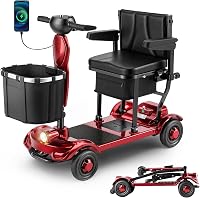
The ONLYWIND 37.5lb Lightweight Mobility Scooters for Seniors has a removable 24V 12Ah lithium battery, a stated 12-mile range, headlights, and automatic brake tail lights. Its listed weight is 37.5 lb excluding the battery.
The Mbxcooter 45Miles Mobility Scooter for Seniors/Adults comes with a detachable lithium battery, bright headlights, a rear safety tail light, and a stated range that varies by version. Its stated top speed is 7 mph.
These features are not proof that a scooter meets your area's road requirements. Check the scooter's exact model and configuration against the rules, and confirm route safety before leaving.
Is a knee scooter suitable for road travel?
A knee scooter is different from a powered mobility scooter and isn't a road vehicle. Check where it may be used and whether it suits your mobility needs before considering any route.
The Vive Mobility All Terrain Knee Scooter Walker is designed for foot, ankle, or lower-leg injuries. It has 12-inch pneumatic wheels, a dual rear friction brake system, and a storage bag.
A knee scooter requires you to push and steer it, so don't treat its ability to roll over gravel or pavement as permission to ride on a road. Follow the device instructions and local rules for sidewalks, paths, and crossings.
What if you can't confirm that road use is allowed?
Don't take the scooter onto the road until you confirm permission. Use a route that local rules allow, such as a sidewalk or shared path where permitted, or ask the local authority for guidance.
If the rules are unclear, provide the authority with the scooter's make, model, and speed details. Ask about the exact road types and equipment requirements that apply to your planned route.
When the road itself is the concern, don't rely on a more powerful motor or wider tires to solve it. If a folding scooter would make transport easier, compare how to choose a folding all-terrain mobility scooter.
How should you check road access before each trip?
Use official rules and a route check every time you plan to ride somewhere new. Laws and conditions can differ between nearby areas, and construction or weather can change a route's safety.
Check the device rules, road type, speed limits, equipment requirements, and any local restrictions. Then review the route for slopes, crossings, traffic, visibility, and safe places to stop or turn back.
For easier planning, keep the authority's guidance and your scooter's model details handy. If you later replace the scooter, our guide to recycling a mobility scooter covers responsible disposal options.
Can mobility scooters be used on the road safely?
Only ride on a road when local rules allow it and the route feels safe for your scooter and abilities. Legal access answers whether you may use the road; route conditions answer whether you should.
Choose another permitted route when traffic is too fast, visibility is poor, or there is no safe place to travel. If road use is allowed and the route fits, follow local equipment rules and plan a way to stop or turn around.
For regular trips, compare the best folding mobility scooter lightweight options if lifting and storage matter, or review mobility scooters for seniors for broader fit considerations.
Frequently asked questions
Can mobility scooters be used on the road?
Sometimes. Whether you can ride a mobility scooter on a road depends on local law, the scooter's class and speed, the road's speed limit, and any registration or equipment rules.
Check the official rules for each area on your route, and use a sidewalk or another permitted route if road riding isn't allowed.
Can I ride a mobility scooter on a main road?
A main road may be off limits or unsafe even when some road use is allowed. Check local rules for road speed limits, prohibited roads, required lights, and crossings.
Also consider traffic speed, visibility, shoulder width, and safe places to turn around before choosing a route.
Do I need a license to ride a mobility scooter on the road?
License requirements vary by country, state, and scooter type. Confirm the rules with the local transport authority or government site, including whether registration, insurance, a vehicle permit, or specific safety equipment is required.
Don't rely on advice from another region when planning your trip.
Can a mobility scooter use a bike lane?
Bike-lane access depends on local rules and the lane's design. Check whether mobility scooters are allowed and whether the lane connects safely to your destination.
A narrow lane, fast bicycle traffic, or an abrupt end can make it a poor route even where riding is permitted.