How to Transfer from a Chair to a Wheelchair
A safer chair to wheelchair transfer starts with locked wheels, clear space, and the wheelchair close to the chair. Use a transfer aid or caregiver support when standing or pivoting is not steady.
On this page (8 sections)
- What should you prepare before a chair to wheelchair transfer?
- How do you complete a chair to wheelchair transfer?
- How does a wheelchair to chair transfer differ?
- When should you use a transfer board?
- Which patient lift options help when standing is unsafe?
- Which products can support safer transfers?
- How can you reduce transfer risks?
- What is the best chair to wheelchair transfer method?
A safer chair to wheelchair transfer uses a locked wheelchair, a short transfer path, and a method that matches the person's strength and balance. The person should stand and pivot only if they can follow directions and bear weight safely.
Before starting, explain each step and agree on a simple cue such as “ready, stand.” Remove clutter, pets, loose rugs, and other obstacles from the path.
If the person is weak, dizzy, in pain, or unable to follow directions, pause and choose a transfer aid or trained help.
What should you prepare before a chair to wheelchair transfer?
Prepare the wheelchair, the two seated surfaces, and the person before anyone moves. Check that the chair and wheelchair are stable, close enough for a short transfer, and positioned on the person's stronger side when appropriate.
Move the wheelchair beside the chair at a slight angle. Lock both wheelchair brakes, move the footrests out of the way, and swing away or remove the armrest only if the wheelchair design allows it.
Ask the person to move toward the front of the chair. Their feet should rest flat on the floor, with one foot slightly ahead if that position feels stable.
Remove loose blankets and make sure clothing will not catch on the chair.
A caregiver should use a gait belt only if trained and if the person's care plan allows it. Learn how gait belts and transfer belts differ.
A gait belt is for guiding and supporting, not for lifting someone whose legs cannot support them.
How do you complete a chair to wheelchair transfer?
The basic method is lean forward, stand, pivot, and sit slowly. Keep the movement close to the chair and wheelchair, and stop if the person's knees buckle or balance changes.
- Tell the person what will happen and confirm that the wheelchair brakes are locked.
- Ask them to place their hands on the chair's stable armrests or seat surface.
- Have them lean forward with their nose over their toes.
- On the agreed cue, help them stand without pulling on their arms or neck.
- Guide them to pivot in small steps toward the wheelchair.
- Ask them to feel the wheelchair behind their legs before sitting.
- Have them reach for the wheelchair armrests and lower slowly.
- Replace the footrests only after the person is fully seated and positioned safely.
Do not let the person hold a moving wheelchair or pull on a removable armrest. Avoid twisting your back or trying to catch a person who is falling with a sudden lift.
If the transfer becomes unsafe, lower the person to the nearest stable surface and get help.
How does a wheelchair to chair transfer differ?
A wheelchair to chair transfer uses the same preparation in reverse, but the destination chair must be stable and easy to reach. Lock the wheelchair, move the footrests away, and place the chair close enough to limit the pivot.
Check the chair height before starting. A very low or soft chair can make standing harder, while a chair with firm armrests may provide better hand support.
If the person has one stronger side, place the chair on that side when the room allows. Keep the transfer path clear, and make sure the person can feel the chair behind their legs before sitting.
When should you use a transfer board?
Use a transfer board when the person can sit upright but cannot safely stand or pivot. The board creates a bridge between two seated surfaces, allowing a controlled slide instead of a full standing transfer.
A board works best when the chair and wheelchair are close, at similar heights, and positioned with a small gap. Protect the skin, keep fingers away from the board edges, and move slowly.
Read our guide to how to use a transfer board on a wheelchair before choosing a technique. You can also compare a transfer board vs slide board to understand how board design changes the movement.
Never improvise with a board that cannot support the person's weight or reach both surfaces. A caregiver should get instruction from a physical or occupational therapist when the transfer is new or difficult.
Which patient lift options help when standing is unsafe?
A patient lift is the better option when the person cannot bear weight or the caregiver cannot safely support a pivot. The correct lift depends on the person's condition, the available space, and the transfer plan from a qualified professional.
A lift can reduce the need for a manual stand, but it still requires correct positioning, secure attachment, and careful movement. Check the equipment instructions before every use and keep the wheelchair brakes locked at the destination.
Our patient lift buying guide explains the main equipment choices. For a powered option, see the best patient lift transfer chair guide, then compare best electric patient lift transfer chairs and best hydraulic patient lift transfer chairs based on the setting.
Which products can support safer transfers?
The right product depends on the transfer problem. A transport wheelchair can make the destination easier to position, while a sliding shower chair can remove the need to cross a tub edge.
Who may benefit from the DMI Tub Transfer Bench?
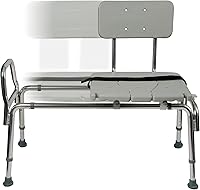
The DMI Tub Transfer Bench and Shower Chair has a plastic seat, a non-slip aluminum body, adjustable seat height from 19 to 23.5 in, a 19 in wide by 14.5 in deep seat, and a 400 lb weight capacity. Its sliding design moves between the area outside the tub and the shower.
This option suits someone who needs help crossing a tub edge rather than moving between ordinary chairs. The backrest can be positioned for right- or left-side use, and the seat includes a safety belt, suction cup feet, and a handle.
Position one end inside the shower and the other outside, then check that the legs are level, locked, and stable. Measure the bathroom first because the bench is 39 in wide.
Who may benefit from the Medline Lightweight Foldable Transport Wheelchair?
The Medline Lightweight Foldable Transport Wheelchair has a 26 lb aluminum frame, a 300 lb weight capacity, a 19 in wide by 16 in deep seat, hand brakes, rear-wheel locking brakes, and 12 in rear wheels.
This chair suits people who need caregiver-assisted mobility after the transfer. The swing-away, detachable footrests help keep the area clear during entry and exit, while the folding frame stores in a car trunk.
Lock the rear-wheel brakes before a transfer and move the footrests away. The black nylon upholstery is easy to clean, and the chair requires no assembly.
Who may benefit from the Platinum Health Carousel?
The Platinum Health Carousel Sliding Shower Chair Tub Transfer Bench has a swivel seat, reclining backrest, padded seat, backrest and armrests, and a 330 lb weight capacity. It is 34 in wide, 21 in deep, and 34.5 in high.
This option suits a bathroom transfer where a swivel and pivot can reduce the distance the person must move. The chair is reversible for right- or left-side use, and its closed-cell polyurethane padding does not absorb water.
Measure the tub, shower, and surrounding floor before choosing it. The standard model has a 15 in wide by 13 in deep seat, so compare those dimensions with the user's needs.
How can you reduce transfer risks?
Keep every transfer slow, planned, and close to the floor and seated surfaces. Do not rush because the person feels tired or because the bathroom is getting cold.
Use firm chairs with armrests when possible. Avoid rolling stools, low couches, chairs with loose cushions, and surfaces that slide across the floor.
Keep the wheelchair brakes locked until the person is fully seated. Recheck the footrests before moving because a footrest in the wrong position can catch a foot or block the transfer.
If falls, repeated near-falls, new weakness, or pain are part of the transfer, ask a physical or occupational therapist to review the setup. A professional can recommend a board, lift, belt, or different transfer direction.
What is the best chair to wheelchair transfer method?
Choose a stand-and-pivot transfer only when the person can bear weight and control their balance. Choose a transfer board when sitting balance is better than standing ability, and choose a patient lift when the person cannot safely stand.
For bathing, a sliding bench can bridge the gap between a wheelchair or walker and the tub. For daily mobility, a folding transport wheelchair can give the caregiver a stable destination with brakes and swing-away footrests.
If you are deciding between seated mobility equipment, compare a transfer chair vs wheelchair and read What Is a Transfer Wheelchair? The Facts before choosing the next step.
Frequently asked questions
What is the safest way to transfer from a chair to a wheelchair?
Move the wheelchair close to the chair, lock both wheelchair brakes, remove footrests, and clear the path. Help the person lean forward, stand only if they can bear weight safely, pivot in small steps, and sit slowly.
Use a transfer board or lift when standing is not reliable.
Can one person help with a chair to wheelchair transfer?
Sometimes, but the helper should follow the person's care plan and know the correct technique. A single caregiver should not attempt a manual lift if the person cannot bear weight, follow directions, or control their balance.
Use a transfer aid or request trained assistance when needed.
Should the wheelchair face the chair during a transfer?
Usually, place the wheelchair at a slight angle beside the chair, with the stronger side closer when appropriate. The exact position depends on the person's strength, the room, and the transfer method.
Lock the brakes, move footrests away, and leave enough space for a controlled pivot.
What equipment helps with a wheelchair transfer?
Transfer boards, sliding boards, patient lifts, and sliding shower chairs can reduce the need to stand or pivot. Choose equipment based on weight capacity, seat height, transfer distance, caregiver ability, and room space.
Follow the equipment instructions and get professional training when possible.