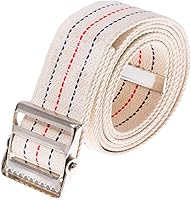
Gait Belt vs Transfer Belt: What Is the Difference? (November 2026)
A gait belt and a transfer belt are often the same type of caregiver aid, but transfer belts may add handles or wider support areas. Choose by the person's needs, the belt's fit and the kind of assistance required.
On this page (6 sections)
A gait belt and a transfer belt are often the same kind of caregiver aid, but a transfer belt may add padded handles or a wider support area. The right choice depends on the person's waist size, the caregiver's grip needs and whether the belt will support walking, standing or a short transfer.
Many families first meet these terms in a hospital or therapy setting, where staff use them during dressing, toileting and short walks. A belt can make that help feel steadier because the caregiver has a clear place to hold instead of gripping clothing or an arm.
The phrase gait belt usually focuses on assisted walking. Transfer belt often describes movement between a bed, chair, toilet or wheelchair, but product names overlap.
In practice, the name gives only a rough clue about the intended task. The construction matters more, including the waist range, width, handle layout and buckle style.
This comparison looks at fit, handles, buckles, belt width and practical use. It does not treat a belt as a lifting sling or as a replacement for equipment meant to lift a person.
That limit matters before you buy. A belt is meant for controlled assistance when a person can take part in standing or moving, not for pulling someone upright by force.
Consider who the belt is for and where it will be used most often. A person who needs help turning in a hallway may benefit from several handle positions, while a person who mainly moves between a bed and a chair may need a wider support area.
Also check the person's current measurement rather than guessing from clothing size. A secure fit is the starting point for any safe use, since a loose belt can shift and a tight one can be hard to fasten.
Think about care at home as well. The belt will need regular checks, cleaning and storage, and a design that is simple to put on and remove may be easier to use every day.
Once the basic need is clear, the details of width, buckle material and handle count can help narrow the choice. Those details are covered in the sections ahead.


Gait belt vs transfer belt: are they different?
The difference is usually purpose and design language, not a strict product category. A gait belt may be a simple waist strap, while a transfer belt often has handles that give the caregiver more places to hold.
That overlap can confuse shoppers, because two belts with different names may have very similar shapes. The handles, width and buckle are often better guides than the wording on the package.
A belt can support a controlled handhold while a person stands, turns or walks a short distance. It should not be used to lift someone by pulling upward on the belt.
Think of it as a guide for the caregiver's hands during a movement the person helps with. If the person cannot bear weight or cannot stay steady, stronger equipment may be needed instead.
A transfer belt can be useful during a move from a wheelchair to a bed or toilet. A gait belt with handles can serve the same role when its size and construction match the person and the task.
The main question is whether the caregiver can hold from a safe and practical angle. Handles on different sides can help during a turn, while a wider back area can spread contact during a short move.
A gait belt is also used for standing practice after illness or surgery, when a therapist wants the person to take more steps with support. In that setting, the caregiver needs to stay close and be ready to guide balance.
For a transfer between surfaces, the belt may help the caregiver steady the person as weight shifts. It still does not support the full weight of the person, and it should never be used as a substitute for a mechanical lift.
Fit decides whether either style works well. Measure the waist where the belt will sit, then check the stated range and allow room for the buckle to close fully.
Comfort matters too, because a belt that digs in or rides up may be hard to use correctly. A width that suits a larger waist may feel bulky on a smaller person, so wider is not always better.
Set up the belt before moving, with the buckle checked and the webbing lying flat. After use, inspect the handles and stitching and store the belt where it stays clean and dry.
If you need a wider look at equipment for assisted movement, our transfer aids complete buying guide explains how belts fit alongside other options.
Which belt features matter most?
Waist fit, handle placement and buckle style matter more than the name printed on the package. Start with the person's waist measurement, then choose the design that gives the caregiver a secure grip without making the belt too bulky.
A belt that is too loose can shift during movement. A belt that is too tight can feel uncomfortable and may be hard to fasten correctly.
Handle count also changes how the caregiver approaches the person. Seven padded handles give several grip positions, while 6 handles can still provide support from different sides.
Waist range
The Posey 6537Q covers 28–52 in waists. For additional larger-fit options, compare bariatric gait belts.
Both Vive options fit waists up to 51 in, while the Leetye Mei belt adjusts from 30–43 in.
Measure around the waist where the belt will sit. Do not choose only by the person's clothing size, since garments and body shape can change the fit.
Belt width
The Vive belts and Posey use 4 in webbing. The Leetye Mei belt has a 5 in padded area.
A wider area spreads contact across more of the back and waist. It can also feel more noticeable on a smaller person, so comfort and fit should guide the choice.
Buckle type
The Vive Gait Belt uses a metal buckle. The Vive Gait Belt with Handles uses a quick-release plastic buckle, and the Leetye Mei belt uses a quick-release polymer plastic buckle.
The Posey has a quick-release buckle, but the buckle material is not specified here. Check that the buckle closes fully and that the belt stays in position before movement begins.
Which product suits each use?
Choose the Vive Gait Belt for a broad fit with a metal buckle, the Leetye Mei for its 5 in padded area, the second Vive for a plastic buckle, and the Posey for its 28–52 in waist range. Each option uses handles to support caregiver grip during assisted movement.
Vive Gait Belt
The Vive Gait Belt supports up to 350 lb and uses strong nylon webbing with reinforced stitching. Its 7 padded handles give the caregiver several grip positions when assisting from different angles.
The metal buckle locks in place and has a quick-release latch for removal. The belt also comes with a manual, which can help you review the intended setup before use.
This is the strongest match for a caregiver who wants the broad waist adjustment and prefers a metal buckle. Its 4 in width may feel more substantial than a simple narrow walking belt.
Read our guide to the best gait belt for seniors if the main need is assisted movement for an older adult.
Leetye Mei Gait Belts for Seniors
The Leetye Mei belt uses 80% polyester and 20% nylon. It has a 5 in wide pad, 7 handles and a quick-release polymer plastic buckle with locking teeth.
Its waist range is 30–43 in, so measure carefully before choosing it. The belt supports up to 360 lb, and the material can be washed with water or dry.
This option fits caregivers who want a wider padded area and a plastic buckle. The narrower waist range may rule it out for people who need the extra adjustment of the Vive or Posey.
For a narrower body shape, compare our best gait belt small guide before you decide.
Vive Gait Belt with Handles
This Vive belt supports up to 350 lb and fits waists up to 51 in. It uses strong nylon webbing, reinforced stitching and a 4 in width for a broader contact area.
The main difference from the other Vive option is the buckle. This version has a durable plastic buckle with a quick-release latch, which suits caregivers who prefer plastic hardware.
The 7 padded handles keep the grip options similar to the metal-buckle Vive. Choose between the 2 Vive versions mainly by buckle preference.
Our guide to the best gait belt with plastic buckle compares this feature with other buying considerations.
Posey 6537Q Gait Belt
The Posey 6537Q uses extra-wide 4 in nylon webbing and a rear support band. Its 6 securely stitched handles provide grip points from different sides or angles.
The belt fits 28–52 in waists, giving it the broadest stated range in this comparison. It also has a quick-release buckle and can be machine washed.
Posey describes this belt as suitable for transfers to and from a wheelchair, toilet or bed. It can also be used as a gait belt or walking belt, which makes it a direct match for readers comparing both terms.
If nylon is your priority, see our guide to the best nylon gait belt for more material-focused choices.
How do you choose between a gait belt and a transfer belt?
Choose the belt that fits securely and gives the caregiver the grip needed for the planned movement. The label matters less than the waist range, buckle, width and number of handles.
For short assisted walks, a belt with handles may make it easier to guide the person without gripping clothing or an arm. See how to use a gait belt with handles for more guidance.
The caregiver still needs to stay close and use a controlled movement.
For wheelchair, toilet or bed transfers, look for a design that allows the caregiver to hold from a practical angle. The Posey and both Vive belts have 4 in widths, while the Leetye Mei has a 5 in padded area.
For a higher stated capacity, the Leetye Mei supports up to 360 lb. The Vive and Posey data here should not be treated as having the same capacity unless the exact product information states it.
People who need a larger waist range may prefer the Posey or either Vive belt. People with a 30–43 in waist who want a 5 in padded area may prefer the Leetye Mei.
For professional caregivers, our guide to the best gait belt for CNA use focuses on grip options and routine handling.
How should you use a belt safely?
Fit the belt snugly, check the buckle and use it only for controlled assistance that the caregiver can manage. A gait belt provides a handhold, but it does not remove fall risk or replace a lift when a person cannot bear weight.
Place the belt around the waist according to the product instructions. Check that it is secure without pressing uncomfortably into the person's body.
Before movement, confirm that the buckle is closed and the belt is not twisted. Ask the person to help as much as they safely can, then move slowly and keep the path clear.
Do not pull sharply on the belt or use it to drag someone. Stop if the person becomes unstable, the belt shifts or the caregiver cannot maintain control.
Inspect the webbing, stitching, handles and buckle before use. Set aside any belt with damaged stitching, a buckle that does not close properly or material that no longer feels secure.
Gait belt vs transfer belt: which one should you buy?
Pick a gait belt with handles when walking and short transfers need several caregiver grip points. Pick a transfer-focused belt when the person needs a wider padded area, a broad waist range or a design intended for movement between surfaces.
Choose the Vive Gait Belt for 7 padded handles, a metal buckle and a fit up to 51 in. It suits caregivers who want the extra adjustment and prefer metal hardware.
Choose the Leetye Mei for its 5 in padded area, plastic buckle and stated support up to 360 lb. Measure carefully, since its waist range is 30 to 43 in.
Choose the Vive Gait Belt with Handles when you want the same 7-handle layout with a quick-release plastic buckle. It is the better match if plastic hardware is your preference.
Choose the Posey 6537Q for its 28 to 52 in waist range, 6 handles and use as either a transfer or walking belt. That range makes it worth considering when other belts may not fit.
The best choice is the one that matches the person's measurement and the caregiver's control. Measure first, then review the buckle and handle layout before ordering.
Frequently asked questions
Is a gait belt the same as a transfer belt?
A gait belt and transfer belt can describe the same caregiver aid. Both wrap around the waist to give a caregiver a controlled handhold during assisted walking or movement.
Transfer belts often have padded handles, while a basic gait belt may be a plain strap with a buckle.
What is the main difference between a gait belt and a transfer belt?
The main difference is how the terms are used. Gait belt usually highlights walking assistance, while transfer belt highlights movement between a bed, chair, toilet or wheelchair.
The belt itself may work for both tasks when it fits correctly and the caregiver uses a safe technique.
Are gait belts used to lift someone?
A gait belt is not a lifting sling. It gives a caregiver a stable grip while helping a person stand, turn or walk, but it should not be used to pull someone up by force or replace a mechanical lift when more support is needed.
Which gait belt is best for a larger waist?
The Posey 6537Q covers 28–52 in waists, while both Vive belts fit waists up to 51 in. The Leetye Mei belt adjusts from 30–43 in.
Measure the person's waist and leave enough room for a secure, comfortable fit before choosing.
Should a gait belt have handles?
Handles can give the caregiver more hand positions during a turn or short assisted walk. They are useful when the person needs support from different angles, but the belt still needs a snug fit and should be used only for the level of assistance the caregiver can safely control.