Transfer Chair vs Wheelchair: Which Should You Choose? (November 2026)
Choose a transfer chair for assisted movement between surfaces, and choose a wheelchair for moving around while seated. Your bathroom layout, caregiver support and daily travel needs decide which type fits.
On this page (9 sections)
- Transfer chair vs wheelchair: what is the main difference?
- Which chair suits a bathtub transfer?
- Which chair is better for moving around the home?
- Transfer chair vs wheelchair: which is easier to use?
- Do you need a patient lift instead?
- What should you measure before choosing?
- Can an electric wheelchair replace a transfer chair?
- What about walkers and other transfer aids?
- Final choice: transfer chair or wheelchair?
Choose a transfer chair for assisted movement between surfaces, and choose a wheelchair for moving around while seated. The transfer chair vs wheelchair decision depends on whether the main task is crossing a tub edge, completing a shower transfer or traveling through the home.
A transfer bench stays focused on the transfer itself. A wheelchair or transport chair supports seated movement after the user is in the chair.
This comparison covers 2 sliding shower chairs and 2 transport wheelchairs. The products are not interchangeable, even when a model combines shower and transport functions.
Think first about the hardest moment in the day rather than the longest one. A tub wall, a shower threshold or a single step into a vehicle can create more risk than a short trip across a room.
A sliding bench helps when sitting down before the move makes the task calmer. The user can settle on the seat outside the tub, then slide across with planned support instead of trying to step over while standing.
A transport wheelchair helps when the user is already seated and needs to move between rooms or to a vehicle. It changes the problem from crossing a bathing edge to guiding, stopping and turning the chair safely.
That distinction matters for caregivers as well as users. A bench needs clear space on both sides of the tub and a caregiver who can support the slide.
A transport chair needs space for the caregiver to stand behind it, push with control and use the brakes at stops. Doorways, rugs and tight turns all affect whether that routine works each day.
Some people need both types of support at different times. A shower bench may handle bathing while a transport chair handles appointments, and neither one should be expected to do the other job well.
Start by naming the exact transfers that happen in the home. Bed to chair, chair to toilet, tub to shower and chair to vehicle each place different demands on strength, balance and timing.
Then match equipment to that list rather than buying for a general idea of mobility help. The safest choice is usually the one that makes the most difficult transfer feel planned instead of rushed.

 Best for padded transfers
Platinum Health Carousel Sliding Shower Chair Tub Transfer
Transfer chair vs wheelchair: what is the main difference?
A transfer chair bridges a gap between surfaces, while a wheelchair supports seated travel. The right choice starts with the task that creates the greatest safety concern.
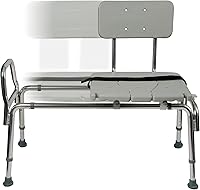
A sliding tub bench positions one end outside the tub and the other inside the shower. The user sits on the seat and slides across the tub lip with caregiver help.
A transport wheelchair moves a seated person from one place to another. The caregiver pushes the chair, uses the brakes when stopping and guides it through doorways, ramps and other routes.
A combined chair can cover both jobs, but it still does not remove the need for a safe transfer into the chair. The WHLICKS model is described as both a transport wheelchair and shower chair, while the Invacare model is a portable travel transfer chair.
Which chair suits a bathtub transfer?
Choose a sliding transfer bench when the user has difficulty stepping over the tub wall. A bench lets the person sit before moving across the gap, which can reduce the need to stand inside the bathing area.
The DMI Tub Transfer Bench is 39 in wide and has an adjustable seat height from 19 to 23.5 in. Its non-slip aluminum body, plastic seat, backrest, safety belt, anti-slip feet and cut out access are aimed at supported bathing.
The Platinum Health Carousel has a swivel seat, reclining backrest and padded armrests. Its 34 in width and 21 in depth make measuring the tub, bathroom path and user position essential before setup.
How does a transfer chair help with bathroom access?
A transfer chair lets the user sit before crossing the bathing threshold. That changes the movement from a standing step into a controlled slide or pivot, but the user and caregiver still need a clear plan.
Place the bench so its legs are level, locked and stable. Keep the chair aligned with the tub and shower, and follow the product instructions for the belt, locks, feet and seat position.
The DMI bench can be configured for right or left installation. The Platinum Health Carousel is also fully reversible, so the bathroom layout can determine which side works better.
Read our guide to patient lift options if the user needs more lifting support than a seated slide can provide. A transfer bench is not a substitute for equipment designed to lift a person.
Which chair is better for moving around the home?
Choose a transport wheelchair when the user needs seated movement between rooms, vehicles or care areas. A caregiver must have enough room to push, stop and turn the chair safely.
The WHLICKS chair weighs 22.1 lb and folds for storage or vehicle transport. It has a telescopic handle, hand brakes, seat belts and a waterproof, rust-resistant frame and seat plate.
Its stated weight capacity is 220 lb. That is lower than the 400 lb DMI capacity and the 330 lb Platinum Health capacity, so check the user's weight and the chair's fit before choosing.
The Invacare Transport Wheelchair has a 19 x 16 in seat, a foldable backrest and a one-handed folding mechanism. It narrows to 9 in when folded, which can help with tight closets, small trunks and other compact storage spaces.
The Invacare chair has a heavy-duty steel frame, breathable nylon seating, swing-away footrests and 8 in TPU casters. It weighs 26 lb and arrives fully assembled.
Transfer chair vs wheelchair: which is easier to use?
The easier option is the one that matches the movement the user can perform safely. A sliding bench may be simpler for a tub transfer, while a transport wheelchair may be simpler for repeated trips after the user is seated.
A bench needs careful positioning across the tub. The caregiver may need to support the user's body, operate the seat or belt and guide the slide.
A transport wheelchair needs a safe sit-down transfer first. After that, the caregiver controls movement with the push handles, brakes and footrests.
Use our guide to chair-to-wheelchair transfer for the movement between a regular chair and a wheelchair. It can also help you identify where the user needs support before choosing equipment.
Do you need a patient lift instead?
Consider a patient lift when the user cannot safely stand, pivot or slide with the available help. A lift is designed for a different level of assistance than a transfer bench or transport wheelchair.
A bench supports a seated slide across a tub edge. It does not lift the user from the floor, bed or chair.
If a lift is part of the plan, compare a best patient lift transfer chair option with the user's room, caregiver routine and transfer points. A portable design may suit homes where equipment must move between rooms.
For users who need powered assistance, compare a best electric patient lift transfer chair option. Electric movement can change the setup and charging needs, so follow the exact instructions for the chosen equipment.
A portable model may be useful when storage and room changes matter. See our best portable patient lift transfer chair guide for that specific use.
What should you measure before choosing?
Measure the tub, doorway, transfer path and storage area before choosing between a transfer bench and wheelchair. Equipment that fits the user but blocks the bathroom or vehicle can still be difficult to use.
For a tub bench, measure the tub ledge, bathroom width and distance from the outside sitting area to the shower. The DMI bench is 39 in wide, while the Platinum Health Carousel is 34 in wide.
For a transport wheelchair, measure doorways, hallway turns and the vehicle opening. The Invacare folds to 9 in wide, and the WHLICKS model is designed to fold for storage and travel.
Also measure the user for seat width and depth. The Invacare seat is 19 x 16 in, while the Platinum Health seat is 15 in wide and 13 in deep.
Check the weight capacity against the user's current weight, clothing and any items carried during use. Do not choose a chair by folded size alone if the seat, footrests or caregiver position will not work.
Can an electric wheelchair replace a transfer chair?
An electric wheelchair can support powered mobility, but it does not automatically solve a bathtub transfer. Its usefulness depends on how the user gets into the chair and whether the bathroom can accommodate it.
A powered chair may help someone travel without being pushed. The user may still need a transfer board, lift or caregiver support to move from a bed or toilet.
For a separate mobility decision, read How to Choose an Electric Wheelchair? What to Expect.
Compare control, turning space and transfer needs separately from bathing access.
Electric power changes how a person moves after seating, not how the person gets seated. Controls, speed settings and turning radius help with rooms and routes, but they do not lift a person over a tub wall.
A powered wheelchair also needs room for the chair itself during bathing transfers. The user may transfer beside it, behind it or from it, and each position needs enough clear floor for safe placement.
Weight is another practical concern in a small bathroom. A powered chair can be harder to position precisely, and the caregiver may need extra space to stand safely while helping.
Do not assume that powered mobility removes the need for a bench or shower chair. Bathing still requires a stable seat inside the wet area and a controlled route across the threshold.
Check whether the user can complete the sit-down transfer into the powered chair without help. If that move needs support, plan that support separately and practice it on a dry floor first.
Think about charging and storage as part of the routine too. The chair needs a reachable place to charge, and the bathing equipment needs space that does not block daily movement.
For many homes, the powered chair covers travel while a bench covers bathing. That split is often safer than expecting one device to handle both tasks.
Measure the bathroom door, the turn into the shower area and the space beside the tub before making a final decision. If the powered chair cannot enter comfortably, a separate bathing solution remains necessary.
The right question is not whether electric power is better in general. The right question is which transfer still feels unsafe after the powered chair is in place.
What about walkers and other transfer aids?
A walker can support short standing movement, but it does not replace a tub transfer bench or wheelchair. The user must be able to stand and move safely with the walker, and the bathroom surface must allow stable placement.
If the walker is part of the transfer plan, check its feet and movement on the floor. Our guide to walker glides vs tennis balls explains how those options affect contact with the floor.
Use a transfer bench when crossing the tub is the main problem. Use a transport wheelchair when seated movement is the main problem, and consider a lift when the user cannot complete the transfer safely with available help.
Final choice: transfer chair or wheelchair?
Pick the DMI bench for a wide, adjustable tub transfer with a 400 lb capacity, or pick the Platinum Health Carousel for padded swivel support. Choose the WHLICKS chair when shower and caregiver transport need to share one foldable chair.
Choose the Invacare Transport Wheelchair when a 19 in seat and 9 in folded width matter for travel and storage. It is a transport chair, so plan for caregiver pushing and a separate bathing solution.
The best choice follows the user's actual movement. Measure first, match the weight capacity and seat size, then choose the equipment that supports the hardest transfer in the home.
For a bathtub, the DMI bench offers a broad sliding seat and height adjustment for matching the tub and user. Its cut out access, safety belt and locked position can help when bathing needs closer support with caregiver help.
The Platinum Health Carousel suits a different kind of bathing need. Its swivel seat, reclining backrest and padded armrests can support a more guided turn into the shower, while reversible use allows the layout to set the direction.
Check capacity before choosing either bench for daily use. The DMI is rated to 400 lb, while the Platinum Health Carousel is rated to 330 lb, so the user's weight and clothing need to fit within that limit.
For travel and shower use in one chair, the WHLICKS model folds and has a waterproof frame and seat plate. It supports up to 220 lb and relies on a caregiver to push, brake and guide the chair.
The Invacare model fits a transport first plan with a wider 19 in seat and a folded width of 9 in. Its steel frame and swing-away footrests suit caregivers who need compact storage for vehicles and closets.
Do not choose by badge alone when the tasks are different. A bathing bench will not move someone across the home, and a transport chair will not make a tub transfer safe on its own.
Measure the tub, doorway, hallway turn and storage space before ordering. Then confirm seat width, seat depth, footrest clearance and caregiver standing room for the chosen chair.
Set up the equipment for the exact routine the household will use each day. Clear the path, lock or brake the chair, test the seat position and keep the first transfer slow.
Check locks, feet and belts often, and wipe down wet surfaces after use. Store folding chairs where they will not be tripped over or damaged.
Make the final choice by the hardest transfer, not by the longest trip. When that move feels stable and repeatable, the chair is more likely to help in real daily life.
Frequently asked questions
What is the difference between a transfer chair and a wheelchair?
A transfer chair helps move someone between surfaces, such as a bed, tub and shower, while a wheelchair carries someone across rooms or outdoor areas while seated. Transfer benches often slide or swivel over a tub edge.
Transport wheelchairs are pushed by a caregiver.
Is a transfer chair the same as a transfer wheelchair?
No. A transfer chair usually refers to equipment designed for assisted repositioning, especially a sliding tub bench or shower chair.
A transfer wheelchair is a transport wheelchair used to move a seated person.
Check whether the chair is built for bathing, travel, or both.
Can a wheelchair be used for shower transfers?
A standard wheelchair should not be treated as a shower chair unless it is specifically designed and labeled for shower use. The WHLICKS chair combines transport wheelchair and shower-chair functions, while the DMI and Platinum Health models are built around tub and shower transfers.
Which transfer chair is best for a bathtub?
The DMI Tub Transfer Bench suits a bathtub when you need a sliding seat, adjustable height and a 400 lb capacity. The Platinum Health Carousel adds a swivel seat, reclining backrest and padded armrests, but its capacity is 330 lb.
Measure the tub before choosing.
Do transfer chairs need a caregiver?
Many transfer chairs need caregiver help because the user must sit, slide or pivot safely between surfaces. The DMI instructions describe caregiver assistance, and transport wheelchairs require someone to push them.
A qualified professional can help assess the safest transfer method for the user.