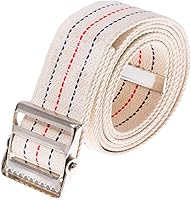
9 Best Gait Belts for Seniors (November 2026)
The best gait belts for seniors include the Vive Gait Belt for all-around transfers, the Vive Gait Belt with Handles for a plastic buckle, and the KkaFFe Gait Belts for Seniors for maximum waist coverage.
On this page (5 sections)
The best gait belt for seniors is the Vive Gait Belt, with 350 lb support, 7 padded handles, a 4 in width and a metal buckle.
That combination leads this comparison for all-around transfers. A caregiver gets several grip positions, and the wider webbing spreads pressure across the midsection.
The Vive with a plastic buckle is a close alternative for people who prefer that fastening material. The KkaFFe 7-handle belt has the highest stated support limit here at 360 lb, but its waist range stops at 46 in.
Think about the daily task before looking at headline numbers. Assisted walking to a bathroom, standing for a few steps, and moving from bed to chair place different demands on the belt and the person wearing it.
A gait belt can help a caregiver guide assisted walking, standing and short transfers. It gives a secure hold point so the caregiver can steady the person and control the pace.
It is not a lifting harness, and it does not make a non weight bearing transfer safe. If the person cannot take part in standing or follow simple instructions, a different aid or trained professional should be involved.
The right choice depends on waist fit, movement ability, buckle style and cleaning needs. Measure the waist before ordering, then check the fit after fastening so the belt stays in place without riding up or limiting breathing.
Handles on more than one side help when a chair, bed or wheelchair leaves little space on one side. A metal buckle with locking teeth suits caregivers who want that feel, while a plastic quick release suits quicker removal.
For broader transfer guidance, start with our patient lift transfer aids guide. For terminology, compare a gait belt vs transfer belt before choosing a design.
Our score is a shortlist tool, not a fit check or professional assessment. Match the shortlist to the person, the room and the transfer itself.
Our picks at a glance
-
1

-
2

-
3

- 4
 Best for a broad waist rangeCheck it
- 5
 Best for a lighter 3-handle beltCheck it
- 6
 Check it
Posey 6546 Premium EZ Clean Gait Belt
Best for wipe-clean care - 7
 Check it
ASA TECHMED 10 Pack Cotton Soft Transfer
Best for shared care teams - 8
 Check it
MIHEQIKQI 10 Packs Transfer and Gait Belts
Best for metal-buckle bulk supply - 9
 Best for bed-to-chair repositioningCheck it
The best gait belt for seniors by use
The best gait belt for seniors depends on the task: choose padded handles for several grip positions, a wide waist range for shared use, or a wipe-clean belt for frequent care. These 9 picks are listed from highest score to lowest.
Vive Gait Belt: Best for all-around transfers
- Supports up to 350 lb
- 7 padded handles
- Fits waists up to 51 in
- 4 in nylon webbing with metal buckle
The Vive Gait Belt combines 350 lb support, 7 padded handles, a 4 in width and a metal buckle. It suits caregivers who want several grip positions for walking support and transfers.
Pros
- 350 lb support
- 7 padded handles
- Metal buckle
- 60-day guarantee
Cons
- Fits waists up to 51 in
- Wider belt may feel bulky for some users
The Vive Gait Belt is the strongest all-around choice for assisted walking and everyday transfers. It supports up to 350 lb, fits waists up to 51 in and uses 7 padded handles so a caregiver can hold from different angles.
Its 4 in width and strong nylon webbing give it a broader contact area than a 2 in belt. The metal buckle uses grabbing teeth to help keep the belt fastened, and the quick-release latch helps with removal after the transfer.
This belt suits home caregivers, nursing support and physical therapy situations where the person can take part in standing or walking. For clinical use, see gait belts in nursing.
The 60-day guarantee is included in the product information, but it doesn't replace checking the belt before every use.
Choose it when you want the highest score, multiple padded grip points and a metal buckle. Measure the waist first because its stated fit ends at 51 in.
Vive Gait Belt with Handles: Best for a plastic buckle
- Supports up to 350 lb
- 7 padded handles
- Fits waists up to 51 in
- 4 in nylon webbing with quick-release plastic buckle
This Vive version keeps the 350 lb support, 7 padded handles and 4 in width while using a quick-release plastic buckle. It fits caregivers who prefer that buckle material.
Pros
- 350 lb support
- 7 padded handles
- Quick-release plastic buckle
- 60-day guarantee
Cons
- Fits waists up to 51 in
- Plastic buckle differs from the metal-buckle version
The Vive Gait Belt with Handles keeps the main features of the top pick while changing the buckle to quick-release plastic.
It supports up to 350 lb, fits waists up to 51 in and has 7 padded handles on 4 in nylon webbing.
Measure around the midsection where the belt will sit, and leave enough length for the buckle to close without strain. That 51 in maximum is still a limit to check before buying.
This version suits caregivers who prefer a plastic buckle, which some find easier to operate with limited hand strength. Padding can make a sustained grip more comfortable during standing, walking or transfers.
Fast removal helps with frequent toilet trips or clothing changes, but it should never come at the cost of a secure fit during the move itself. Check the belt regularly for frayed stitching, bent buckle parts or handles that have lost their shape, and retire it if any appear.
Choose this version over the metal-buckle Vive when the plastic buckle matches your routine. The belts share the same stated support limit and waist maximum, so the buckle is the main deciding factor.
KkaFFe Gait Belts for Seniors: Best for maximum waist coverage
- Supports up to 360 lb
- 7 sponge-wrapped handles
- Fits waists from 30 to 46 in
- 5.1 in widened waistband
The 7-handle KkaFFe belt has the highest stated support limit here and a 5.1 in widened waistband. It suits assisted walking and short transfers for users within its 30 to 46 in waist range.
Pros
- 360 lb support
- 7 handles
- 5.1 in waistband
- Quick-release buckle
Cons
- Waist range ends at 46 in
- Wider waistband may not suit every user
The KkaFFe Gait Belts for Seniors offers the highest stated support limit in this roundup at 360 lb.
It has 7 sponge-wrapped handles, a 5.1 in widened waistband and a 30 to 46 in waist range. The wider band spreads contact across more of the waist, though it may feel bulky under clothing for some users.
Its quick-release polymer buckle has adjustable length, while anti-slip adhesive points help the belt stay close to the skin during movement. Sponge-wrapped handles cushion the pulling force, protect the caregiver hands and give a clearer grip than plain webbing.
This belt is aimed at assisted walking, bedside transfers, wheelchair transfers and helping someone rise. Different grip positions can help when the caregiver position changes around a chair or bed.
In a narrow doorway or close to a wall, the caregiver may not be able to use every handle. A simpler layout can sometimes work just as well in tight space.
Place the buckle where the caregiver can reach it, check that the band sits level and confirm no handle twist reduces the grip. Choose it for the wider waistband and highest stated support limit here, but check the 46 in maximum carefully.
Posey 6537Q Gait Belt: Best for a broad waist range
- Fits waists from 28 to 52 in
- 6 stitched grab handles
- 4 in rear support band
- Quick-release buckle
The Posey 6537Q covers a 28 to 52 in waist range and has 6 stitched handles. Its 4 in rear support band gives caregivers a broad contact area for wheelchair, toilet and bed transfers.
Pros
- Broad 28 to 52 in waist range
- 6 handles
- 4 in rear support band
- Machine washable
Cons
- No stated weight capacity
- Six handles instead of seven
The Posey 6537Q is the broad-fit pick, accommodating waists from 28 to 52 in.
It uses extra-wide 4 in nylon webbing, a rear support band and 6 securely stitched grab handles. That range makes it practical for shared care where one belt may serve several people.
Vertical and horizontal handles give nurses, therapists and caregivers several places to hold from different sides. Its quick-release buckle suits transfers to and from a wheelchair, toilet or bed, and it can also be used as a walking belt.
The 4 in rear support band provides greater contact at the back, where much guiding force is applied. Posey also states it is machine washable, which helps when the same belt is used often.
Choose it when waist coverage matters more than 7 handles or a stated weight limit. Fit still needs a direct check on the person.
KkaFFe Gait Belt for Seniors: Best for a lighter 3-handle belt
- Supports up to 320 lb
- 3 sponge-wrapped handles
- Fits waists from 26.7 to 45.7 in
- Nylon and polyester fiber fabric
The 3-handle KkaFFe belt is a lighter option for users within its 26.7 to 45.7 in waist range. It supports up to 320 lb and is designed for standing, walking and short transfers.
Pros
- 320 lb support
- 3 handles
- Light 6.4 oz item weight
- Quick-release buckle
Cons
- Lower support limit than the 7-handle KkaFFe
- Fewer grip positions
The KkaFFe Gait Belt for Seniors is the lighter 3-handle option from KkaFFe.
It supports up to 320 lb, fits waists from 26.7 to 45.7 in and has an item weight of 6.4 oz.
Three sponge-wrapped handles give the caregiver defined grip points without the larger handle layout of the 7-handle version. The padding cushions the pull and helps the hands keep a firm hold.
The belt is intended for standing, walking support and transfers involving beds, chairs and wheelchairs. It suits short moves where the caregiver can position body weight close to the person.
This design may suit a user who needs assisted movement but does not need grip points on every side. A simpler layout can be easier to store, carry and clean between uses.
Its nylon and polyester fiber fabric has cross-reinforced stitching at the handles. Strong stitching matters because the handles take repeated pulling force during standing and turning.
The lower waist maximum deserves attention before purchase. Anyone near or above 45.7 in should look at a wider range instead of forcing a fit.
Daily care is straightforward for a fabric belt of this type. Check the webbing and handles for wear, and clean the belt by the method that suits its materials and the care setting.
Choose it when a lighter belt and simpler handle arrangement are more useful. Pick the 7-handle KkaFFe instead when you need a wider waistband or more grip directions.
Posey 6546 Premium EZ Clean Gait Belt: Best for wipe-clean care
- 60 in belt
- Fits waists up to 58 in
- 2 in BioThane polyurethane-encapsulated webbing
- Self-locking polyethylene buckle
The Posey 6546 uses 2 in BioThane polyurethane-encapsulated webbing and fits waists up to 58 in. Its wipe-clean surface suits repeated care in home, therapy and facility settings.
Pros
- Fits up to 58 in
- Wipe-clean webbing
- Self-locking buckle
- 60 in belt
Cons
- No handles
- No stated weight capacity
The Posey 6546 Premium EZ Clean Gait Belt is the best choice for wipe-clean care.
Its 60 in belt uses 2 in BioThane polyurethane-encapsulated webbing and fits waists up to 58 in.
That 58 in maximum is the widest stated fit in this roundup. It can help when other belts stop at 51 or 52 in and still leave no adjustment room.
The spring-loaded, self-locking polyethylene buckle gives the caregiver a secure hold-point during supervised walking. A self-locking design reduces the chance of the buckle slipping open mid transfer.
The belt can also be used as a transfer belt, so it suits more than one type of assisted movement. That flexibility helps in homes where one aid covers walking support and short transfers.
Cleaning is simple: wipe the webbing with mild detergent. That makes this option useful in settings where the belt needs quick surface care between uses.
A wipe-clean surface suits repeated care in therapy rooms, clinics and busy homes. It avoids a laundry cycle when only surface soil needs attention, which can save time between appointments.
The 2 in width is narrower than the 4 in belts in this list. A narrower belt may feel less bulky, but it offers less contact area across the waist during a pull.
Choose it when a broad waist maximum and wipe-clean material matter more than padded handles. It has no stated weight capacity, so do not treat its 58 in fit as a support rating.
ASA TECHMED 10 Pack Cotton Soft Transfer: Best for shared care teams
- 10 belts
- 2 in x 60 in
- 100% cotton webbing
- Metal buckle and belt loop holder
The ASA TECHMED pack includes 10 cotton transfer belts with metal buckles and belt loop holders. It suits shared homecare, nursing and therapy use where several belts are useful.
Pros
- 10-belt pack
- 100% cotton
- Machine washable
- Metal buckle
Cons
- No handles
- No stated weight capacity
The ASA TECHMED 10 Pack Cotton Soft Transfer is the best option for shared care teams that need several basic belts.
The pack includes 10 belts made from 100% cotton webbing, each measuring 2 in by 60 in.
Each belt has a metal buckle and belt loop holder. The loop holder gives a place to store a belt on a hook or rail between uses.
The cotton construction is described as soft and machine washable, which can help when belts are assigned across homecare, nursing or therapy spaces.
Soft cotton can feel comfortable against clothing, and machine washing suits teams that rotate belts through laundry. A pack also means a spare belt is ready when one is being washed.
This is a straightforward belt rather than a handled design. It may fit a team that wants a supply of narrow transfer belts for routine assistance and has no need for multiple caregiver grip points.
Without handles, the caregiver holds the webbing itself during a transfer. That works for many short moves, but grip can be less defined than holding a padded handle.
The 2 in width keeps the belt slim and easy to wrap around a midsection. It also means less pressure spread than a 4 in belt, so fit and pulling technique carry more importance.
Choose it for quantity and cotton material. The product information does not state a weight capacity or waist range, so confirm the fit before use.
MIHEQIKQI 10 Packs Transfer and Gait Belts: Best for metal-buckle bulk supply
- 10 belts
- 60 in length
- 2 in polyester-cotton webbing
- Metal buckle with anti-slip locking teeth
The MIHEQIKQI pack includes 10 transfer and gait belts with 60 in length and metal buckles. It fits facilities or caregivers that need multiple belts for walking and transfer assistance.
Pros
- 10-belt pack
- Metal buckles
- 60 in belts
- 2 in webbing
Cons
- No handles
- No stated weight capacity
The MIHEQIKQI 10 Packs Transfer and Gait Belts is a bulk option with metal buckles and 60 in belts.
Each belt is 2 in wide and uses double-stitched polyester-cotton webbing with anti-slip locking teeth.
The 10-pack suits nursing homes, therapy settings and homecare teams that need multiple belts available. Having several belts reduces downtime when laundry or cleaning takes one out of rotation.
The belts are intended for assisted movement from beds, chairs, wheelchairs, sofas and cars. That range covers the most common short transfers in home and facility care.
The instructions describe threading the metal tip through the buckle hinge, teeth and rear slot before tightening. That sequence helps the teeth engage and keeps the strap from loosening under load.
They also warn that people with different waist sizes may affect the fit and that overweight users may move or loosen the belt, so check the fit carefully.
A careful fit check means trying a gentle pull before standing begins. If the belt shifts, slides or feels loose at the buckle, adjust it or choose a different size approach.
Double stitching and a 2 in width give the webbing a sturdy, low-profile feel. The narrow shape is easy to place and store, but it spreads pressure over less area than wider belts.
Choose this pack when metal buckles and quantity are your main needs. It does not include handles or a stated weight capacity.
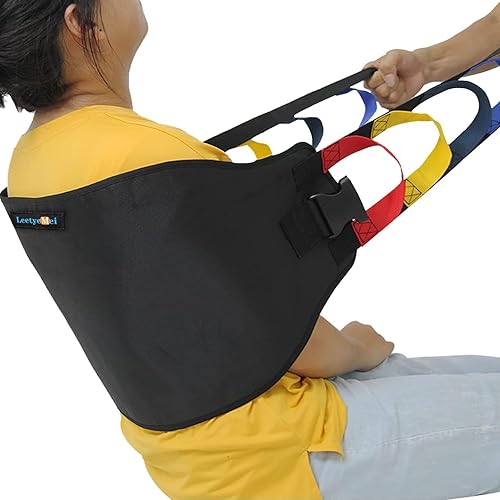
Leetye Mei Transfer Sling: Best for bed-to-chair repositioning
- Supports up to 330 lb
- Nylon and knitted mesh fabric
- 5 handles at each end
- Adjustable waist strap with quick-release buckle
The Leetye Mei is a transfer sling with a widened back contact area and 5 handles at each end. It suits bed, wheelchair, car and commode transfers when a sling shape is more useful than a narrow belt.
Pros
- 330 lb support
- 5 handles at each end
- Widened back contact area
- Quick-release buckle
Cons
- Sling design differs from a standard gait belt
- No stated waist range
The Leetye Mei Transfer Sling is different from a narrow waist gait belt. It uses nylon and knitted mesh fabric, a widened back contact area, an adjustable waist strap and 5 handles at each end.
It supports up to 330 lb and is designed for transfers to and from a bed, wheelchair, car or commode. For help getting in and out of a car, compare car assist handles for seniors.
The handle layout can also help with sitting up, moving legs, bending knees or turning over.
This shape may be more useful when the person's movement involves repositioning or bed-to-chair assistance. It isn't the same as a standard walking belt, so compare the task and care plan before choosing it.
Choose it when a sling-style design fits the transfer better. The product information doesn't state a waist range, so confirm fit before relying on it.
What should you check before buying a gait belt for seniors?
The most important checks are waist fit, support limit, handle layout and buckle style. These details determine whether the belt matches the person's body and the caregiver's movement around a bed, chair or wheelchair.
How should a gait belt fit?
A gait belt should sit around the person's midsection and stay secure without shifting or causing discomfort. You should be able to check the fit before standing assistance begins, and the belt shouldn't cover tubes, wires or areas that need protection.
The waist ranges differ widely in this roundup. The Posey 6546 fits up to 58 in, the Posey 6537Q fits 28 to 52 in, and the 7-handle KkaFFe fits 30 to 46 in.
For a smaller waist, compare our guide to the best gait belts for small adults. For a larger user, review the best bariatric gait belts and confirm the stated support limit and fit.
Do handles matter for assisted walking?
Handles give the caregiver more grip positions, but more handles aren't automatically better for every transfer. A 7-handle belt can help when the caregiver moves from the side to the front, while a simple belt may be easier to store and clean.
For a deeper comparison, see the best gait belts with handles and best padded gait belts with handles. If the belt will be used in physical therapy, our best gait belts for physical therapy guide covers that use case.
Should you choose nylon, cotton or a wipe-clean material?
Choose nylon or polyester when you want a belt with stated webbing strength and a structured feel. Cotton can be a practical choice for a soft, washable belt, while BioThane polyurethane-encapsulated webbing is useful when wipe-clean care matters.
Our comparison of the best nylon gait belts focuses on webbing and handle choices. For softer fabric options, see the best cloth gait belts.
Is a metal buckle or plastic buckle better?
A metal buckle may appeal to caregivers who want a metal fastening system with locking teeth. A plastic quick-release buckle may be preferable when quick release and lower buckle weight are priorities.
The Vive Gait Belt uses a metal buckle, while the Vive Gait Belt with Handles uses a quick-release plastic buckle. Posey's EZ Clean belt uses a spring-loaded, self-locking polyethylene buckle.
If you specifically want metal, compare the best gait belts with metal buckles. For quick-release and closure choices, our gait belt with Velcro guide explains why fastening style matters.
How do you use a gait belt for assisted transfers?
Use a gait belt only for a person who can take part in the movement and follow instructions.
A caregiver should be trained in the transfer method, check the belt before use and stop if it slips, causes pain or shows damage.
Start by explaining the move in simple steps. Tell the person where they will sit, where they will stand and what they should hold, then give them a moment to get ready.
Place the belt around the midsection with the buckle where the caregiver can reach it easily. Check that it sits level and does not cover tubes, wires or sore areas.
Check the fit before standing begins. The belt should stay in place yet allow comfortable breathing and two fingers of space underneath.
Seat the person with feet flat on the floor and knees roughly level with the hips. That position gives the best leverage for rising and helps the person push through their legs.
Position the caregiver close, with a stable stance and a handle within easy reach. Avoid reaching across the body or pulling from a distance, since both reduce control.
Use the belt to guide and steady, not to haul the person upward. The person legs and trunk should do the work, with the caregiver providing balance and direction.
Do not pull on the arms or use the belt as a substitute for a lift when the person cannot bear weight. Watch the belt during the whole move, and if it rides up, twists or loosens, stop and sit the person back down safely.
For a handled design, follow our guide on how to use a gait belt with handles. For a different approach, read how to choose an alternative to a gait belt.
Store the belt where it stays clean and easy to find between uses. Hang it on a hook or keep it in a care bag, and check stitching and buckle parts before the next transfer.
More guides on this topic
Use these extra guides when the main comparison leaves a question unanswered.
Bulk buying suits teams that rotate belts through laundry or cleaning. A vest style can suit a different body shape or care plan, so read that guide before assuming a standard belt fits.
Start with the two guides below, then return to the waist range and buckle checks above.
- Best Gait Belts to Buy in Bulk
- How to Choose a Gait Belt Vest
Which gait belt is best for seniors?
The Vive Gait Belt is the best gait belt for seniors when you want 350 lb support, 7 padded handles, a 4 in width and a metal buckle.
The Vive plastic-buckle version is the better match when that fastening style is preferred. Both share the same stated support limit and waist maximum, so personal routine decides between them.
Pick the KkaFFe 7-handle belt for its 360 lb stated support limit and 5.1 in waistband. The wider band spreads contact across the waist, but the 30 to 46 in range rules out larger waists.
Pick the Posey 6537Q for a 28 to 52 in waist range, or the Posey 6546 for wipe-clean care and a fit up to 58 in. The Posey 6537Q suits shared care where machine washing helps, while the Posey 6546 suits settings where quick surface cleaning matters more than padded handles.
For shared care, choose the ASA TECHMED or MIHEQIKQI 10-pack for rotation, laundry and different rooms. If the movement is mainly bed-to-chair repositioning, consider the Leetye Mei sling rather than a standard gait belt.
Match the final choice to the transfer itself, not only headline specs. Measure first, check the belt before each use, and stop if it slips or causes pain.
Our top 3 picks at a glance
-
1
-
2
-
3
Frequently asked questions
What is the best gait belt for seniors?
The Vive Gait Belt is the best gait belt for seniors in this comparison because it combines 350 lb support, 7 padded handles, a 4 in width, a metal buckle and an adjustable fit for waists up to 51 in.
Choose a different model when you need a wider waist range, wipe-clean material or a bulk pack.
What should you look for in a gait belt for seniors?
Check the waist range, buckle type, handle layout, belt width and stated support limit. A gait belt should fit securely without restricting breathing or shifting during assistance.
Also consider whether you need a washable surface, a plastic quick-release buckle, a metal buckle or several belts for shared care.
Are gait belts safe for every senior?
No. A gait belt is for assisted movement, not for lifting someone who cannot bear weight or follow instructions.
Ask a trained clinician or caregiver to show you the correct method for the person's condition.
Stop if the belt slips, causes pain or shows damage.
What is the difference between a gait belt and a transfer belt?
A gait belt is a waist belt used to give a caregiver a secure hold during assisted walking or transfers. A transfer belt may use the same basic idea, but names vary and some designs add handles, padding or a wider support area.
Compare the buckle, fit and intended movement before choosing.
Can one caregiver use a gait belt for a wheelchair transfer?
Sometimes, but the answer depends on the person's weight-bearing ability, balance, strength and care plan. A gait belt gives the caregiver a grip, but it does not replace proper transfer training or a mechanical lift when one is needed.
Use the transfer method taught by a qualified professional.