How to Choose a 500-Lb Electric Wheelchair
A heavy duty electric wheelchair for a 500-lb user must be rated for at least 500 lb, with enough seat width, frame clearance and maneuvering space for daily use. Check the full seated fit and the room around the chair before comparing motors or folding features.
On this page (9 sections)
- What should you check first in a heavy duty electric wheelchair 500 lbs users need?
- How do you measure the user and the chair?
- Why does maneuvering space matter for larger users?
- Which product examples fit this comparison?
- How should you compare seat width with capacity?
- What motor and wheel details should you consider?
- How do you plan transport and storage?
- When is a different mobility device a better fit?
- What is the final choice rule for a 500-lb user?
A heavy duty electric wheelchair 500 lbs users need should have a published capacity of at least 500 lb, plus a seat and frame that fit the person without crowding. Start with capacity and seated measurements, then check turning space, doorway clearance, battery handling and transport weight.
That order matters because the most comfortable looking chair can still be the wrong chair for daily life. Capacity tells you whether the frame, motors and braking system are rated for the load, while seated measurements tell you whether the person can actually use the chair without pain or unsafe reaching.
A 500-lb capacity is a safety requirement, not a comfort feature. If the chair is rated below the user's weight, it is not a match even if the seat looks wide or the motors seem powerful.
Treat the published limit as a ceiling, not as a goal to approach. Clothing, shoes, bags and other items carried on the chair may also affect the total load, and the manufacturer guidance should say what is included in the rating.
Seat width needs the same careful check. A seat that presses against the hips can make long rides uncomfortable, while a seat that is far too wide can leave the user poorly supported and make the joystick harder to reach.
Measure the user while seated in normal clothing and in the position used for everyday travel. Check hip width, seat depth, foot position and whether the controls sit within easy reach without leaning or twisting.
Turning space is the next practical test. A chair may fit through a doorway yet still be hard to turn in a hallway, bathroom or kitchen, so the full path needs checking before a purchase.
Battery handling and transport weight also shape daily use. Consider how the battery is removed, how often charging is needed, and whether one person can lift and load the chair without strain.
This guide explains how to compare heavy duty electric wheelchairs for larger users. It also shows where the 3 examples below fit, including chairs that may help with width or transport but do not meet a 500-lb target.
Use those examples as comparison points rather than shortcuts. Each one highlights a different trade off between weight, seat room, folding design and published capacity.
The safest choice is the one that passes every basic filter in sequence. Capacity comes first, then seated fit, then room to move, and only then should motors, range and folding features decide between chairs that already meet those needs.
What should you check first in a heavy duty electric wheelchair 500 lbs users need?
Check the published weight capacity before any other feature. The chair should support the user's body weight and any items the manufacturer includes in its capacity guidance.
Do not assume that “heavy duty” means 500 lb. That phrase can describe a chair's frame, motors or intended use without confirming the exact capacity you need.
Write down these details before shopping:
- User weight, including normal clothing and anything carried on the chair.
- Published maximum weight capacity.
- Seat width and seat depth.
- Armrest and footrest position.
- Overall chair width and length.
- Turning radius or turning space.
- Ground clearance and the surfaces used at home.
- Chair weight without batteries.
- Battery weight and removal method.
- Folded size, if transport matters.
Leave a margin below the maximum rating when possible. A chair operated at its limit may leave less room for clothing, bags, uneven surfaces or changes in daily load.
For a broader explanation of the category, read What Is a Heavy Duty Electric Wheelchair? What It Looks Like.
How do you measure the user and the chair?
Measure the seated person in the position they will use, then compare those measurements with the chair's seat area. A seat should provide usable room without forcing the hips against the sides or leaving the person unable to reach the controls.
Measure hip width while seated in normal clothing. Add practical room for clothing and movement, but do not use a large gap as a substitute for support.
Check seat depth from the back of the hips toward the knees. The feet should reach the footrest in a stable position, and the user should not have to slide forward to operate the joystick.
Also check:
- Seat height for transfers.
- Armrest height and width.
- Footrest position.
- Backrest height.
- Joystick location.
- Space needed to turn into the seat.
The widest seat is not automatically the best choice. A seat that is too wide can make the joystick harder to reach and may leave the user without enough side support.
See our best extra wide electric wheelchair guide if hip and thigh room are the main concern.
Why does maneuvering space matter for larger users?
Maneuvering space matters because the user's body and the chair both need room to turn. Measure the full path, not only the doorway opening.
Start with the narrowest doorway in the home. Compare it with the chair's overall width, including armrests and controls.
Then check hallways, bathroom entrances, kitchen turns and the space beside the bed.
A turning radius describes how tightly the chair can turn, but the room still needs clear floor space. Furniture, wall corners and door swings can make a technically suitable chair difficult to use.
Mark the chair's footprint with tape on the floor. Sit or stand beside the outline and check whether there is enough room to approach, turn, transfer and back away.
Outdoor routes need their own check. Look at thresholds, ramps, grass, gravel, slopes and uneven pavement.
A chair designed for outdoor use may still need a clear route and a safe way to cross changes in level.
Which product examples fit this comparison?
The 3 products below show why capacity, width and portability must be checked separately. They are useful comparison points, but none should be treated as a 500-lb chair unless its published capacity meets that requirement.
Porto Mobility Ranger Discovery
The Porto Mobility Ranger Discovery suits someone who values a lightweight folding design, removable side batteries and a compact turning radius. Its stated capacity information is below a 500-lb target, so it is not the right match for a user who needs a confirmed 500-lb rating.
The chair uses a high-strength aircraft-quality aluminum alloy frame and has a weather-resistant finish. The design folds in 3 seconds, and the armrests lift while the footrest folds up for entry and exit.
Its dual side batteries can be removed for transport. The stated travel distance is up to 18 miles or up to 20 miles in the supplied product information, so confirm the expected range for your use before relying on it for a full day.
The chair has dual 250W brushless motors, an electromagnetic brake and wheels intended for grass, gravel, mud, dirt, snow and some sandy surfaces. Its folded height is stated as 13 inches, and its overall dimensions are 34 x 23 x 36 inches.
Choose it for portability and outdoor flexibility when the user's weight fits the published rating. Skip it when the main requirement is a verified 500-lb capacity.
Serianie 400LB Capacity Heavy-Duty Electric Wheelchair
The Serianie is aimed at adults who need a folding electric wheelchair for home and outdoor use, but its 400-lb capacity does not meet a 500-lb requirement.
Its dimensions are 41.3 x 24.8 x 37 inches, while the product-size information also gives 44.9 inches in width, 25.6 inches in length and 36.6 inches in height. Because those measurements differ, confirm the exact configuration before planning a doorway or storage space.
The chair is described for shopping trips, parks, family gatherings, home use and outdoor use. Its high-grade alloy construction is intended to balance durability and weight.
Choose it only when the user remains safely below the 400-lb rating and the chair's dimensions fit the route. Do not select it as a 500-lb solution based only on the heavy-duty wording.
Goldseason 22 Inch Extra Wide Electric Wheelchairs
The Goldseason offers the widest seat in this comparison, but its 350-lb capacity is well below the 500-lb target. It may suit an adult who needs more seating room and weighs within its published limit.
The two motors are rated at 250W each, and the chair uses 11-inch tires. Its battery provides up to 15 miles of range per charge, with a stated charging time of about 6 to 8 hours.
The chair weighs 48 lb without the battery. Account for the separate battery weight when planning to lift or load it.
The 360-degree joystick supports one-handed steering. An electromagnetic braking system, anti-tip rear wheels, safety belt, parking brake and LED headlights are included features.
Choose it for extra seat width when the user's weight fits the 350-lb limit. Do not treat the 22-inch seat as proof that it can support a 500-lb user.
How should you compare seat width with capacity?
Compare seat width and weight capacity as two separate filters. Width answers whether the user can sit comfortably, while capacity answers whether the frame and drive system are rated for the load.
A chair with a wide seat but a low capacity is not a heavy-duty match. A chair with a high capacity but a narrow seat may also be unsuitable if the user cannot sit without pressure at the hips or sides.
Use this order:
- Remove chairs below the required capacity.
- Measure the user's seated width and depth.
- Remove chairs that do not provide enough usable seat room.
- Check overall width against every doorway and turn.
- Check the joystick position and transfer approach.
- Compare battery removal and transport needs.
- Review the surface, slope and threshold conditions.
This process prevents a common mistake: choosing the widest-looking chair before checking whether it can safely carry the user.
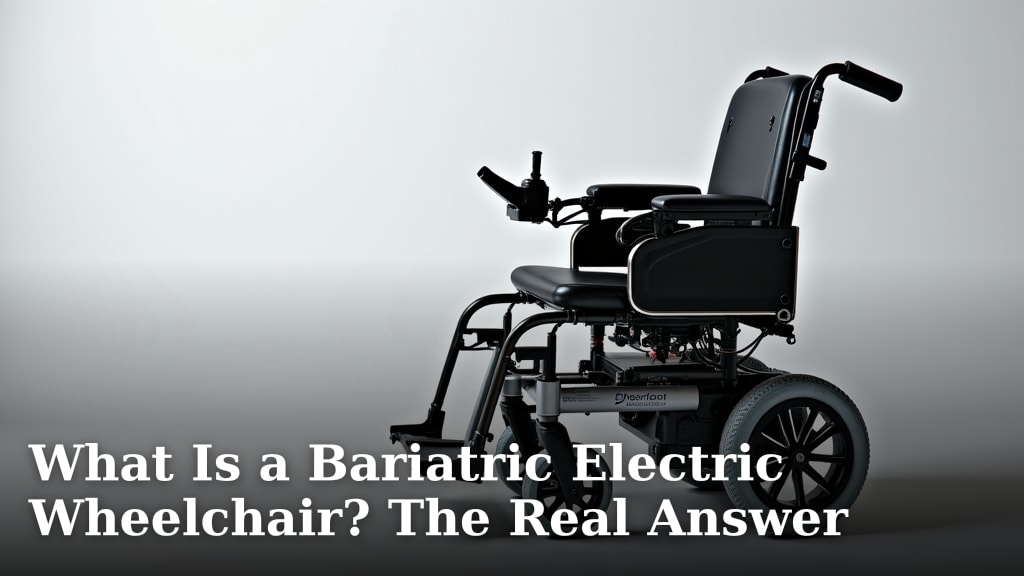
For terminology and capacity differences, read What Is a Bariatric Electric Wheelchair? The Real Answer.
What motor and wheel details should you consider?
Motor power matters after capacity and fit are confirmed. A higher motor number does not by itself prove that a chair can carry a 500-lb user or climb every slope safely.
Look for the motor configuration, wheel size, brake type, ground clearance and stated surface use. These details help you compare daily movement on smooth floors, pavement, grass or rougher ground.
A chair used indoors needs predictable steering and enough clearance around furniture. A chair used outdoors needs a route that matches its wheels, clearance and slope guidance.
Check the brake system and the user's ability to release the joystick. Electromagnetic braking appears in the Porto and Goldseason descriptions, but braking performance still depends on the surface, slope and safe operation.
Do not infer a safe load from a chair's travel range. Battery range changes with rider weight, terrain, temperature and driving conditions, as Goldseason's information explains.
How do you plan transport and storage?
Plan transport around the chair weight, battery weight and folded shape together. A folding chair can still be difficult to lift if the frame and battery are heavy.
The Porto chair is stated at 50 lb without batteries and 58 lb with batteries, with removable side batteries that reduce the lifting weight by 8 lb. The Goldseason chair is 48 lb without its battery.
The Serianie chair is stated at 73 lb.
Measure the trunk opening, cargo floor and lifting height. A folded height or thickness does not tell you whether the chair will fit through the opening at the angle you need.
Keep batteries secure during transport and follow the product's charging and storage instructions. Remove a battery only if the design allows it and you can carry it safely.
If the chair will be used outside the home, compare the route from the vehicle to the destination. A chair that fits the trunk may still be too wide for a doorway or too heavy for one person to unload.
When is a different mobility device a better fit?
A power wheelchair is often the better category when the user needs joystick control and a powered seat for indoor or outdoor movement. A mobility scooter is a different layout, so compare seating, steering, turning space and transfer needs before switching categories.
The layout difference affects more than appearance. A power chair usually places the user lower and closer to the ground, while many scooters place the user higher with legs in front and a tiller between the knees.
That change in position can alter balance, leg comfort and the way the user gets on and off. A person who transfers sideways into a power chair may need a different approach for a scooter seat.
Steering also works differently in each category. A joystick can allow small movements with one hand, while a tiller may need both hands and more forward space to turn.
Turning space must therefore be checked again if the category changes. A scooter that seems narrow on paper may need extra room for the tiller, the front wheels and the swing of the seat.
Scooters generally need more room for the tiller and a different approach to the seat. They may also change how the user positions their legs and transfers.
Seat support is another key point. A wide scooter seat does not by itself prove that the overall scooter is rated for the user's weight or that the sitting position will remain comfortable over time.
Foot room matters as well. Leg length, knee position and the space under a tiller can make a scooter feel cramped even when the seat width looks generous.
Read What Is a Heavy Duty Mobility Scooter? What to Expect if you are comparing both categories.
That comparison should include the routes used most often. Indoor turns, thresholds, slopes and outdoor surfaces can favour one layout over the other for a specific home and routine.
Keep the user's balance, reach, transfer method and route in mind. The best category is the one that supports safe daily movement without forcing awkward posture or extra assistance.
Do not change categories only because a scooter has a large seat or a high-looking weight number. The complete seating and steering setup must suit the user's daily needs.
Also check how the device will be stored, charged and moved. A layout that works in a showroom may be harder to load, park or turn in the space available at home.
If both categories remain possible, compare them with the same checklist. Use published capacity, seated measurements, turning space, transfer needs and transport weight for each device before making a final choice.
What is the final choice rule for a 500-lb user?
Choose a heavy duty electric wheelchair 500 lbs users can rely on only after confirming a published capacity of at least 500 lb and a safe seated fit. Then match the chair to the home route, outdoor surfaces, battery routine and transport plan.
The Porto Mobility Ranger Discovery is the portability-focused example, but its stated capacity information is below 500 lb. The Serianie is a 400-lb chair, and the Goldseason has a 22-inch seat but a 350-lb capacity, so neither meets a 500-lb requirement.
Use How to Choose an Electric Wheelchair? What to Expect for the broader selection process.
The right choice is the chair that meets the load requirement first, fits the user's body second and works in the real spaces where it will be used.
Frequently asked questions
What capacity should a heavy duty electric wheelchair have for a 500-lb user?
Choose a chair with a published weight capacity of at least 500 lb, then confirm whether that rating includes the user only or the user plus belongings. Leave room below the maximum instead of treating the limit as a target.
Also check seat width, seat depth, frame clearance and the manufacturer's safety instructions.
Is a 22-inch seat wide enough for a 500-lb user?
A 22-inch seat may provide more hip and thigh room than a narrower chair, but seat width alone cannot confirm a safe fit for a 500-lb user. Measure the seated body width, allow room for clothing and check the chair's weight rating, seat depth, armrest position and transfer space.
What else matters besides weight capacity?
Seat dimensions, turning radius, doorway width, floor clearance, battery handling and the chair's total weight all affect daily use. A chair can meet a capacity number but still be difficult to enter, steer, load, store or turn around in your home.
Can a folding electric wheelchair support a larger user?
Some folding electric wheelchairs support larger users, but folding design does not prove a chair is suitable for 500 lb. Compare the published weight capacity with your full load, then check the folded size, chair weight, battery weight and the space needed to unfold and use it.