How to Use a Bedside Commode Chair
To use a bedside commode chair, place it on a level surface, lock or secure it as instructed, and sit down slowly using the armrests. After toileting, clean yourself, stand with support, then remove and empty or dispose of the waste container safely.
On this page (8 sections)
- How do you set up a bedside commode chair?
- How do you sit down and stand up from the commode?
- What should you do after using the commode?
- How do you remove and empty a bedside commode bucket?
- What should you do if the chair has wheels?
- How do you keep the commode area safer?
- Which supplies help with bedside commode use?
- When should you ask for help using a commode?
To use a bedside commode chair, set it on a level surface, keep the bucket in place, and sit down slowly using the armrests. After toileting, stand with support, then remove and empty or dispose of the waste container according to its instructions.
Keep a clear path between the bed and chair, and use the commode instructions for setup and cleaning. If you need help standing or turning, ask a caregiver to assist rather than rushing the transfer.
How do you set up a bedside commode chair?
Place the commode on a level, dry floor close to the bed, with enough room to approach and turn. Assemble it fully and check that the seat, bucket, lid, and any stabilizing parts are correctly positioned.
Keep the route clear of rugs, cords, and furniture. A night light can make the approach easier to see, and nearby grab bars may help in a bathroom where the commode is positioned over a toilet.
Follow the chair's instructions for any locks, feet, height adjustments, or use over a toilet. Don't use a chair that rocks, has loose parts, or is missing a required bucket.
Which bedside commode chair setup suits your room?
The right setup depends on where the chair will be used and how you transfer to it. Some commodes are intended for use beside the bed, while others can also fit over a toilet or fold for storage.
The Drive Medical Folding Bedside Commode has a 3-in-1 design, adjustable height, fold-up steel legs, armrests, and a 7.5-quart bucket. Its snap-on seat and lid and push-pin height adjustments are designed for tool-free setup.
Choose a model only if its seat height and weight capacity suit the user and its footprint fits the room. For more options, compare the types of bedside commodes and see best bedside commode for elderly choices.
How do you sit down and stand up from the commode?
Turn until the commode is behind you, feel the seat at the back of your legs, then lower yourself slowly while holding the armrests. Reverse the movement to stand, pushing up from the armrests if the chair instructions allow.
If you use a walker or cane, keep it within reach without letting it block your turn. Avoid pulling on the walker or a towel rack to lift yourself, since it may move.
A caregiver can steady the chair and assist with the transfer if needed. Agree on how they will help before you begin, and stop if the chair shifts or you feel unsteady.
How should you position yourself on a bedside commode?
Sit fully on the seat with your feet supported on the floor, if possible. Keep clothing clear of the bucket and avoid leaning far to one side to reach toilet paper or other supplies.
The seat should feel stable before you let go of the armrests. If your feet do not reach the floor or your knees feel uncomfortable, check the chair's height adjustment and instructions before using it again.
A shower chair serves a different purpose unless it is designed to collect waste. See the differences in our guide to bedside commode vs shower chair.
What should you do after using the commode?
Clean yourself while seated if that is the safer position, then stand slowly and make sure the path is clear. Replace clothing only after you are steady, and wash your hands after handling the commode or waste container.
Keep wipes, tissue, and a lined waste bin within reach before sitting down. Avoid twisting sharply or reaching behind the chair while you are on it.
If you use the chair over a toilet, follow its instructions for that setup and remove the bucket only as directed. Check that the chair remains stable before each use.
How do you remove and empty a bedside commode bucket?
Remove the bucket carefully after standing, keeping it level to reduce spills. Carry it to the toilet or disposal area using its handle if it has one, and follow the commode instructions for emptying and cleaning.
If the bucket has a cover, use it as instructed when carrying the container. Avoid overfilling it, and don't lift a heavy bucket if you need help; ask another person to carry it.
After emptying, clean the bucket with supplies approved for its material and let it dry as directed. See how to clean a bedside commode for more cleaning guidance.
Wipe any splashes promptly, clean nearby touch points, and wash your hands with soap and water.
Can you use a liner to handle commode waste?
A liner can make collection and disposal more convenient if it fits the bucket and the commode instructions allow one. Fit it securely before use and check that it stays open inside the bucket.
Elzrghs Commode Liners come in a 100-count pack with drawstrings and are sized 21 x 16 in for standard commode buckets. The liners do not include an absorbent pad, so consider how you will manage liquid waste and disposal before use.
After use, pull the drawstrings, tie them together, and dispose of the sealed liner according to local waste rules and product instructions. Don't flush a liner or its contents unless the instructions explicitly say it is safe to do so.
What should you do if the chair has wheels?
Keep a wheeled commode stationary during transfers, following its instructions for brakes or other locking parts. Never sit down or stand up while the chair can roll.
Check that the wheels are not obstructed and that the chair is on an even surface. If you are unsure how its locks work, ask a caregiver to show you before using it.
A wheeled model may help when a caregiver needs to move the chair, but it requires careful setup at every stop. Compare best bedside commode with wheels and use a model only as its instructions permit.
How do you keep the commode area safer?
Keep the floor dry, the seat secure, and supplies within reach before each transfer. Put a stable light near the route and leave enough space to turn without bumping into furniture.
Don't place the commode on a loose mat or use it as a support for standing. Check the frame and seat regularly for damage, and stop using it if a part is loose or unstable.
For toilet transfers, properly fitted safety rails can offer a handhold. Our guide to best toilet safety rails for seniors explains what to consider, while bathtub grab bar replacement covers a separate bath fixture task.
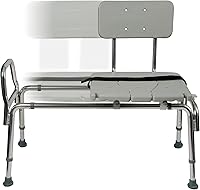
A shower chair can support seated bathing, but it does not replace a commode bucket. If you're deciding between equipment for bathing and toileting, review tub transfer bench vs shower bench.
Which supplies help with bedside commode use?
A bedside commode setup may need a stable chair, a compatible bucket or liner, and cleaning supplies. Keep frequently used items close enough to reach without twisting.
The Vaunn Medical Deluxe Spa Shower Chair is a separate bathing aid with a seat, back, padded armrests, and height-adjustable legs. It is intended for seated showers, so it does not replace a commode unless a chair is specifically designed and equipped for toileting.
Use a commode for toileting and a shower chair for bathing. For a mobile option with reclining support, compare reclining commode wheelchairs.
Choose equipment based on the transfer, room, and task, and follow each chair's own setup and cleaning instructions.
When should you ask for help using a commode?
Ask a caregiver for help if you cannot sit, stand, or turn without losing balance, or if the commode moves during a transfer. A health professional can also advise on safer transfer methods and equipment fit for your situation.
Don't try to lift or reposition a person alone if you have not been shown how. For urgent symptoms, a fall, or an injury, contact appropriate medical help.
For routine use, keep the commode stable, transfer slowly, and manage the bucket after each use. Choose the chair setup that fits the room and the user's transfer needs, then check best bedside commodes for seniors when comparing options.
Frequently asked questions
How do you use a bedside commode chair safely?
Set the commode on a level, dry floor and follow its instructions for setup and any locking parts. Keep the bucket in place, approach with a mobility aid if needed, turn carefully, and lower yourself using the armrests.
Ask a caregiver for help if you cannot transfer safely on your own.
How often should you empty a bedside commode bucket?
Empty the bucket after each use when practical, before it becomes heavy or difficult to carry. Wear disposable gloves if available, avoid splashing, and follow the commode and waste-disposal instructions.
Clean the bucket and nearby surfaces after emptying, then wash your hands.
Can you put a liner in a bedside commode?
Many commode buckets can take a liner, but check the chair and liner instructions for fit and use. Secure the liner so it cannot slip into the bucket during use.
If the liner includes no absorbent pad, plan for liquid waste and disposal accordingly.
Can a shower chair be used as a bedside commode?
No, a shower chair is not automatically a commode. It needs a compatible opening and bucket, and the maker must identify it for toileting use.
Use a bedside commode for waste collection, and choose a shower chair for seated bathing unless the chair is designed for both.