How to Use a Shower Chair Correctly
Use a shower chair on a level, clear surface, adjust it before bathing, and sit down before washing. Keep the chair stable, enter and leave slowly, and ask for help when your balance or strength is limited.
On this page (8 sections)
- How do you prepare a shower chair before use?
- How should you sit on a shower chair?
- How do you wash while seated?
- How do you use a shower chair with a bathtub?
- How do you use a standard shower chair?
- How do you leave a shower chair safely?
- How do you care for a shower chair?
- What is the safest way to use a shower chair correctly?
Use a shower chair correctly by setting it on a clear, level surface, adjusting it before bathing, sitting down before washing, and standing only after the water is off. Move slowly during every transfer, and ask a caregiver for help if you cannot keep your balance.
A chair helps you wash while seated, but it does not make an unsafe bathroom safe by itself. Clear the floor, keep supplies close, and use grab bars or another approved support when your bathroom setup allows it.
How do you prepare a shower chair before use?
Prepare the chair and bathroom before you turn on the water. Remove loose mats and bottles from the route, check the floor for water, and place soap, shampoo, and a towel where you can reach them without standing.
Read the chair's instructions for height adjustment, leg locks, backrest placement, and weight limits. If you are choosing equipment, compare a best medical grade shower chair with your needs for support, space, and transfers.
Set each leg to the same height unless the instructions specifically allow another setup. Press down gently on the seat and check that the chair does not rock, tilt, or slide before you sit.
A chair with a back can give you a defined sitting position. A shower chair vs shower stool comparison can help if you are deciding between back support and a smaller seat.
How should you sit on a shower chair?
Stand with the chair behind your legs, feel the seat with the backs of your legs, and lower yourself slowly. Keep your feet planted as you sit, and use a stable support only if it is designed for that purpose.
Do not pull on a shower curtain, towel bar, or movable shower fixture. Those items may shift when you put your body weight on them.
Once seated, move your hips toward the center of the seat. Keep both feet supported on the floor or on the chair's intended foot support, and avoid leaning far to one side to reach a bottle.
The chair should leave enough room for you to wash without twisting. If you need extra hand support, see best shower chair with handles for features to compare.
What should you check after sitting?
Check your balance, water temperature, and reach before washing. Make sure the chair remains stable after your weight is fully on it, and confirm that the water is comfortable before it contacts your skin.
Keep your most-used items within reach. A long-handled sponge may reduce bending, but do not add accessories unless they are suitable for the chair and do not make the seat unstable.
Do not stand to retrieve a dropped item. Ask for help or wait until the shower is finished and you are safely outside the wet area.
How do you wash while seated?
Wash from the seated position and keep your movements small. Start with areas you can reach without bending forward, twisting sharply, or shifting your weight beyond the chair's support.
Keep one hand on the chair or another stable support when you need to reach. Rinse soap from the seat and floor as needed so water and residue do not create a slick surface.
A backrest can help you keep your torso supported, but it does not mean you should lean heavily to one side. Sit upright and pause if you feel weak, dizzy, or unsteady.
Use a handheld showerhead if one is already installed and positioned safely. Do not stand just to adjust a high control or reach a wall-mounted item.
How do you use a shower chair with a bathtub?
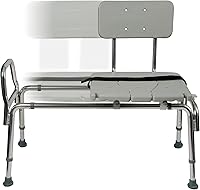
Use a tub transfer bench when you need to cross a bathtub wall while seated. One part of the bench stays outside the tub and the other part sits inside, allowing you to sit before sliding across the tub edge.
The DMI Tub Transfer Bench and Shower Chair has an adjustable seat height from 19 in to 23.5 in, a 400 lb weight capacity, a cut out for access, and a right- or left-side seat configuration. Its seat is plastic with a non-slip aluminum body.
Before use, position the bench with one end inside the tub and the other outside. Check that the legs are level, locked, and stable, then sit with caregiver help when needed and slide gently across the tub edge.
Measure the bathroom and tub area before choosing a transfer bench. Its overall dimensions are 39 in W x 18 in D x 37 in H, so the space around the tub must allow the seat to move.
The Drive Medical Tub Transfer Bench for Bathtub has height-adjustable legs with 0.5 in adjustments, a 350 lb weight capacity, suction cup feet, drainage openings, and a supportive backrest.
This type of bench suits people who cannot safely step over the tub wall. It still requires a clear transfer path, careful positioning, and enough room outside the tub to sit and stand.
If your main concern is bathroom equipment that also works near a toilet, read bedside commode vs shower chair before choosing.
How do you use a standard shower chair?
Use a standard shower chair when you can enter the shower area safely and only need seated support while washing. Approach the chair slowly, sit before turning your attention to bathing, and keep the chair away from the shower's direct path if that improves access.
The Drive Medical Shower Chair with Back and Suction Feet has a 19.5 in wide seat, adjustable height, a removable backrest, drainage holes, suction feet, and a 300 lb weight capacity. It has a plastic seat and an aluminum frame.
Its removable backrest may suit a bathroom routine that needs a different transfer position, but remove or adjust it only as directed. Check that the chair remains stable after any change.
A standard chair does not replace a transfer bench when a tub wall blocks your entry. For a compact bathroom, compare best shower chair for small shower after measuring the available floor space.
How do you leave a shower chair safely?
Finish washing, turn off the water, and pause before you transfer out. Dry your hands as much as possible, keep both feet supported, and make sure the route to the dry floor is clear.
If you use a standard chair, place your feet firmly before standing. Push from a stable surface approved for support, rise slowly, and pause until your balance feels steady.
If you use a transfer bench, slide completely outside the tub before standing. Keep the bench stable throughout the movement, and have a caregiver assist if you cannot control the transfer alone.
Do not step onto a wet floor while holding soap, shampoo, or a towel. Set these items down first or ask someone to move them.
After leaving the wet area, dry your feet and the floor. A toilet support change may also affect transfers, so compare toilet seat riser vs raised toilet seat if standing from the toilet is difficult.
How do you care for a shower chair?
Rinse away soap and dry the chair after use. Pay attention to the seat, drainage openings, legs, feet, and any moving or locking parts.
Check the chair regularly for rocking, loose parts, damaged feet, blocked drainage holes, or changes in height settings. Stop using it if it no longer sits firmly or if a part does not lock as intended.
Keep the chair within its stated weight capacity. Do not place heavy objects on it or use it as a step.
A Carex model may be worth comparing if that brand is already part of your bathroom plan. See best Carex shower chairs for related options.
What is the safest way to use a shower chair correctly?
Choose the chair based on your entry method, set it up on a clear stable surface, sit before washing, and transfer out only after the water is off. A standard chair suits a level shower when you can enter safely, while a transfer bench suits a bathtub wall that you cannot safely step over.
Pick the DMI bench if you need a sliding transfer and a 400 lb capacity. Pick the Drive Medical shower chair if you need seated bathing with adjustable height and a removable backrest.
Pick the Drive Medical tub bench if 0.5 in height adjustments and a 350 lb capacity fit your bathtub routine.
Measure first, follow the chair instructions, and ask for help when a transfer feels uncertain. Correct use is a routine of stable setup, seated washing, and slow entry and exit.
Frequently asked questions
Should you sit down before turning on the shower?
Yes. Position the shower chair securely, sit down with both feet supported, and then turn on the water if the controls are within reach.
This reduces the time you spend standing on a wet surface.
Ask for help if you cannot sit or transfer without losing balance.
How do you keep a shower chair from sliding?
Place the chair on a clear, level surface and check that all feet make firm contact with the floor. Suction-style feet can help grip wet surfaces, but they do not replace correct placement, weight limits, or careful transfers.
Follow the chair's instructions before each use.
Can you use a shower chair in a bathtub?
Use a tub transfer bench designed for bathtub entry when you need to move over the tub wall while seated. A standard shower chair is better suited to a level shower area.
Measure the tub and bathroom space first, then follow the manufacturer's setup instructions.
How do you get out of a shower chair safely?
Turn off the water, dry your hands if possible, and pause before standing. Place both feet firmly, hold an approved stable support, and rise slowly.
If you need a transfer bench, slide fully outside the tub before standing, with caregiver help when needed.