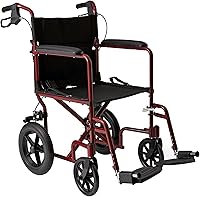
How to Choose a Lightweight Wheelchair Under 20 Pounds
A lightweight wheelchair under 20 lbs should weigh under 20 lb as a complete chair, not just have a frame under that limit. Confirm what the weight includes, then match the chair type and handling features to who will push it and where it will go.
On this page (7 sections)
- Does “under 20 lb” mean the whole wheelchair weighs under 20 lb?
- How should you compare complete weight and frame weight?
- Which chair type fits your use?
- What should you check besides the weight?
- How do these example wheelchairs compare?
- How do you decide whether an under-20-lb chair is right?
- What should you remember when choosing a lightweight wheelchair under 20 lbs?
A lightweight wheelchair under 20 lbs should weigh under 20 lb as a complete chair, not just have a frame under that limit. Check what the weight includes, then choose between a transport chair and a self-propelled wheelchair based on who will move it.
That distinction matters when lifting the chair into a vehicle or storing it at home. A number for the frame alone may leave out parts you need for everyday use.
For an overview of options, see our best lightweight adult manual wheelchair guide. This guide focuses on how to judge the under-20-lb claim and what else to compare.
Does “under 20 lb” mean the whole wheelchair weighs under 20 lb?
It only means that if the stated figure covers the complete chair in the setup you will use. Check whether the weight includes wheels, footrests and other parts that come off.
A wheelchair may be described as lightweight because its frame is light, while the total chair weighs more once assembled. Ask what the measurement covers if the maker does not make that clear.
Also distinguish between a transport chair and a self-propelled wheelchair. Transport chairs are pushed by a companion, while self-propelled chairs have large rear wheels the rider can reach.
The phrase ultralight wheelchair under 20 lbs can describe a shopping target, but it does not guarantee a standard weight category. Compare the actual complete-chair weight and features for each model.
How should you compare complete weight and frame weight?
Use complete-chair weight for lifting and transport comparisons. It gives you a more useful estimate of the chair you will pick up, though removable accessories and configuration can still affect the final weight.
| Weight detail | What it tells you | What to check |
|---|---|---|
| Complete chair weight | The weight of the assembled chair as specified | Whether footrests and other parts are included |
| Frame weight | The weight of the frame alone | How much the assembled chair weighs |
| Weight with removable parts off | A lighter lifting load for that configuration | Whether you can safely store or transport those parts separately |
Do not assume that “lightweight” means a model meets the 20 lb threshold. For a broader comparison, read how much lightweight wheelchairs weigh.
Why do some wheelchair weights differ?
Weights can differ because one figure may apply to a frame, while another describes a different setup or measurement. Removable parts can also change what gets weighed.
The Drive Medical Expedition illustrates why checking matters: its description calls it 19 lb, while its dimensions entry gives a weight of 26.8 lb. Confirm the complete-chair figure and what is included before counting it as under 20 lb.
Which chair type fits your use?
Choose a transport chair if a companion will push it, and consider a self-propelled wheelchair if the rider needs to move the large rear wheels. Neither type is automatically better for every user or trip.
Transport chairs can suit outings where another person will handle movement. Check handle height, brakes, wheel size and the route, including ramps, thresholds and uneven surfaces.
A self-propelled wheelchair gives the rider access to large rear wheels for movement. Compare reach, seating fit and the chair’s overall weight, especially if a companion will also lift it.
Read lightweight vs ultra lightweight wheelchair for a closer look at how these labels are used. To learn what ultralight can mean in context, see what an ultralight wheelchair is.
What should you check besides the weight?
Check fit, folding size, wheels and handling before choosing. A low weight will not help if the chair does not fit the user or is awkward for the person who will push and lift it.
- Fit: Compare seat width and depth with the user’s needs.
- Capacity: Check the maximum weight recommendation for the specific chair.
- Folded size: Confirm it fits your vehicle or storage space.
- Wheels: Consider who will push the chair and the surfaces on the route.
- Brakes: Check how the chair stops and stays in place.
- Footrests and arms: See how they affect transfers and access to tables.
- Lifting: Consider who will lift the chair and whether parts need to be removed first.
If powered movement is more appropriate, use our electric wheelchair choosing guide. Compare powered options by their controls, transport needs and fit.
How do these example wheelchairs compare?
The three examples differ by chair type and stated weight, and none should be assumed to meet the complete-chair under-20-lb goal without checking. The Expedition is described as 19 lb, but a separate weight entry gives 26.8 lb.
| Model | Type | Weight detail to note |
|---|---|---|
| Drive Medical Folding Transport Wheelchair | Transport chair | Product dimensions entry gives 26 lb |
| Drive Medical Lightweight Expedition Folding Transport Wheelchair | Transport chair | Description says 19 lb; dimensions entry gives 26.8 lb |
| Drive Medical Blue Streak Lightweight Wheelchair | Self-propelled wheelchair | Item weight is 41.3 lb |
The Expedition is the closest match to the target based on its 19 lb description. Confirm the complete-chair weight and included parts with the seller or maker before relying on that figure.
How do you decide whether an under-20-lb chair is right?
Pick an under-20-lb complete chair only when the verified weight and chair type fit your actual use. If the weight includes only the frame, compare the assembled chair instead.
For a companion-pushed chair, focus on the full lifting load, folding size and brake setup. For a self-propelled chair, check whether the rider can reach the rear wheels and manage the chair on the planned route.
If fit, capacity or safe transfers are uncertain, ask a qualified mobility professional to help assess the chair. The right choice is the one that meets the user’s needs and can be handled by the people who will use it.
What should you remember when choosing a lightweight wheelchair under 20 lbs?
Verify complete-chair weight first, then choose the chair type and features around the rider and helper. Pick a transport chair for companion pushing, or compare self-propelled options if the rider needs to move the wheels independently.
The Expedition’s 19 lb description makes it worth checking, but its separate 26.8 lb weight entry needs clarification. Compare more models in our best lightweight adult manual wheelchair guide.
Frequently asked questions
Does under 20 lb mean the whole wheelchair weighs under 20 lb?
Not always. A maker may give the frame weight or the complete chair weight, and removable parts can change what is included.
Check the stated weight and what it covers, including footrests, wheels and armrests, before comparing models.
If the detail is unclear, ask the seller or maker to confirm.
Is a transport chair the same as a self-propelled wheelchair?
No. A transport chair is generally pushed by a companion and has smaller rear wheels, while a self-propelled wheelchair has larger rear wheels the rider can reach.
Compare the intended way to move the chair, then check whether the rider can steer and brake it safely for the planned use.
Can a wheelchair under 20 lb support any user?
No. A low chair weight does not tell you its maximum user capacity or whether its seat dimensions fit.
Check the weight capacity, seat width and depth, and the user’s positioning needs for each model.
Ask a qualified mobility professional if fit or support needs are uncertain.
What matters besides wheelchair weight?
Check how the chair folds, its folded dimensions, wheel size, brakes, footrests and the person who will push or propel it. A lighter chair can still be awkward to lift or use if its shape, seating or controls do not suit the user and the route.
Are any of these examples under 20 lb as a complete chair?
The Drive Medical Expedition is described as weighing 19 lb, while its dimensions entry gives a separate weight of 26.8 lb. Because those figures differ, confirm the complete chair weight and what is included before treating it as under 20 lb.
The other examples have listed weights above that threshold.