Upright Walker vs Rollator: Which Should You Choose? (November 2026)
Pick an upright walker if you hunch over a rollator or want your forearms supported, and pick a conventional rollator if you grip well and want a lighter, simpler aid. In this upright walker vs rollator comparison, posture, door width, weight capacity and seat needs decide the right choice.
On this page (13 sections)
- Upright walker vs rollator: the quick verdict
- How forearm support changes your walking posture
- How handgrips and brakes work on a rollator
- Width, doorways and small spaces
- Height adjustment for tall and short users
- Weight capacity and frame strength
- Seats, rest stops and accessories
- Wheels, surfaces and outdoor use
- Folding, storage and lifting into a car
- Who should buy an upright walker
- Who should buy a conventional rollator instead
- Which products fit which buyer
- Verdict in this upright walker vs rollator choice
Pick an upright walker for forearm support and a more upright posture, and pick a conventional rollator for simple handgrip walking and easy sitting. This upright walker vs rollator guide compares 4 upright models against the traditional rollator design, so you can match support to your body and your home.
Our score weighs specs, features and buyer feedback against what you're shopping for. We compared specs and features, and we checked dimensions, capacities and wheel sizes across these models.
An upright walker has forearm pads or armrests at a higher level. You rest your forearms on the pads and hold small handgrips, which helps you stand taller.
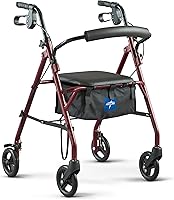
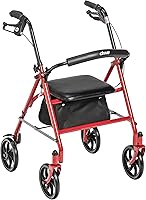
A conventional rollator has handgrips at waist height and often a seat, so you lean forward a little as you walk.
The right choice depends on where you feel strain. If your shoulders, neck or back ache from hunching, forearm support may help.
If your hands are weak, a rollator with loop brakes may be easier to stop and lock.


Upright walker vs rollator: the quick verdict
An upright walker wins for posture and forearm support, while a rollator wins for simple grip, brakes and familiar use. Neither is safer for everyone, because fit and strength matter more than shape alone.
Many buyers mention that upright pads feel more supportive on longer walks. Rollator users often prefer the clear handgrip and seat setup for short trips and rest stops.
Use the table below to compare the key specs side by side. Then read the sections that decide the choice for your body.
| Product | Best for | Capacity | Width | Height | Our score |
|---|---|---|---|---|---|
| Agrish Narrow Walker Folding Upright Walker | narrow doorways | 450 lb | 18 to 22 in | 42 to 51 in | 9.6 |
| Helavo Upright Walker with Seat | outdoor walks | 300 lb | 9.5 | ||
| Vive Mobility Upright Walker with Seat | tall users | 300 lb | 45 to 52 in | 9.4 | |
| ELENKER Upright Walker | compact folding | 9.1 |
How forearm support changes your walking posture
Forearm support lets you walk taller because the pads carry weight through your arms instead of your hands alone.
That change can reduce the forward lean that handgrips often cause. It also spreads pressure more evenly across the forearm.
The Agrish model has 3D soft PU armrests with 4-length adjustment. The armrests conform to natural arm curves, and the sponge handle is said to reduce wrist and neck fatigue.
The armrests release in 3 seconds to convert to standard walker mode. That gives you a different grip when forearm support is not needed.
The Vive model has contoured armrests and forearm pads that adjust forward and backward. That helps users with different arm lengths avoid reaching too far ahead.
The Helavo model has soft padded armrests and height adjustable ergonomic handles. Helavo says this helps you walk straight and relieves shoulders and back.
The ELENKER model adjusts the forearm tube, handle bar and leg tube. That fully adjustable frame helps you find a more natural posture, and it folds flat with one hand.
Check grip height before you walk. Your elbows should bend in a relaxed way, not lift toward your shoulders.
How handgrips and brakes work on a rollator
A conventional rollator uses handgrips and squeeze brakes, so it suits people with strong enough hands to grip and stop.
That simple setup is why many people learn a rollator quickly. It gives you a clear place to hold and a direct way to slow down.
Rollators usually have loop brakes or squeeze brakes that slow the rear wheels and lock them for sitting. You squeeze to slow and push to lock.
The ELENKER upright model also uses a dual brake system. That same squeeze and push action helps when you stop and sit.
The Helavo model has an easy braking system with a parking brake. That helps you sit safely on its 18.9 in wide seat.
The Vive model has length adjustable hand grips with loop brakes. You can lock the wheels in place for stable seating during rest stops.
A rollator can be harder to use if hand pain or weak grip makes braking difficult. In that case, forearm support may spread the load better.
Try the brakes on level ground first. Brakes should hold firm when locked, with no creep when you put weight on the seat.
Width, doorways and small spaces
Width decides if a walker fits your home, and a narrow upright walker suits tight doorways best.
Measure your narrowest doorway and allow room to turn, not just pass through.
The Agrish model adjusts from 18 to 22 in wide with 5 width levels. At 18 in, with wheels inward, it is the narrowest here for indoor and outdoor use.
The Helavo model is 26.4 in wide. That may fail bathroom doors or older halls.
The Vive model measures 32 x 25 x 52 in overall. The ELENKER model measures 25 x 28 x 47 in, also wider than the Agrish at its narrowest.
Our guide to types of walkers for disabled explains width and support differences by walker type.
Height adjustment for tall and short users
Height adjustment matters as much as width, because wrong height can cause hunching even on an upright walker.
Set pads and grips so elbows bend comfortably with shoulders down. A good fit lets you stand tall without strain.
The Agrish model adjusts in 10 positions from 42 to 51 in. That suits many heights and body proportions.
The Vive model adjusts from 45 to 52 in with locking push pins. It is ideal for heights from 5 ft 2 in to 6 ft 4 in, and its forearm pads adjust forward and back.
The Helavo model is 46.9 in high with height adjustable handles and backrest. Its slide system adjusts without push buttons.
The ELENKER model adjusts forearm tube, handle bar and leg tube for different arm and leg settings.
If you are tall, our guide to best upright walkers for tall people explains taller frames. If you are short, best upright walkers for short people covers lower settings and reach.
Weight capacity and frame strength
Weight capacity should be checked first if you are bariatric or if a caregiver will lean on the walker during transfers.
A higher capacity does not always mean a better daily fit, but it does mean more margin. Check the limit before you rely on the frame.
The Agrish model holds up to 450 lb with an H-frame. That is the highest capacity in this group and suits bariatric users who need a narrow yet heavy duty frame.
It also assembles in 5 minutes with no tools. The Agrish weighs 11 lb in product dimensions, which is light for its capacity.
The Helavo model supports users up to 300 lb. Its frame uses durable aluminum and weighs 22.7 lb.
The Vive model also supports up to 300 lb. It uses a durable aluminum frame and weighs 20 lb, which can make lifting into a car easier.
The ELENKER model weighs 27 lb. Its frame uses an anti tip over design, but no weight capacity is stated in the data here.
If capacity matters for you, check with the seller before you order. Do not assume a limit that is not listed.
Seats, rest stops and accessories
A seat matters for rest during walks, but many upright walkers trade a seat for narrower width or higher capacity.
Decide if you will sit often or only briefly. That choice rules out several models fast.
The Helavo model has a cushioned seat 18.9 in wide and 9.1 in deep, plus a height adjustable padded backrest and cup holder. A sturdy bag suits longer outdoor walks.
The Vive model has a 17.5 in wide seat and a detachable shoulder bag for essentials.
The ELENKER model has an adjustable padded seat with backrest, under-seat pouch and cane or umbrella holder.
The Agrish model lists no seat. It focuses on narrow width, removable armrests and 450 lb capacity.
Our list of best upright walker attachments covers storage add-ons. Our guide to best walker trays for rolling folding walker helps match trays to folding frames.
Wheels, surfaces and outdoor use
Wheel size and tire type decide whether a walker feels smooth indoors, on pavement or on uneven ground. Bigger wheels roll over bumps more easily, but they can make the walker wider and heavier.
The Helavo model has 10 in rubber front wheels. Helavo says these puncture-proof tires give excellent cushioning on almost any surface.
That makes it the strongest outdoor pick in this group.
The Vive model has 8 in flat-free wheels for stability on many surfaces. Flat-free wheels avoid flat tires, which helps if you walk on paths with small stones.
The ELENKER model has 8 in solid PVC wheels. Solid wheels roll well on most surfaces and do not need air.
Its anti tip over frame helps with stability.
The Agrish model has wheels with an inward design for narrow passage. That wheel placement helps the walker stay compact at 18 in wide.
It suits indoor use and smooth outdoor paths.
For outdoor walks, a rollator with larger wheels and a parking brake often feels more secure. Our best upright walkers for seniors guide covers models built for older users who walk outside often.
Folding, storage and lifting into a car
Folding matters if you travel by car, store the walker in a closet or lift it into a trunk weekly.
A light frame lifts easier, but a flat fold may store better in tight corners. Measure storage space first.
The Agrish model folds at the touch of a button. It fits a car trunk or tight corners for travel and small homes.
The ELENKER model folds flat with one hand. It can slide behind a seat or into a closet, and its cane and umbrella holder frees your hands.
The Vive model folds to fit a trunk or backseat. It weighs 20 lb, a few pounds less than some rivals.
The Helavo model weighs 22.7 lb and folds for transport. Its durable aluminum frame carries extra accessory weight.
Measure trunk opening and backseat space before buying. If you are weighing a wheelchair for longer trips, how to choose an electric wheelchair explains when a walker is no longer enough.
Who should buy an upright walker
Buy an upright walker if you hunch over a rollator, have shoulder or neck strain, or want forearm support for longer walks.
Those buyers gain most from pads and higher support.
The Agrish model suits small homes needing a narrow frame and high capacity. Its removable armrests switch to standard walker mode for a different grip.
The Helavo model suits outdoor walkers wanting cushioning and a seat. Its 10 in rubber wheels help on paths, and cup and cane holders help on longer trips.
The Vive model suits tall users and longer arms. Its pads adjust forward and back to 52 in height, and 20 lb weight helps travel.
The ELENKER model suits users wanting a padded seat and backrest in a compact folding frame. Its under-seat pouch and one-hand fold suit small storage spaces.
Use an upright walker if you can bear weight through forearms without pain. If pressure hurts, a conventional rollator with handgrips may feel better, so try both in a store if you can.
Who should buy a conventional rollator instead
Buy a conventional rollator if you grip well, prefer handgrips, and want a familiar design with a seat and brakes. That choice suits short trips, frequent sitting and simpler storage.
A rollator is easier if you need to lock brakes quickly before sitting. Handgrips give you a clear place to hold when you stand up.
That can help if forearm pads feel awkward during a transfer.
A rollator also suits people who walk mostly indoors on smooth floors. Smaller wheels can roll easily in hallways and around furniture.
You will not need the outdoor cushioning of larger wheels.
A rollator may be less helpful if you tend to hunch. Your hands stay in front of your body and lower than your forearms would rest together.
That posture can strain your shoulders and back on longer walks.
Choose a rollator if your hands are strong and your main need is a seat for rest. Choose an upright walker if posture is your main concern.
Both aids can work, but they solve different problems.
Which products fit which buyer
The best pick depends on home width, height, capacity and whether you need a seat. Use these product fits to narrow your shortlist before you read the verdict.
If you need baskets for a folding walker, our guide to best walker basket for folding walker helps you choose storage that fits. Check the frame width before you buy, so the basket does not block folding.
Verdict in this upright walker vs rollator choice
Pick the Agrish for narrow doorways and 450 lb capacity, the Helavo for outdoor walks, the Vive for tall users, and the ELENKER for a padded seat with flat folding. Pick a conventional rollator only if handgrips and simple brakes suit your hands and posture better.
Measure your doorways, check your height and decide whether you need a seat. Those 3 checks will rule out most models quickly.
Then choose the walker that lets you stand tall without pain. Forearm support helps many users walk more upright, but a rollator may still be the safer fit if you grip well and sit often.
For your next step, read the tall or short guide that matches your height. That fit check will help you set the height before the walker arrives.
Frequently asked questions
Is an upright walker better than a rollator?
An upright walker is better if you tend to hunch forward or want forearm support to walk more upright. A rollator is better if you have good hand grip, prefer a simpler frame and want to stand or sit using handgrips.
Your posture and grip strength matter most.
Can I use a rollator if I hunch over?
You can, but a conventional rollator may encourage a forward lean because you hold handgrips in front of you. An upright walker supports your forearms higher and can help you walk in a more natural position.
If hunching is your main issue, compare upright models first.
Which is easier to use in a small home?
A narrow upright walker with adjustable width is easier in a small home because it fits through tighter doorways. The Agrish model narrows to 18 in.
Measure your doorways and hall turns before you choose any walker or rollator.
Do upright walkers have seats?
Many do. The Helavo, Vive and ELENKER models here have seats for resting during a walk.
The Agrish narrow walker focuses on width adjustment and capacity and does not list a seat in its data.