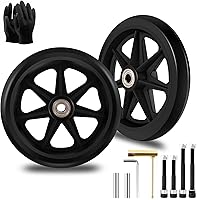
How to Choose All-Terrain Wheels for a Wheelchair
Wheelchair all terrain wheels work best when size, axle fit and tire type match your chair and your usual surfaces. Measure the old wheel, check width and bearing fit, then pick a wider solid tire for rough ground or a narrower wheel for indoor use.
On this page (12 sections)
- How do I choose the right size of wheelchair all terrain wheels?
- How do I check axle fit and complete wheel compatibility?
- Which tire material works best for outdoor handling?
- Should I switch front wheels, rear wheels or both?
- How do 6 inch, 7 inch and 8 inch wheels compare?
- What are the tradeoffs of a wheelchair with all terrain wheels?
- How do material, bearings and hub strength matter?
- Can power wheelchairs use the same wheels as manual chairs?
- How do I install and test new all terrain wheels safely?
- How do I care for all terrain wheels after outdoor use?
- Which of these three options should I pick?
- How do I make a final pick for wheelchair all terrain wheels?
The best wheelchair all terrain wheels are the ones that fit your chair, clear your forks and match the ground you use most. Start by measuring diameter, width and axle fit before you compare tire material or tread.
A wheelchair with all terrain wheels is not a magic fix for every surface. Deep mud, loose sand and steep slopes still need power, help or a different chair.
For paths, grass, gravel and cracked pavement, wheel size and width matter a lot.
This guide walks through size, fit, tire type, front wheel choice and daily care. It also shows three real replacement options and when each one makes sense.
How do I choose the right size of wheelchair all terrain wheels?
Choose the diameter that matches your current wheel and your fork clearance. Size changes how the chair rolls, turns and sits, so do not guess it.
A larger wheel rolls over bumps and cracks more easily. It can also raise the seat, shift your balance and make the chair wider to turn.
A smaller wheel turns in tight spaces more easily, but it catches on rough edges sooner.
Measure the old wheel from the ground to the top of the tire. Then measure the width across the tire.
Write both numbers down before you shop.
How wide should all terrain wheelchair wheels be?
Pick a width based on your main surface. Wider tires spread weight and grip loose ground better, while narrower tires turn and fit through tight gaps more easily.
A narrow wheel suits halls, shops and smooth paths. A wider wheel suits grass, gravel and uneven outdoor ground.
Too wide a wheel can rub the fork or frame, so check clearance on both sides.
Measure the gap inside your fork with the old wheel removed if you can do so safely. Leave room for the tire to spin without rubbing.
For a broad view of chair types first, read What Are All the Types of Wheelchairs? The Full Picture.
It helps you match wheel changes to the kind of chair you own.
Rule: match the old diameter first, then choose width for your main surface.
How do I check axle fit and complete wheel compatibility?
Check axle fit before you check style or color. A wheel that does not fit the axle will not work, no matter how good the tire looks.
You need to confirm the bearing hole size, bolt length and fork width. The ANTIQO 8 inch pair, for example, has a 0.315 inch, or 8 mm, bearing hole and a 3.3 inch bolt length.
Those numbers help you compare it with your chair.
Remove the old wheel only if you can do it safely and keep the chair stable. Note which side each part came from.
Keep small parts in a tray so nothing rolls away.
Wheel compatibility also covers weight and use. A wheel made for a walker or rollator may not suit a heavy power chair.
Read the stated use and compare it with your chair type.
If you need step by step fitting help, see how to replace wheelchair wheels. That guide covers basic removal and refitting in plain steps.
Rule: confirm diameter, width, bearing hole and bolt length before you order.
Which tire material works best for outdoor handling?
Pick solid PU or rubber tires if you want low upkeep and puncture resistance. Solid tires do not need air, so they stay ready for use with less care.
The CANWUPON 6 inch wheels use wear resistant PU tires and a durable ABS hub. CANWUPON says the thickened, anti slip tires suit indoor and outdoor surfaces.
The solid rubber also gives quiet and stable rolling in quiet places such as hospitals or nursing homes.
Solid tires do not absorb shocks like air tires. On rough ground, you may feel more vibration through the frame.
A softer tire or a larger diameter can help, but it will not remove every bump.
Check the tire surface before you choose. A smooth tire suits smooth floors and paths.
A tire with more grip suits wet or loose ground, but it can feel harder to turn indoors.
For tire focused options, compare best all terrain wheelchair tires. That page helps you separate tire choice from full wheel choice.
Rule: choose solid tires for low upkeep, and check grip for your wettest or loosest surface.
Should I switch front wheels, rear wheels or both?
Start with the wheels that do the most work on your routes. Front casters steer and bump first, while rear wheels carry more weight and drive the roll.
Many wheelchairs use small front casters that catch on cracks, grass and gravel. Changing those first can make a clear difference on outdoor paths.
Rear wheels matter more for pushing effort, grip and long rolls.
A power chair adds another layer. Front and rear wheel roles change with motor placement and weight balance.
Do not assume a manual chair rule fits a power chair without checking the chair type.
The ANTIQO pair is stated as suitable for wheelchair front wheel replacement. Its description also lists front or rear wheel replacement.
Still check size and axle fit for your exact spot.
For front wheel ideas, see best wheelchair front wheel replacement. It narrows the search to the wheels that steer your chair.
Rule: fix the front casters first if bumps and steering are your main problem.
How do 6 inch, 7 inch and 8 inch wheels compare?
Compare 6 inch, 7 inch and 8 inch wheels by control, not by size alone. Bigger wheels roll over obstacles more easily, and smaller wheels turn more easily.
The CANWUPON 6 inch pair is a compact choice. It suits users who need a lighter, more maneuverable wheel for indoor and outdoor use.
CANWUPON says the wheels are lightweight and labor saving, which helps with daily pushing.
The CANWUPON 7 inch pair sits in the middle. It has a 1.57 inch wheel width, metal ball bearings and 12.9 grade high strength screws.
That width can help on loose ground, but you must confirm fork clearance.
The ANTIQO 8 inch pair is the largest here. It measures 8 inches by 2 inches, or 200 by 50.
ANTIQO says the solid tires need no inflation and help prevent punctures.
Larger wheels can change seat height and footrest angle. Sit in the chair after fitting and check reach, brakes and transfers before a long trip.
Rule: move up one size at a time and test clearance, balance and turning.
What are the tradeoffs of a wheelchair with all terrain wheels?
A wheelchair with all terrain wheels trades indoor ease for outdoor grip. Wide, solid wheels help on grass and gravel, but they can feel heavier and less nimble inside.
Outdoor handling improves when the tire stays in contact with uneven ground. A wider tire spreads load and resists sinking.
A larger diameter rolls over small obstacles with less effort.
The tradeoff shows up at doors, lifts and tight turns. A wider wheel may rub, and a larger wheel may change how the chair fits through a gap.
Measure your narrowest doorway before you switch.
Weight matters too. Bigger wheels and stronger hubs can add pounds to the chair.
Lighter wheels help with lifting, but do not pick a wheel that is too light for the load it must carry.
For broader replacement choices, see best wheelchair replacement wheels. It helps you compare standard replacements with outdoor focused ones.
Rule: choose outdoor wheels for your worst normal route, not for a rare perfect day.
How do material, bearings and hub strength matter?
Look at hub material, bearings and screws before you trust a wheel for daily use. Bearings and hardware decide how long a wheel spins smoothly under load.
The CANWUPON wheels use ABS hubs, metal ball bearings and 12.9 grade high strength screws. CANWUPON says the ABS wheels have strong load bearing capacity for wheelchair assist devices and rollators.
The ANTIQO wheels use full metal bearings, environmentally friendly polyurethane solid tires and thickened polypropylene hubs. ANTIQO says that mix gives a long lasting and reliable user experience.
The claim is useful, but fit still comes first.
A good bearing should spin without grinding or wobble. If a wheel feels rough before you fit it, do not force it onto your chair.
Return or exchange it while it is still unused if you can.
Clean the axle area when you change wheels. Dirt and hair around the bearing can shorten wheel life.
A quick wipe and visual check takes little time and prevents many problems.
Rule: pick strong bearings and hardware, then confirm the load fits your chair type.
Can power wheelchairs use the same wheels as manual chairs?
Do not assume manual and power chairs share wheel rules. Power chairs carry more weight and use different axles, forks and motors.
The ANTIQO pair is made for electric and power wheelchair caster use. That makes it a better starting point for a power chair than a wheel stated for walkers or rollators.
For power chair basics, read What Is a 4 Wheel Electric Wheelchair? What Really Matters.
It helps you check drive, balance and wheel role before you change parts.
Electric chairs also need clearance around motors, cables and suspension parts. A tire that fits a manual fork may rub a power chair frame.
Spin the wheel by hand and check all sides before you sit in the chair.
Battery weight and motor torque can expose weak hubs faster. Use wheels stated for power wheelchair use when your chair is electric.
If the stated use is unclear, ask the maker or seller before you order.
Rule: match the wheel to manual or power use before you match it to size.
How do I install and test new all terrain wheels safely?
Install new wheels slowly and test the chair before you go out. Fit, spin, brake and sit test every wheel before your first trip.
First, confirm size and screws. CANWUPON says installation is simple once size and screws are confirmed.
Simple still means careful, because a loose wheel can fail in use.
Fit one wheel at a time. Tighten hardware evenly, then spin the wheel and watch for rub or wobble.
Check that the brake still locks and that the wheel does not touch the fork.
Sit in the chair and test transfers, footrest position and reach. A larger wheel can raise the seat and change how your feet land.
Adjust what you can, but do not ignore poor fit.
Take a short roll on smooth ground first. Then try a curb cut, grass edge or gravel path at low speed.
Stop if the chair pulls to one side or the tire rubs.
Use how to replace wheelchair wheels as your fitting walk through. Keep the old wheels until the new ones pass your test.
Rule: no long trip until the wheel spins freely, brakes work and you can transfer safely.
How do I care for all terrain wheels after outdoor use?
Clean and inspect outdoor wheels after mud, grit or wet use. Dirt around bearings and axles shortens wheel life faster than normal wear.
Wipe the tire and hub with a damp cloth after outdoor use. Pick out stones or packed mud from the tread.
Let the wheel dry before you store the chair if it is very wet.
Check tire wear each month. Solid PU wears slowly, but flat spots, cuts and chunks can still appear.
Replace a damaged tire before it affects grip or steering.
Spin each wheel and listen for grinding. Tighten loose hardware only to the maker guidance.
If a bearing feels rough or a hub cracks, replace the wheel rather than riding on it.
Store the chair dry and off grit. A dirty garage floor can grind the tire each time you roll out.
A small mat or clean storage spot helps more than most people expect.
Rule: clean, spin and inspect outdoor wheels after rough or wet trips.
Which of these three options should I pick?
Pick the CANWUPON 6 inch pair for compact indoor and outdoor use. Its narrow 6 inch size suits tighter spaces where control matters most.
Pick the CANWUPON 7 inch pair when you want a middle ground. Its 1.57 inch width and metal ball bearings suit wheelchair and drive rollator use, but fork clearance must be checked.
Pick the ANTIQO 8 inch pair for power wheelchair casters and puncture free use. Its 8 mm bearing hole and 3.3 inch bolt give you exact fit numbers to check before you order.
All three options use solid tires that need no inflation. All three need size confirmation before purchase.
Do not skip that step because the wheels look similar in photos.
If your main issue is tire grip rather than wheel fit, compare best all terrain wheelchair tires next. If your main issue is steering, start with best wheelchair front wheel replacement.
Rule: fit first, surface second, size third, and test before you trust.
How do I make a final pick for wheelchair all terrain wheels?
Make your final pick with a short checklist. The right wheelchair all terrain wheels fit your axle, clear your fork and match your everyday ground.
Measure diameter and width. Confirm bearing hole and bolt length.
Note manual or power use. Test doors, brakes and transfers after fitting.
A wheelchair with all terrain wheels can open up parks, paths and gravel routes for many users. It cannot make deep mud, soft sand or steep hills safe for every chair.
Be honest about your normal route and choose for that route.
Keep the old wheels for a week after fitting. That gives you a safe fallback if the new size changes balance or turning.
It also lets you compare both sets on the same path.
For a full replacement plan, use best wheelchair replacement wheels and how to replace wheelchair wheels. Together they cover choice, fit and fitting.
Rule: buy only the wheel that passes your measurements and your short test roll.
Frequently asked questions
What size all terrain wheelchair wheels should I buy?
Buy the size that matches your current wheel and fork clearance. Measure diameter and width before you order, and check the axle and bearing size.
A larger wheel rolls over bumps more easily, but it can raise seat height and change turning.
Are solid tires better than pneumatic tires for outdoor use?
Solid tires avoid punctures and low pressure, so they need less care. Pneumatic tires can feel softer on rough ground, but they need air and can go flat.
Pick solid tires if you want low upkeep, and check width for the surfaces you use most.
Can I put all terrain wheels on any wheelchair?
No. Wheel compatibility depends on diameter, width, axle fit, fork clearance and load.
Confirm the specifications and size before you order.
If the wheel does not match your chair, it may wobble, rub or strain the frame.
Do bigger wheels make a wheelchair easier to push outdoors?
Bigger wheels can roll over cracks and small bumps with less effort. They can also make the chair heavier and harder to turn in tight indoor space.
Test your route and doorway width before you switch to a larger size.