How to Choose a 22-Inch Transport Wheelchair
A 22 inch transport wheelchair suits adults who need wider seating and caregiver-propelled mobility, but you must check doorways, vehicle space, seat depth and transfer access first. Compare the chair's usable seat width with the user's clothing and posture needs, then confirm the folded dimensions and total weight.
On this page (10 sections)
- Is a 22 inch transport wheelchair right for you?
- How should you measure for a 22 inch transport wheelchair?
- What should you check besides seat width?
- How do the products here fit different needs?
- How does a 22 inch seat affect vehicle loading?
- Can a wider seat improve comfort?
- What is the difference between a transport chair and a captain seat wheelchair?
- How should you use and care for a transport wheelchair?
- What should you choose if a 22 inch chair will not fit?
- Final decision rule for a 22 inch transport wheelchair
A 22 inch transport wheelchair suits adults who need more seat room than a narrow travel chair provides and who will usually be pushed by a caregiver. The wider seat can improve fit, but you still need to check the full frame width, seat depth, route, transfers and vehicle storage.
Measure the user while seated in normal clothing. Compare that measurement with the usable seat width, then leave enough room for posture without creating a loose fit that makes the user shift during movement.
A transport wheelchair is built around caregiver propulsion rather than independent self-propulsion. Read our guide to transport chair vs wheelchair if you are deciding between a caregiver-pushed chair and a larger wheelchair with self-propelling wheels.
Is a 22 inch transport wheelchair right for you?
A 22 inch transport wheelchair is a good starting point when a narrower chair feels restrictive and a caregiver needs a portable option for appointments, outings or vehicle travel. It is less suitable if the chair must pass through narrow doors or be lifted often by one person.
Seat width is only one part of the fit. Check seat depth, armrest position, footrest clearance and the user's ability to sit upright without sliding forward or sideways.
For extra leg support, compare extra-long elevating leg rests.
A wider seat may be useful for:
- Adults who need more room across the hips and thighs.
- Users who wear bulky clothing or leg supports.
- Caregivers who want a stable seating platform for short trips.
- Indoor and outdoor paths that do not require tight turns.
- Vehicle travel where the folded chair can be lifted safely.
A narrower chair may be easier for:
- Small bathrooms and narrow hallways.
- Compact car trunks.
- Caregivers who frequently lift the chair.
- Users who need close support from the armrests.
- Routes with many tight doorways or sharp corners.
Do not choose a 22 inch seat only because the number sounds more comfortable. A seat that is too wide can make side support less effective and may make it harder to position the user near a table, transfer surface or vehicle seat.
How should you measure for a 22 inch transport wheelchair?
Measure the user's seated width, then compare it with the chair's usable seat width and depth. The best fit gives the user enough room for ordinary clothing while keeping the pelvis and upper body reasonably centered.
Use these measurements:
- Measure across the widest part of the hips and thighs while seated.
- Add room for normal clothing and any regular clothing layers.
- Measure from the back of the hips to the back of the knees.
- Check whether the chair's seat depth supports the thighs without pressing behind the knees.
- Measure the doorway, hallway and bathroom route.
- Measure the vehicle opening and the storage area.
A seat width does not equal the full outside width. Armrests, wheel placement, frame tubes and folded hardware can add several inches, so compare the complete chair dimensions with the narrowest part of the route.
The user's posture also matters. If the person needs strong lateral support, an overly wide chair may leave too much unused space at the sides.
If the person needs more room for comfort, a narrow seat may cause pressure or make transfers more difficult.
What should you check besides seat width?
Check chair width, weight, folded size, brakes, footrests and caregiver handles before choosing a 22 inch transport wheelchair. These details affect daily use more than the seat number alone.
Overall width and turning space
Measure the chair at its widest point. Include the armrests, wheels and any swing-away footrests in your route planning.
A wider frame may work well in an open home, clinic or level outdoor path. It may be difficult in older bathrooms, narrow bedroom doors or crowded shops.
Turn the chair through the tightest corner before you plan regular use. A straight doorway measurement is not enough if the caregiver must make a sharp turn immediately after entering.
Chair weight and lifting points
A lighter chair is usually easier to place in a vehicle, but the chair still needs to feel stable for the intended route. Check the chair's total weight and identify the safe lifting points before loading.
Do not lift a folded chair by loose footrests or removable parts. Keep the loading path clear, use two people when needed and avoid twisting while carrying.
Folding size and vehicle fit
A folding frame can simplify storage, but the folded shape still needs to fit through the trunk opening. Measure the opening itself, not only the trunk's interior volume.
Check whether the footrests swing away or fold with the chair. If they remain attached, they may affect the length or shape during loading.
Brakes and transfers
Wheel locks should hold the chair still during a transfer, but they are not a substitute for caregiver support. Apply both locks before the user sits down, stands up or moves between surfaces.
Keep the footrests out of the way during transfers when the design allows it. The user should not step on a footplate unless the chair's instructions specifically support that action.
For bathroom transfers, a transport wheelchair alone may not solve the whole problem. A transfer wheelchair guide explains how transfer-focused designs differ from ordinary caregiver-propelled chairs.
How do the products here fit different needs?
These products cover different parts of the mobility decision. The Drive Medical and Medline models are transport wheelchairs, while the DMI model is a bathroom transfer bench that can help with shower transfers but is not a replacement for a transport wheelchair.
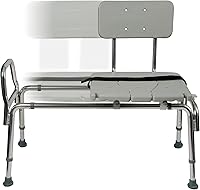
DMI Tub Transfer Bench and Shower Chair
The DMI Tub Transfer Bench and Shower Chair suits a bathroom transfer problem rather than general transport. It has a plastic seat with a non-slip aluminum body, adjustable seat height from 19 to 23.5 in, a 19 in wide by 14.5 in deep seat, and a 400 lb weight capacity.
Its 39 in overall width gives the seat room to slide from outside the tub to inside the shower. The seat can be configured for right- or left-side installation, and the design includes a backrest, safety belt, suction-cup rubber feet, nylon strap locks and a removable cutout.
The tool-free assembly and adjustable height can help with setup, but you still need to measure the bathroom before choosing it. Check the tub edge, floor space, shower opening and the path from the wheelchair to the bench.
The DMI weighs 10.7 lb and has a total height of 37 in at its tallest setting. Those numbers describe the transfer bench, not a transport wheelchair, so use them for bathroom planning only.
Choose it when safe movement across a tub edge is the priority. For a wider caregiver chair used outside the bathroom, compare it with the best bariatric transport chair guide.
Drive Medical Folding Transport Wheelchair
The Drive Medical Folding Transport Wheelchair suits caregivers who want a folding chair with a 17 in padded nylon seat, swing-away footrests, padded armrests and a fold-flat backrest. It weighs 26 lb and measures 33 x 21.5 x 39 in.
This is not a 22 inch transport wheelchair. Its 17 in seat makes it a useful narrower comparison for buyers deciding whether a compact fit is enough or whether they need a wider seat.
The steel frame is designed for everyday transport use, while 8 in wheels are placed at the front and rear. The padded nylon seat is designed to wipe clean, which can make routine care simpler.
Swing-away footrests can help create a clearer transfer path. The fold-flat backrest and folding frame can also make storage easier, but the 26 lb weight still matters if one caregiver must lift it repeatedly.
Choose this model when compact folding features and a narrower seat match the user's fit. Look elsewhere if the user needs the extra room of a 22 in seat or if the chair must support a wider seating posture.
Medline Ultra Lightweight Transport Wheelchair for Adults, Foldable, 19-Inch Seat Width, Red Frame, Black Upholstery
The Medline Ultra Lightweight Transport Wheelchair for Adults, Foldable, 19-Inch Seat Width, Red Frame, Black Upholstery suits users who need a lighter folding transport chair with a 19 in wide by 16 in deep seat. It has an aluminum frame, a 300 lb weight capacity, desk-length cushioned armrests and swing-away footrests.
This model is also narrower than a 22 inch transport wheelchair. Its 15 lb stated product weight can make vehicle loading easier than a heavier chair, while the 8 in rear wheels and swivel front wheels support maneuvering around doorways, corners and ramps.
The chair folds for storage and has a cup holder, comfortable hand grips, a seat belt and rear-wheel locking brakes. The black nylon upholstery is designed for easy cleaning, and no assembly is required.
Choose it when the user's measurements fit a 19 in seat and low lifting weight matters. It may not provide enough room for someone who specifically needs a 22 in seat, so measure before deciding.
If arm clearance is central to the transfer plan, read how to choose a transport chair with removable arms. Removable or swing-away parts can change how close the chair can approach another surface.
How does a 22 inch seat affect vehicle loading?
A 22 inch seat usually means you should expect a wider folded package than a narrow transport chair, even if the chair folds. Measure the trunk opening, back-seat door and lifting height before you buy.
Start with the vehicle:
- Measure the narrowest opening the folded chair must pass through.
- Check the height from the ground to the trunk floor.
- Measure the usable depth with the rear seats in their normal position.
- Mark where the folded footrests, wheels and handles will sit.
- Leave room to lift the chair without hitting the roof or hatch.
- Keep the chair from blocking emergency equipment or the driver's view.
A chair can fit inside the vehicle and still be difficult to load. If the caregiver must lift it over a high bumper, the chair's weight and folded shape may matter more than its open width.
Plan the loading method before the first trip. Apply the wheel locks before folding, remove or swing away parts only as directed and keep fingers clear of folding joints.
If a family is comparing transport mobility with powered travel, our guide to how to choose an electric wheelchair covers a different set of weight, charging and vehicle needs.
Can a wider seat improve comfort?
A wider seat can improve comfort when the user needs more room across the hips, but comfort depends on fit, posture and support rather than width alone. Seat depth and the position of the armrests also affect how the user sits.
The Medline chair has a 19 in wide by 16 in deep seat, while the Drive Medical chair has a 17 in padded nylon seat. These examples show why a wider seat can change the way the user's legs, arms and body align with the frame.
A 22 in seat may help when a 17 or 19 in seat is too narrow. It may be less helpful if the user is small or if the extra width leaves too much side-to-side movement.
Check the following while the user is seated:
- The hips should rest fully on the seat.
- The knees should point forward without pressing against the frame.
- The feet should have a clear support position.
- The arms should rest naturally without leaning outward.
- The back should remain supported during ordinary movement.
- The belt, if included, should not replace proper seating fit.
Do not add cushions or supports without checking how they change seat height and transfer position. A cushion can also reduce the usable seat depth.
What is the difference between a transport chair and a captain seat wheelchair?
A transport chair is generally pushed by a caregiver, while a captain seat wheelchair is a powered mobility design with a different seating and control layout. The right choice depends on route length, caregiver ability, transfers, storage and the user's mobility needs.
Read what is a captain seat wheelchair if you are comparing a manual transport chair with a powered chair that uses a captain-style seat. The seating names do not describe the same equipment category.
A 22 inch transport wheelchair may be easier to use for short outings where a caregiver can push and load the chair. A powered chair may require more space, charging planning and vehicle equipment, depending on the model.
Choose the simplest option that meets the actual mobility task. Do not select a powered or wider chair only because it sounds more capable if the route, home and vehicle cannot support it.
How should you use and care for a transport wheelchair?
Use a transport wheelchair on routes that match its design, with the caregiver controlling movement and the user seated securely. Inspect the wheels, brakes, footrests, frame and upholstery before each trip.
Before use:
- Open the chair fully and confirm the frame is locked in position.
- Check that the wheel locks engage.
- Secure the footrests and move them into the correct position.
- Help the user sit fully back in the seat.
- Fasten the seat belt if the chair has one.
- Keep hands, clothing and feet away from wheels and folding joints.
During movement, slow down before ramps, door thresholds and uneven surfaces. Avoid sudden turns, and do not use a transport chair on stairs unless a trained professional and suitable equipment are involved.
For cleaning, follow the chair's care instructions and keep fabric, grips and frame surfaces free from moisture that could affect handling. Inspect fasteners and moving parts rather than waiting for a loose component to affect a transfer.
What should you choose if a 22 inch chair will not fit?
Choose a narrower transport chair if the user fits safely and the route or vehicle cannot accommodate a wider frame. Choose a wider model only when the added seat room solves a real fit problem and the caregiver can still handle the chair.
The Drive Medical model is the narrowest seat example here at 17 in. The Medline model provides a middle option at 19 in and has a 15 lb product weight.
Neither is a 22 inch chair, but both show the trade-off between seat width and portability.
The DMI bench addresses a separate bathroom transfer need. It can support movement across a tub edge, but it does not replace a transport wheelchair for appointments, shopping or outdoor paths.
Measure first, then choose the smallest chair that gives the user a safe and comfortable fit. If the user needs more seat width, confirm the full frame width, folded size, weight and transfer setup before ordering.
Final decision rule for a 22 inch transport wheelchair
Pick a 22 inch transport wheelchair when the user's seated width needs extra room and the caregiver has enough space to push, turn, transfer and load the chair. Pick a narrower chair when doorways, vehicle storage or lifting effort are the stronger limits.
Use the Drive Medical model as a comparison for a 17 in padded seat and 26 lb folding chair. Use the Medline model as a comparison for a 19 in seat, 15 lb aluminum frame and 300 lb capacity.
Use the DMI bench only when the main task is safer tub and shower transfer.
Before choosing, measure the user, the narrowest route, the vehicle opening and the storage area. Then compare the chair's seat depth, brakes, footrests and folded handling with the caregiver's actual routine.
Frequently asked questions
Is a 22 inch transport wheelchair wider than a standard wheelchair?
A 22 inch transport wheelchair has a wider seat than many compact transport chairs, but the overall chair width can be larger than the seat width. Measure the frame at its widest points, then compare that number with doorways, bathroom access and the space beside a vehicle seat.
Can one caregiver push a 22 inch transport wheelchair?
A caregiver can push a transport wheelchair when the chair's design, user weight and route are suitable. Check the total chair weight, wheel size, brakes and surface conditions before use.
A wider seat may improve fit, but it can also make narrow turns and vehicle loading harder.
How do I measure someone for a 22 inch transport wheelchair?
Measure seated hip width with normal clothing, then leave enough room for comfortable posture without letting the user slide sideways. Also check seat depth, footrest position and armrest height.
A seat that is wider than needed may reduce lateral support during movement.
Is the Drive Medical Folding Transport Wheelchair a 22 inch model?
The Drive Medical Folding Transport Wheelchair has a 17 inch padded nylon seat, so it is not a 22 inch transport wheelchair. It can still serve as a compact comparison for buyers who value folding storage, caregiver handling and a narrower seat.
What should I check before loading a transport wheelchair into a car?
Confirm the folded size, chair weight, footrest position and the height of the vehicle opening. Remove obstacles from the loading path, lock the chair when transferring and use help for heavier chairs or awkward lifts.
Never assume a wider seat will fit a particular trunk.