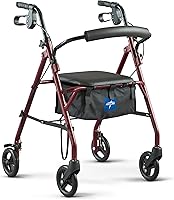
Walker vs Cane: Which Walking Aid Should You Choose? (November 2026)
Choose a walker for two-sided support and a cane for one-sided balance help. In a walker vs cane decision, your balance, strength, home layout and trips decide more than brand or style.
On this page (15 sections)
- Quick verdict: walker vs cane for most people
- The two side by side: support and handling
- How much support does a walker give you?
- How much support does a cane give you?
- Balance and fall risk: which one helps more?
- Speed, stride and energy use
- Home fit: doors, halls and tight rooms
- Travel and storage: cane wins by a wide margin
- HurryCane Freedom Edition Foldable Walking Cane: best for travel-ready cane users
- HONEYBULL Walking Cane for Men & Women: best for compact foldable canes
- Cane bases, tips and winter use
- Cost, upkeep and everyday care
- Who should buy a walker?
- Who should buy a cane?
- Walker vs cane: our final verdict
Choose a walker for two-sided support and a cane for one-sided balance help. In a walker vs cane decision, your balance, strength, home layout and trips decide more than brand or style.
A walker frames your body on both sides and helps you bear weight through both arms. A cane adds a third point of contact on one side and leaves the other hand free.
Our score weighs specs, features and buyer feedback against what you're shopping for. We compared walker designs and cane bases by support, handling and everyday fit.
 Best for travel-ready cane users
HurryCane Freedom Edition Foldable Walking Cane
 Best for compact foldable canes
HONEYBULL Walking Cane for Men & Women
Quick verdict: walker vs cane for most people
A walker wins for stability, and a cane wins for freedom and travel. Most people with balance problems that affect both sides do better with a walker.
A cane is not a weaker walker. For a comparison with a walking stick, see cane vs walking stick.
It helps timing and balance without holding you in a frame.
If unsteadiness happens on both sides, a walker helps more. If one side feels weak, a cane in the opposite hand can help.
Our types of walkers for disabled guide explains frame styles and wheel options for walker shoppers.
The two side by side: support and handling
A walker supports both sides at once, while a cane supports one side and moves with your stride. That difference drives almost every other choice.
A walker is placed ahead of you, then you lean in and step forward. A cane moves in rhythm with your opposite foot.
| Point | Walker | Cane |
|---|---|---|
| Support | Both sides | One side |
| Best for | Moderate to greater balance needs | Mild balance needs |
| Stairs | Often hard to fit | Leaves one hand for rail |
| Travel | Larger to store | Folds small |
| Hands free | Few | One hand free |
| Speed | Slower, more stable steps | Closer to normal stride |
A walker slows you down because each step starts with placement and weight shift. A cane lets you keep a steadier pace if your legs can do the work.
Fit, foot position and practice matter as much as the device.
How much support does a walker give you?
A walker gives the most support of any common walking aid. It shares your weight across both arms and both sides of your body.
You can rest through the frame when you stand, turn or sit. That matters after surgery or when you tire halfway through a trip.
It also helps when one leg is weaker than the other. The strong side does not do all the work.
Wider frames feel stable but may not pass narrow doors. Smaller frames fit tight halls but give a narrower base.
Our guide to how to use a walker correctly covers height, grip and step timing.
Walker support in daily tasks
A walker helps you stand from a chair with both arms. It also gives you a place to pause while you dress or reach a counter.
Keep any tray load light and centered, as front weight can change balance. Practice turns in a wide space before narrow halls.
How much support does a cane give you?
A cane adds balance and confidence without taking over the work of walking. It suits people who walk well but want a third point of contact.
Hold a cane in the hand opposite your weaker leg. That lets the cane and weak leg move together.
The plant of the base also gives feedback on where the ground is and whether it feels firm.
Our how to choose a cane guide explains handle shape, height and base types.
Cane support in daily tasks
A cane leaves one hand free for doors, bags, rails and handshakes. That helps for shopping and work.
It works well for short walks, crowds and uneven sidewalks when balance is mostly good. It does not hold you up if you stumble, so frequent grabbing of furniture signals a need for more support.
Balance and fall risk: which one helps more?
A walker helps more when falls come from weakness on both sides. A cane helps more when falls come from timing or light unsteadiness.
Trouble rising from a chair points toward a walker. Trouble on curbs or in crowds may point toward a cane.
A therapist can test gait, leg strength and balance in a short visit. That gives better advice than guessing from pain alone.
Do not switch to less support to prove improvement. Use the aid that keeps you safe while you rebuild strength.
Our post on types of walkers for seniors helps match frame and wheel choices to home size and strength.
Steps, curbs and uneven ground
Stairs need a handrail with either aid, moving the aid one step at a time. A cane fits better because it is light and leaves a hand free.
Curbs and grass favor a cane whose base pivots and stays flat. A walker wheel can catch on a curb edge.
Speed, stride and energy use
A cane preserves a more normal stride and uses less energy. A walker trades speed for control.
With a cane, your stride length stays close to usual if pain allows. With a walker, you lift or roll the frame, step through, then reset each time.
If long walks tire you, a cane may help you finish with less effort. If they make you unsteady, a walker may be worth the slower pace.
Break long trips into rests and reset your grip before continuing.
Home fit: doors, halls and tight rooms
A cane fits almost every home, while a walker needs door and hall space checked first. Measure before you buy either aid.
Measure your narrowest door, bathroom entry and hall turn. Check space beside your bed, chair and toilet for placing the aid and turning.
A cane needs far less room and can sit beside a chair or fold into a drawer.
Our walker for kids guide shows how sizing changes for smaller users, with the same fit rule for adults.
Travel and storage: cane wins by a wide margin
A cane folds small and travels with almost no effort. A walker needs trunk space and a plan for each stop.
A foldable cane fits a car door pocket or bag. A walker often needs the full trunk or a back seat.
That size gap matters for short trips and long ones. A cane can go from home to the car to the shop without a special spot saved for it.
A walker asks for more planning at every step. You may need help lifting it, a clear place to open it, and room to store it once you arrive.
Check airline and airport rules before travel. Both canes in this post fold to about 13 inches and stand on their own.
Standing on its own helps when you need both hands for a door, a bag, or a seat. Folded length also helps you keep it clean and out of the way at home.
For mixed travel, a cane suits buses, trains, and small cars best. A walker suits trips where a car trunk and extra time are already part of the plan.
HurryCane Freedom Edition Foldable Walking Cane: best for travel-ready cane users
The HurryCane suits taller cane users who want a wide base and a tall height range. It adjusts from 30.5 to 37.5 inches.
Its SteadiGrip base measures 4.25 inches and gives three points of contact. The pivoting design helps it stay in contact as you walk.
It weighs 16 ounces and folds to 13.7 inches, standing on its own when you need both hands. The shaft is aluminum and the handle is rubber.
Choose it if you need height above 36 inches or a wider base feels more secure. Skip it if you need support on both sides.
HONEYBULL Walking Cane for Men & Women: best for compact foldable canes
The HONEYBULL suits users who want the smallest fold and a pivoting base for angled ground. It adjusts from 30 to 36 inches.
Its 4 inch base has three prongs and pivots to stay flat on angled surfaces, helping on ramps and curbs.
It folds to 12.5 inches and weighs 0.44 kg. It stands on its own and works in either hand, with an aluminum shaft and push button lock.
Choose it if storage is tight or you walk on sloped paths often. Skip it if you need height above 36 inches.
Cane bases, tips and winter use
A wide pivoting base gives more contact than a single rubber tip. That contact helps on grass, ramps and uneven paths.
The HurryCane uses a patented SteadiGrip base with WhisperFlex pivoting. The HONEYBULL uses a three-pronged pivoting base with non-scratch rubber.
Both aim to keep the base flat as your body shifts. Our guide to best cane tips for ice covers tread options for winter.
Offset handles and grip comfort
An offset handle shifts the grip over the shaft and can feel more natural for some users. A T handle gives a wide grip but can catch in tight spaces.
Our explainer on what is an offset walking cane covers when that shape helps. Replace a worn tip and check the base and lock monthly.
Cost, upkeep and everyday care
Both aids need simple care that takes a few minutes each month. Clean the frame, check locks and replace worn tips.
Wipe aluminum shafts with a damp cloth and dry them well. Check push buttons and folding locks for grit or stiffness.
Inspect rubber tips for smooth spots and cracks. Store a cane folded in a dry place and check walker wheels and leg caps regularly.
Our guide to best walker trays for seniors shows how to carry small items without overloading a frame.
Who should buy a walker?
Buy a walker if you need support on both sides or you lean on the aid to stand. It is the safer first choice for moderate balance needs.
Choose a walker after surgery, with new weakness, or when you cannot rise from a chair without help. Choose it if you feel unsteady even at home.
A walker helps because both arms share the work. That two-sided support can make standing, turning, and sitting feel more controlled.
It also helps when fatigue shows up partway through a walk. You can pause, lean through the frame, and reset before the next step.
Consider a walker if you grab furniture often to steady yourself. Frequent grabbing is a plain sign that one-sided support may no longer be enough.
It helps if one leg tires faster than the other. A frame spreads effort across both sides instead of asking the stronger side to do most of the work.
Set-up matters too. Height, grip position, and wheel choice change how steady a walker feels in halls and near chairs.
Ask a clinician if unsure. A short gait check can show whether one-sided help is enough.
A clinician can also watch you rise, turn, and walk a short distance. Those simple tasks often reveal more than pain reports alone.
Do not pick a cane just to move faster. Speed helps little if each step feels unsure.
Start with the support you need today, then reassess as strength changes. A walker now does not lock you into it forever.
Who should buy a cane?
Buy a cane if you walk steadily but want balance help on one side. It is the better choice for mild needs and active daily life.
Choose a cane if you use a rail on stairs, shop in crowds, or want one hand free for bags and doors.
A cane suits people who mainly need timing and confidence. It adds a third point of contact without slowing your stride too much.
It also works well when one leg feels less sure than the other. Hold the cane in the opposite hand so it moves with the weaker side.
The HurryCane fits taller users to 37.5 inches with a 4.25 inch base. The HONEYBULL fits users wanting a 12.5 inch fold to 36 inches.
Walker vs cane: our final verdict
Pick a walker for two-sided support, and pick a cane for one-sided balance and freedom. That rule settles most choices.
If you need both arms to stand, start with a walker. If you can stand and walk well but want confidence on one side, start with a cane.
Reassess as strength changes. Measure your home, check your height and practice on level ground.
Our types of walkers for disabled guide is a good next read if you choose a walker. If you choose a cane, start with how to choose a cane.
How we research
We compared specs, features and buyer patterns for walkers and canes. We did not test these aids ourselves.
Health advice here is general and is not a substitute for care from your clinician.
Frequently asked questions
Is a walker safer than a cane?
A walker is safer for people who need support on both sides or who cannot bear weight evenly on one leg. A cane suits people with mild balance issues who can walk with support on one side.
Your clinician can advise which level of support fits your condition and daily tasks.
Can I use a cane instead of a walker?
You can use a cane instead of a walker only if you have good strength on one side and mild balance needs. If you lean heavily on the aid, feel unsteady often, or need support for both arms, a walker usually offers more stable support.
When in doubt, ask a therapist to assess your gait.
Which is better for stairs?
Neither aid should be used on stairs without training and a handrail. A cane leaves one hand free for the rail, while a walker often cannot fit safely on narrow stairs.
Many people use a rail and a cane on stairs, then switch to a walker on level ground after checking with a clinician.
Should I buy a walker or a cane first?
Buy the aid that matches your current balance, not the one you hope to need later. If you recover quickly and walk steadily, a cane may be enough for daily help.
If you need steady support at home, a walker gives more stability now and can be reassessed as strength changes.