What Is a Drop Arm Commode and How Do You Use It?
A drop arm commode is a toilet chair with one or both armrests that lower or swing away, creating side access for a lateral transfer. Lock the arm back in place before sitting or standing.
On this page (9 sections)
- What is a drop arm commode?
- How does a drop arm help with a lateral transfer?
- How do you use a drop arm commode?
- What should you check before a transfer?
- Can you use a drop arm commode over a toilet?
- Which features matter when choosing one?
- Which commodes have a movable arm?
- How do you clean and maintain a drop arm commode?
- How do you decide if a drop arm commode fits your needs?
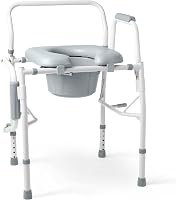
A drop arm commode is a toilet chair with an armrest that lowers or moves away to create side access for a lateral transfer. The arm can help make it easier to move between a wheelchair and the seat, but it must be locked in place before sitting or standing.
A drop arm bedside commode may be used beside a bed, and some models can be placed over a toilet. Check the model's instructions and the user's transfer needs before choosing where to use it.
What is a drop arm commode?
A drop arm commode is a commode chair with one or more armrests that move down or out of the way. The opening gives a person or caregiver access from the side instead of requiring a transfer over a fixed armrest.
The seat sits over a removable bucket on many models. Some can also be used over a toilet after the bucket is removed, if the maker allows it and the commode fits securely.
“Drop arm” describes the movable arm feature. “Bedside commode” describes a commode used near a bed, so a bedside model may have drop arms or fixed arms.
How does a drop arm help with a lateral transfer?
A lowered arm creates a side opening between the commode seat and a wheelchair or other transfer surface. That can let a person move sideways onto the seat, with or without caregiver assistance.
The arm does not lift or support the person during the transfer. Follow the user’s care plan and the commode’s instructions, and ask a qualified clinician or therapist for transfer guidance if you’re unsure how to position or assist someone.
A clear route matters. Move loose rugs and nearby items, place the commode on a level floor, and position the wheelchair close enough for the planned transfer without blocking the arm’s movement.
What is a drop arm bedside commode?
A drop arm bedside commode is a commode chair designed for use near a bed, with an arm that lowers or moves away for side access. It may suit someone who needs a shorter route to a toilet seat, though the room must still allow safe positioning and caregiver access.
Some models also work over an existing toilet after you remove the bucket. For more options, see our guide to best drop arm bedside commode.
How do you use a drop arm commode?
Use a drop arm commode by placing it securely, lowering the arm for the transfer, then raising and locking the arm before the person sits. Follow the specific model’s setup and transfer instructions, since release controls and use options differ.
- Check that the commode is fully assembled and on a level, stable floor.
- Set the height as directed, and make sure each leg is secure.
- Position the wheelchair or other transfer surface beside the commode.
- Release and lower the arm using the method in the instructions.
- Complete the transfer using the person’s planned method of assistance.
- Raise the arm and confirm it locks before the person sits or stands.
- After use, follow the commode’s instructions for bucket removal and cleaning.
Don’t lean on a lowered arm or use the commode if a leg, fastener, or lock seems loose. If it shifts or rocks, stop and correct the setup before anyone transfers.
What should you check before a transfer?
Check the floor, frame, height, and arm lock before every transfer. The commode should sit flat and steady, with enough room to position the wheelchair and open the arm.
Make sure the seat height works for the planned transfer. A seat that is too high or too low may make it harder to move safely, so follow the care plan and the model’s adjustment instructions.
If you use grab bars in the bathroom, check that they’re firmly mounted and within reach. A loose towel bar is not a safe substitute for a grab bar.
Where should the commode go beside a toilet?
Place a commode where it stays level and leaves a clear route for the person and caregiver. If using it over a toilet, check the instructions for bucket removal and make sure the frame fits without rocking or blocking the movable arm.
For a separate grab bar, review where to place a grab bar next to a toilet. A commode arm and a wall-mounted grab bar serve different purposes, so don’t treat one as a replacement for the other.
Can you use a drop arm commode over a toilet?
Some drop arm commodes can be positioned over a toilet with the bucket removed, but the instructions for that model determine whether this setup is allowed. Check the toilet’s shape and surrounding clearance, and confirm the commode sits securely before use.
A commode designed only for bedside use may not fit over your toilet. If you’re comparing models, our guide to drop arm commode vs bedside commode explains how the names and features differ.
A commode wheelchair is another option for some bathroom routines, but it has different design and use considerations. For a reclining option, compare reclining commode wheelchairs.
Read what is a commode wheelchair and what to keep in mind before comparing it with a stationary chair.
Which features matter when choosing one?
Choose a drop arm commode by checking the transfer opening, seat height, stability, and intended placement. Confirm the arm releases easily for the person who will use it, then locks securely for sitting and standing.
Consider these points before choosing:
- Arm operation: Check where the release is and whether the user or caregiver can operate it.
- Seat height: Make sure the adjustment range suits the user and planned transfer.
- Placement: Decide whether it will sit beside a bed, over a toilet, or both.
- Weight limit: Confirm the model’s stated limit fits the user’s needs.
- Cleaning: Check how the seat, bucket, and other removable parts are cleaned.
- Room space: Leave room for the chair, wheelchair, caregiver, and the arm to move.
A padded seat may matter if comfort is a priority. Compare best padded drop arm commode options, and see best bariatric drop arm commode if you need a model with a higher stated weight capacity.
If you’re choosing other bathroom supports, a shower chair vs tub transfer bench guide can help you compare seating for bathing.
Which commodes have a movable arm?
These three commodes offer different features to compare, including folding legs, padded seating, or a higher stated weight capacity. Check the specific instructions and measurements before deciding which setup fits your space and transfer routine.
The Drive Medical Folding Bedside Commode has fold-up steel legs, adjustable height, and a 7.5-quart bucket, for readers who also want a folding bedside option.
The Medline Drop Arm Commode Chair for Adults has padded drop-down arms and an adjustable seat height from 18–22 in, for readers who want padded seating and side access.
The DMI Drop Arm Portable Toilet Commode has a release button for sliding access from either side and a stated 500 lb capacity, for readers who need a higher capacity model.
How do you clean and maintain a drop arm commode?
Clean the seat, bucket, and frame according to the commode’s instructions. Remove the bucket carefully, and use the cleaning products and method the maker recommends for its materials.
Check the arm release and lock, leg height adjustments, feet, and frame regularly. Stop using the commode if a part is cracked, loose, or fails to lock; contact the manufacturer for repair guidance.
How do you decide if a drop arm commode fits your needs?
A drop arm commode may suit someone who needs side access between a wheelchair and a toilet seat, provided the frame, transfer plan, and room layout fit. Choose a model whose arm locks securely and whose height and placement match the intended use.
If the commode will sit beside a bed, check that it leaves enough room to approach and transfer. If you plan to place it over a toilet, confirm that the model supports that setup and fits your bathroom.
Frequently asked questions
What is a drop arm commode used for?
A drop arm commode provides a toilet seat with an armrest that lowers or moves out of the way. That opening can give a person using a wheelchair or needing caregiver help more room to transfer sideways onto the seat.
It may also be positioned beside a bed or over a toilet, depending on its design.
How do you lower the arm on a drop arm commode?
Use the release, latch, or button specified in the commode's instructions, then guide the arm down or out of the transfer path. Designs vary, so don't force an arm that doesn't move easily.
Before anyone sits, check that the arm is raised and securely locked.
Can a drop arm commode go over a toilet?
Some drop arm commodes can be positioned over a standard toilet after removing the bucket, but not every model or bathroom setup is suitable. Check the commode instructions, toilet clearance, floor stability, and fit before transferring.
Keep the arm raised and locked during use.
Is a drop arm commode the same as a bedside commode?
A drop arm commode describes a commode with a movable arm for side access; a bedside commode describes where or how a commode can be used. Some bedside commodes have drop arms, while others have fixed arms.
Compare the two styles in our guide to drop arm commode vs bedside commode.