How to Keep Water Inside the Tub with a Transfer Bench
To keep water inside the tub with a transfer bench, drape the curtain over the bench’s inner seat or use its curtain slot, then check that the curtain hangs inside the tub and stays clear of the transfer path.
On this page (7 sections)
- Where should a shower curtain sit around a tub transfer bench?
- How do curtain slots help control splashes?
- What if your transfer bench has no curtain slot?
- Which transfer benches can work with curtain placement?
- How can you test the curtain setup before bathing?
- What else can help keep water in the tub?
- What should you do if water still escapes?
To keep water inside the tub with a transfer bench, position the shower curtain so it overlaps the bench and hangs inside the tub. A bench with a curtain slot can help guide the curtain around the seat, while a splash barrier can cover a gap that remains.
The curtain should block water without catching on the seat, belt, arms, or the person transferring. Check the arrangement before bathing, and keep the bench legs stable and the transfer path clear.
Where should a shower curtain sit around a tub transfer bench?
The curtain should hang inside the tub and overlap the bench’s inside edge. This directs water toward the tub instead of onto the bathroom floor.
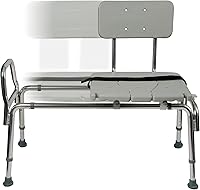
Some transfer benches have a slot or cutout intended to let the curtain pass through or rest against the bench. If yours has one, guide the curtain through the slot as its instructions show, then pull it closed around the person and shower area.
A tub transfer bench with a shower curtain slot may reduce the gap between the curtain and seat. It does not remove the need to check how water flows around the bench, especially near the faucet end and the wall.
Keep the outside section of the bench available for the transfer. The curtain should not cross the path where a person sits down or slides onto the seat.
How do curtain slots help control splashes?
A curtain slot gives the curtain a place to pass through the bench, which can help it sit closer to the seat. The fit depends on the bench shape and curtain, so check for openings around the slot.
Pull the curtain gently into position rather than stretching it tightly across the bench. A taut curtain can shift during bathing or interfere with movement.
If water escapes through a remaining gap, try repositioning the curtain so its inner edge overlaps the bench more. A splash guard may help where the tub and bench meet, but it should not block drainage or create a snag point.
If you're still choosing a bench, compare the differences in our guide to tub transfer bench vs shower bench. A transfer bench spans the tub wall, so curtain placement needs to account for both the inside and outside sections.
If you're deciding whether you need a bench or an inside seat, compare a shower chair and tub transfer bench.
What if your transfer bench has no curtain slot?
Drape the curtain over the bench’s inside edge if the bench design allows it. Check that the curtain falls into the tub and does not get pulled outside when you move it.
Some people use a flexible splash barrier along the tub edge to direct spray back into the basin. Make sure it stays in place and doesn't interfere with the seat, feet, or transfer.
A regular curtain may bunch where it meets the bench. Smooth out folds before turning on the water, and aim the shower spray away from any opening.
Which transfer benches can work with curtain placement?
Choose a bench that fits your tub and leaves enough room to position the curtain. Measure the tub, bathroom floor, and the space around the bench before deciding.
The DMI Tub Transfer Bench and Shower Chair has a removable cutout and a backrest that can be positioned for left- or right-hand use. Keep the curtain away from the cutout and check that it does not snag on the seat or safety belt.
The Drive Medical Tub Transfer Bench for Bathtub has drainage openings in the seat and suction cup feet. Check that the curtain does not cover the drainage openings or pull against the bench.
The Platinum Health Carousel Sliding Shower Chair Tub Transfer has pivoting arms and a swivel seat. Its padding and moving parts make it important to keep the curtain from catching as the seat turns.
Learn what a tub transfer bench is before comparing designs. If you need help choosing one, our guide to the best tub transfer bench for seniors covers options for different setups.
How can you test the curtain setup before bathing?
Check the curtain position, bench stability, and water direction before anyone sits down. Move the curtain through its full range to see whether it catches or pulls the bench.
With the shower off, confirm that the curtain hangs inside the tub and covers the opening near the seat. Check that no part of the curtain blocks the transfer area or prevents access to any bench controls or safety features.
When the shower is running, direct water toward the tub walls and away from gaps around the curtain. Stop and adjust the curtain if water reaches the floor or the fabric shifts into the transfer path.
Follow the bench instructions for setup and transfers. Our guide to tub transfer bench use explains the basic sit-and-slide approach.
What else can help keep water in the tub?
A well-positioned curtain is the first step; a splash barrier can help with a stubborn gap. Keep any added barrier smooth, secure, and clear of the transfer route.
A hand-held showerhead can make it easier to direct spray away from the curtain opening, if your shower has one. Avoid aiming water toward the bench’s outside section or the bathroom floor.
Grab bars may provide a separate handhold when installed and used as intended. Read our bathroom safety guide to grab bars and check bathtub grab bar placement for location considerations.
A shower seat may suit a different bathroom layout. See shower chair vs shower bench if you are comparing seating types, and what to keep in mind about a commode wheelchair if you are planning bathroom access around mobility equipment.
What should you do if water still escapes?
Find the gap and adjust the curtain before adding accessories. Common leak points include the bench edge, the tub end, and the curtain where it meets the wall.
Pull the curtain farther inside the tub and flatten any folds. If the bench has a slot, make sure the curtain passes through it as intended; if it does not, see whether the curtain can rest over the inner seat edge without obstructing movement.
Check that the shower spray is not hitting the curtain directly near an opening. If a splash barrier still seems necessary, choose one that fits the tub and bench arrangement, and confirm it cannot shift under light contact.
For a transfer bench with a shower curtain, the practical rule is simple: keep the curtain inside the tub, overlap the bench edge, and leave the transfer path open. If the curtain will not stay in place, reconsider the bench position or use a barrier designed for that tub rather than improvising one that can snag or move.