How to Walk with a Rollator
To walk with a rollator safely, set the handles to wrist height, stand inside the frame, and take small steps while squeezing the brakes to stop. Move at a steady pace, look ahead, and lower the brakes only when you are ready to walk forward.
On this page (11 sections)
- What is a rollator for walking, and how is it different from a walker?
- How do you set the handle height before walking with a rollator?
- What is the correct position for walking with a rollator?
- How do you use the brakes when walking with a rollator?
- How do you turn a rollator safely in a small space?
- How do you sit down and stand up from a rollator seat?
- How do you walk with a rollator on different surfaces at home?
- What everyday tasks get easier when walking with a rollator?
- When is a cane or another aid better than a rollator?
- How do you care for a rollator and practice walking with a rollator each week?
- What should you remember about walking with a rollator?
To walk with a rollator safely, set the handles to wrist height, stand inside the frame, and take small steps while squeezing the brakes to stop. Move at a steady pace and look ahead.
Treat the rollator as part of your balance, not as a cart to push ahead of you.
If you are new, practice in a clear room with a chair nearby so you can learn brakes, turning, and the seat without added stress.
A cane may be enough for shorter trips indoors, and our guide to walker vs cane can help you compare the two options.
What is a rollator for walking, and how is it different from a walker?
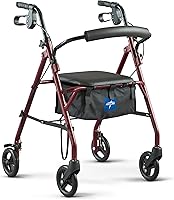
A rollator for walking is a wheeled aid with handles, brakes, and usually a seat for rests. It rolls forward with you instead of needing to be lifted at each step.
A standard walker has no wheels, or only front wheels, so you lift or slide it forward. A rollator moves more like a lightweight cart with brake handles, which can feel faster and needs more practice to control.
Our guide to types of walkers for disabled explains the main designs in plain terms.
How does a rollator help with balance while you walk?
A rollator helps with balance because you can hold both handles and lean a little into the frame as you step. The four wheels spread your support over a wider area than a cane.
The brakes matter as much as the wheels. They let you lock the rollator in place to stand, sit, or pick something up.
Without locked brakes, a rollator can roll away when you put weight on the seat.
How do you set the handle height before walking with a rollator?
Set the handle height so your shoulders are relaxed and your elbows bend a little on the grips. Stand tall with your arms at your sides and check whether the handles sit near your wrist crease.
Adjust both sides to the same height, then lock each adjustment in place. Test the height inside the frame without hunching your shoulders or reaching down.
If the handles feel too high, you may push the rollator forward instead of using it for support. If they feel too low, you may bend forward and lose balance.
Check also that the wheels turn freely, the brakes work smoothly, and the frame opens and locks fully.
What is the correct position for walking with a rollator?
Stand inside the frame with your hips between the back wheels and your hands on the handles. Your feet should stay close to the rear of the rollator, not far ahead of it.
Start with the rollator a short step ahead of you. Roll it forward a little, then step toward it with one foot, then the other.
Keep the steps small so your body stays over the base and your hands can reach the brakes.
Look ahead at where you want to go, not down at your feet. Looking down can pull your weight forward and make the rollator feel like it is running away from you.
How do you take the first steps with a rollator?
Release the brakes only when you are ready to move, then roll the frame forward about 6 to 12 inches. Step forward with one foot, then bring the other foot up to meet it.
Keep both hands on the handles as you step. If you feel the rollator moving too fast, squeeze the brakes gently and stop, then start again with a shorter roll.
Practice this stop and start motion several times in a hallway. Good control comes from stopping often at first, not from walking farther.
How do you use the brakes when walking with a rollator?
Use the brakes to stop before you turn, sit, stand, or reach. Squeeze both levers at the same time so the rollator slows evenly.
Squeeze gently to slow down and harder to stop, and release the brakes only when you want the wheels to roll again.
Lock the brakes fully when you sit or pause to talk, open a door, or pick something up.
Our guide to how to use a walker correctly covers hand placement and posture for walkers in general.
How do you turn a rollator safely in a small space?
Turn a rollator by stopping first, then pivoting the frame in small steps. Never try to turn while the brakes are released and you are still moving forward.
Lock the brakes, take a small step with one foot, then swing the rollator a little toward that foot. Take another small step and turn the frame again until you face the new direction.
Small turns take a few more steps, but they keep your feet under your body and your hands on the handles. Wide turns can catch the wheels on furniture or rugs, so move furniture or take a wider path when you can.
How do you sit down and stand up from a rollator seat?
Sit on a rollator seat only after you lock both brakes on a level surface. Turn the rollator so the seat faces you, then back up until your legs touch the seat.
Lower yourself slowly with your hands on the handles. Keep your feet flat and close together, and avoid dropping onto the seat, which can tip a light frame backward.
To stand, push down through the handles and stand up in stages. Release the brakes only after you are fully upright and holding both handles.
Our guide to the best rollator walker with seat for seniors can help you compare seat designs and brake styles.
How do you walk with a rollator on different surfaces at home?
Walk with a rollator on hard floors first, then try rugs, thresholds, and outdoor paths one at a time. Hard floors let the wheels roll smoothly and show how the brakes respond.
Rugs can slow the wheels or catch a small front wheel, so go slowly and avoid thick rugs with curled edges when you can. Stop at thresholds, then roll straight over the bump at a slow pace.
Outdoors, look for smooth paths, curb ramps, and dry surfaces, as wet tile, gravel, grass, and steep slopes can make control harder. An upright walker vs rollator comparison can help if you are unsure which design suits your home.
What everyday tasks get easier when walking with a rollator?
Walking with a rollator helps with shopping, errands, and rest stops because you can carry items and sit when you need to. The seat and a storage pouch or basket make short trips easier.
Use the seat for planned rests, not to recover from dizziness. If you feel faint, sit on a chair right away or lock the brakes and lower yourself slowly.
Keep your bag, keys, or phone within reach before you sit so you do not lean sideways. For car trips, lock the brakes and set the rollator beside the car door before you transfer.
Some people prefer a different aid for car trips, and how to use a walker after hip replacement covers some transfer questions after surgery.
When is a cane or another aid better than a rollator?
A cane or another aid may suit you better if you need only light balance help and can walk steadily on your own. A rollator adds weight, width, and brake steps that some people do not need indoors.
Frieda is 72 and walks to her mailbox each morning, but she only needs a light aid for balance on her flat street. She uses a folding cane for that short walk and saves her rollator for longer shopping trips.
The HurryCane Freedom Edition Foldable Walking Cane has a T handle with a rubber grip and an aluminum shaft. It adjusts from 30.5 to 37.5 inches, folds to 13.7 inches, and weighs 16 ounces.
Its SteadiGrip base is 4.25 inches wide with a pivoting design for three point contact. The base lets the cane stand on its own when set down.
A cane is easier to carry in a car or bag, but it supports one side only. A rollator supports both sides and adds brakes and a seat for long walks or uneven ground.
Our guide to a walker for kids covers sizing and safety for younger users. A mobility scooter vs knee scooter comparison can help when walking feels too tiring.
How do you care for a rollator and practice walking with a rollator each week?
Care for a rollator by checking the brakes, wheels, and locks before each use. Wipe the handles and seat with a damp cloth and mild soap, then dry them.
Check that the brakes squeeze fully and hold when locked. Adjust parts only as your manual describes, and stop using the rollator if a wheel wobbles, a brake slips, or the frame feels loose.
Practice daily in short sessions. Walk a hallway, stop at a chair, sit and stand, then turn and walk back.
Keep the brakes locked when parked. Store the rollator where it will not block a doorway or fall on someone.
What should you remember about walking with a rollator?
Walking with a rollator works best when you keep your body inside the frame, lock the brakes to stop, and turn in small steps. Those three habits protect your balance on most indoor and outdoor routes.
Set the handles to wrist height, look ahead, and keep your steps short. Stop before you sit, stand, turn, or reach, and release the brakes only when you are ready to roll.
Choose the aid that fits the trip. Use a rollator for longer walks and rest stops, and consider a cane for short, light trips where you need less support.
With practice, walking with a rollator can make daily movement calmer and more controlled.
Frequently asked questions
How fast should you walk with a rollator?
Walk at a pace where you can stop within one step and keep both hands on the handles. Short, even steps help you stay inside the frame and keep the brakes within reach.
Speed should feel controlled, not rushed, on floors, rugs, and outdoor paths.
Can you climb stairs with a rollator?
Most rollators are not made for stairs, so check your model instructions before you try. A handrail and a different aid may suit steps better.
If you must use stairs, get guidance from a clinician or therapist who knows your balance and strength.
When should you sit on a rollator seat?
Sit only when the brakes are locked on a level surface and the seat is made for resting. Lock both brakes, turn the rollator so your back is toward the seat, and lower yourself slowly.
Stand up by reversing the steps and releasing the brakes only after you are upright.