How to Choose an All-Terrain Manual Wheelchair
An all-terrain manual wheelchair should match the surfaces you use most, your ability to propel it, and how you plan to transport it. Check wheel size and tread, ask how the setup handles loose ground, and compare the chair’s weight and folded dimensions with your vehicle.
On this page (7 sections)
- What should an all-terrain manual wheelchair handle?
- Which wheel design suits your routes?
- How should the chair fit the rider?
- Can an all-terrain wheelchair fit your transport routine?
- Which products can help with related mobility needs?
- What should you check before buying?
- How do you choose an all-terrain manual wheelchair?
An all-terrain manual wheelchair is a fit for outdoor routes only when its wheels, frame and propulsion demands match the surfaces you use. Compare the chair with your usual paths, the help available for difficult sections and the space you have for storage and transport.
The phrase “all terrain” can cover very different needs. A chair intended for firm park paths may not be suitable for loose sand, mud or steep trails, so ask about the exact surfaces before you buy.
If you’re still comparing chair styles, start with our guides to Types of Manual Wheelchairs: A Helpful Guide and What Are All the Types of Wheelchairs? The Full Picture.
What should an all-terrain manual wheelchair handle?
Choose a chair based on the actual ground you expect to cross, not the broad all-terrain label. Firm paths, grass, gravel, mud and sand create different demands for traction, rolling effort and stability.
Write down where you expect to use the chair most often. Note surface firmness, slopes, bumps, path width and how far you need to travel.
| Surface | What to consider |
|---|---|
| Packed dirt or firm gravel | Tire tread, wheel size and small bumps |
| Grass | Grass length, ground firmness and slope |
| Loose gravel | Tire traction, rolling effort and loose stones |
| Mud | Whether the route is firm enough for the chair to move safely |
| Sand | Wheel width and whether the chair is designed for soft ground |
| Uneven trails | Stability, obstacles, path width and available assistance |
A wheelchair that works on a firm trail may bog down where gravel shifts or grass is soft. The rider may need more upper-body effort, or another person may need to assist.
No wheelchair should be assumed to work on every surface. Ask the manufacturer which surfaces the design is intended for and whether it has limits for slopes or uneven ground.
For a specific soft-surface challenge, read our guide to wheelchairs for the beach and sand. Sand often calls for a different setup than an outdoor path.
How does terrain change propulsion effort?
Rough or soft ground can take more effort to cross than smooth pavement. The additional effort depends on the rider, chair, tire setup, distance and route.
Think through the whole trip, including returning uphill or crossing a long stretch without a place to rest. If you rely on an attendant, ask them to consider pushing effort and safe control on slopes.
A user who wants to propel independently should try to get guidance on propulsion demands for the surfaces in question. A manual wheelchair power attachment may reduce some pushing effort, but check its fit and terrain guidance.
If possible, arrange a demonstration on similar ground before deciding.
Which wheel design suits your routes?
The tire and wheel combination matters more than the all-terrain label alone. Compare wheel diameter, tire width, tread, inflation needs and how the wheels connect to the chair.
Larger wheels may roll over some bumps more easily, while wider tires may be useful on some soft surfaces. Those features do not guarantee traction or easy movement, and a wheel setup that suits one surface may have drawbacks elsewhere.
Ask these questions about the wheel design:
- Is the tire solid, air-filled or another type?
- Does it need regular pressure checks or other maintenance?
- Is the tread intended for smooth paths, mixed ground or loose surfaces?
- Are the wheels removable, and how does that affect transport?
- Can you get replacement tires or tubes where you live?
Match the design to the ground you’ll actually cross. A chair with tires suited to firm paths may still struggle in deep sand, and a wider wheel may change how the chair feels indoors.
Some users may also need to check whether the wheel setup fits through their home’s doors or around tight corners. Measure regular indoor routes if the chair will serve both inside and outside.
How important are brakes and stability?
Brakes and stability matter whenever you stop, transfer or travel on a slope. Check how the chair is meant to be secured and whether the rider or attendant can reach and use its controls.
Ask the maker how the brakes are expected to work on inclines and uneven ground. Do not assume a brake designed for level surfaces will safely hold a chair on a steep slope.
Before a trip, check that the route offers a firm place to stop when needed. Avoid surfaces where the chair may slide, tip or become difficult to control.
How should the chair fit the rider?
A suitable chair should fit the rider’s body and support how they sit and move. Check seat width, seat depth, foot support, armrests and the rider’s posture needs with a qualified seating professional when possible.
A chair that is too wide or too narrow may make positioning harder. Seat depth and foot support also affect comfort and how the rider’s legs are positioned.
Consider how the chair will be used throughout the day. A rider who spends long periods seated may have different support needs from someone who uses the chair for shorter outdoor trips.
A cushion can change the sitting height and positioning, so check compatibility before choosing one. Our guide to the best gel wheelchair cushion can help you compare cushion features.
Do not rely on a general size label alone. Measure the rider and compare those measurements with the chair’s sizing guidance; ask a seating professional about posture, pressure management or complex support needs.
Can an all-terrain wheelchair fit your transport routine?
Transport fit depends on the chair’s folded size, weight, lifting points and how it breaks down. For a powered folding option, see folding all-terrain electric wheelchairs.
Measure your vehicle and think through who will load the chair before you choose.
Check the vehicle’s narrowest opening, cargo depth and height. Compare those measurements with the chair folded, and confirm whether removing wheels or footrests is required.
Weight matters as much as trunk space. For easier handling, compare lightweight manual wheelchairs for adults.
If someone will lift the chair, consider their reach, strength and the number of times it must be loaded during a typical week. For a specific lightweight model, see the Karman LT-980 wheelchair review.
For travel-focused comparisons, see our guide to the best lightweight wheelchair for travel. A lighter chair can be easier to handle, though its outdoor suitability still depends on its design.
A transport chair is another option when an attendant does the pushing. Learn the difference in our transport chair vs wheelchair guide.
The Medline transport chair weight guide can also help you think about lifting and loading. Its transport chair is described as folding and lightweight, but it is intended for a different kind of use than a self-propelled manual wheelchair.
Which transport trade-offs matter most?
A compact folding chair may be easier to store, while a chair built for rougher surfaces may be heavier or take up more room. Compare lightweight and ultra-lightweight wheelchairs to understand the weight categories.
Compare what matters most for your regular routes and trips.
Consider the whole routine: getting the chair out of storage, loading it, assembling or unfolding it, and positioning it at your destination. A chair that fits the vehicle but is difficult to lift may not suit a solo driver.
If the rider needs someone else to push, compare transport chairs and transfer chairs to understand their different roles. A transport chair is for moving a seated person, while a transfer chair supports moving between locations such as a wheelchair and a bath.
Which products can help with related mobility needs?
These products support related situations, but they are not all-terrain manual wheelchairs. Use them only if their specific purpose fits your routine.
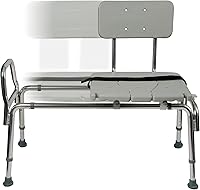
The DMI bench has an adjustable seat height and can be set up with the backrest on the right or left. Measure your bathroom first, since the bench is 39 in wide.
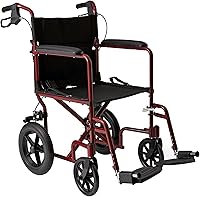
The Medline chair is intended for an attendant to push rather than for self-propelling over trails. Its folding frame and swing-away footrests may be useful for car transport, but compare the folded dimensions with your vehicle.
The Drive Medical Blue Streak has a steel frame and push-to-lock rear brakes. Its features are aimed at everyday mobility, so confirm its suitability before using it on rough ground.
What should you check before buying?
Use a short checklist to compare the chair with your route and routine. For a broader starting point, compare wheelchairs for seniors.
Get clear answers about surface limits, rider fit and transport before placing an order.
- List the surfaces and slopes on your regular routes.
- Ask which of those surfaces the chair is designed to handle.
- Compare wheel size, width, tread and tire care needs.
- Check seat dimensions and support needs with the rider.
- Measure the vehicle opening and cargo area.
- Confirm the chair’s weight and loading method.
- Ask how to secure the chair during transfers and stops.
- Find out what maintenance, replacement tires or parts may be needed.
If you need both indoor and outdoor use, compare tight indoor turns with outdoor wheel needs. If powered mobility may suit your route, compare all-terrain electric wheelchairs.
A chair that fits one environment may be awkward in the other.
Ask for a demonstration or a return policy that allows an appropriate fit check when available. Confirm that policy directly before buying.
How do you choose an all-terrain manual wheelchair?
Choose an all-terrain manual wheelchair by ranking your most common surfaces, propulsion needs and transport limits. If firm paths are the main goal, focus on a wheel setup suited to those routes; if sand is a regular need, compare chairs designed for soft ground.
For someone who needs attendant help, make pushing effort and vehicle loading part of the decision. For self-propulsion, seek a chair and setup matched to the rider’s ability and route.
Start by comparing manual wheelchair types and the full picture of wheelchair types, then ask the chair maker about your exact surfaces and fit needs.
Frequently asked questions
Can a manual wheelchair go on grass or gravel?
Some manual wheelchairs can handle firm, short grass or packed gravel, but performance depends on tires, wheel size, chair setup and the rider’s propulsion. Loose gravel, mud, sand and steep or uneven ground can demand more effort or help.
Check the maker’s surface guidance and plan a safer route if traction is uncertain.
Are larger wheels better for an all-terrain manual wheelchair?
Larger wheels can roll over some surface changes more easily, but wheel size alone does not make a chair suitable for every terrain. Tire width, tread, pressure, chair geometry and the rider’s strength also matter.
Compare the complete wheel setup with the surfaces you expect to use.
Is a transport wheelchair suitable for self-propelling outdoors?
A transport wheelchair is generally designed for an attendant to push, so it may not suit someone who wants to propel a chair independently. Check the wheel and hand-rim setup before buying.
For a deeper comparison, see our guide to transport chairs versus wheelchairs.
How do I know if an all-terrain wheelchair will fit in my car?
Compare the wheelchair’s folded dimensions and weight with your trunk opening, cargo space and lifting ability. Also account for removable wheels or footrests if the chair uses them, and measure the route into the vehicle.
A chair that fits inside may still be difficult to lift or position.
Does an all-terrain wheelchair work on beach sand?
Beach sand can be especially difficult for standard wheelchair tires because narrow wheels may sink or drag. Some specialty chairs use wider wheels or other designs for sand, but you should confirm the intended surfaces and support needs.
Our guide to wheelchairs for the beach and sand covers that choice.